

Once the first three days at home are done, start with short outings of 20 to 30 minutes, like a walk around the block, then build up gradually. Take one last bathroom trip before you leave, pack spare cotton underwear and wipes, and let your child’s own signals guide the timing instead of a fixed schedule. Most children are dry in the daytime within about a week.
When can you actually leave the house after you start potty training?
The first three days are best spent at home, because that is when your child learns the most and you can react quickly to every attempt. Once those days are behind you, short outings are the next step: a walk around the block, a quick trip to grab the mail, twenty to thirty minutes tops.
Each day, stretch the outings a little longer, a store run instead of a walk, then a short errand with a stop planned in. Most children are dry during the day in about a week, though some manage it in three days and others need two or three weeks, and that range is normal, not a sign anything went wrong. Nighttime dryness is a separate skill that tends to come later, once daytime training is solid.
What do you say before you walk out the door?
The goal is your child telling you they need to go, not you asking every twenty minutes. Instead of constantly offering the potty, ask something like, ‘will you tell me when you need to pee?’ That question, repeated gently, is what teaches your child to notice the feeling and speak up, rather than waiting for you to guess.
There are two moments where you still prompt, during training and for good afterward: right before and after sleeping, and right before you head out the door. Those two exceptions are not the same as potty training by the clock. You are not putting your child on the toilet every thirty minutes because a timer says so, you are simply closing the loop at the two transitions where an accident is most likely and least convenient.
Before you leave, one last toilet trip is enough. Skip the idea of a countdown timer in the car or constant check ins once you are moving. If you are unsure whether your child is even showing the signs of readiness yet, this is worth checking before you plan your first outing at all.
What goes in your on-the-go potty bag?
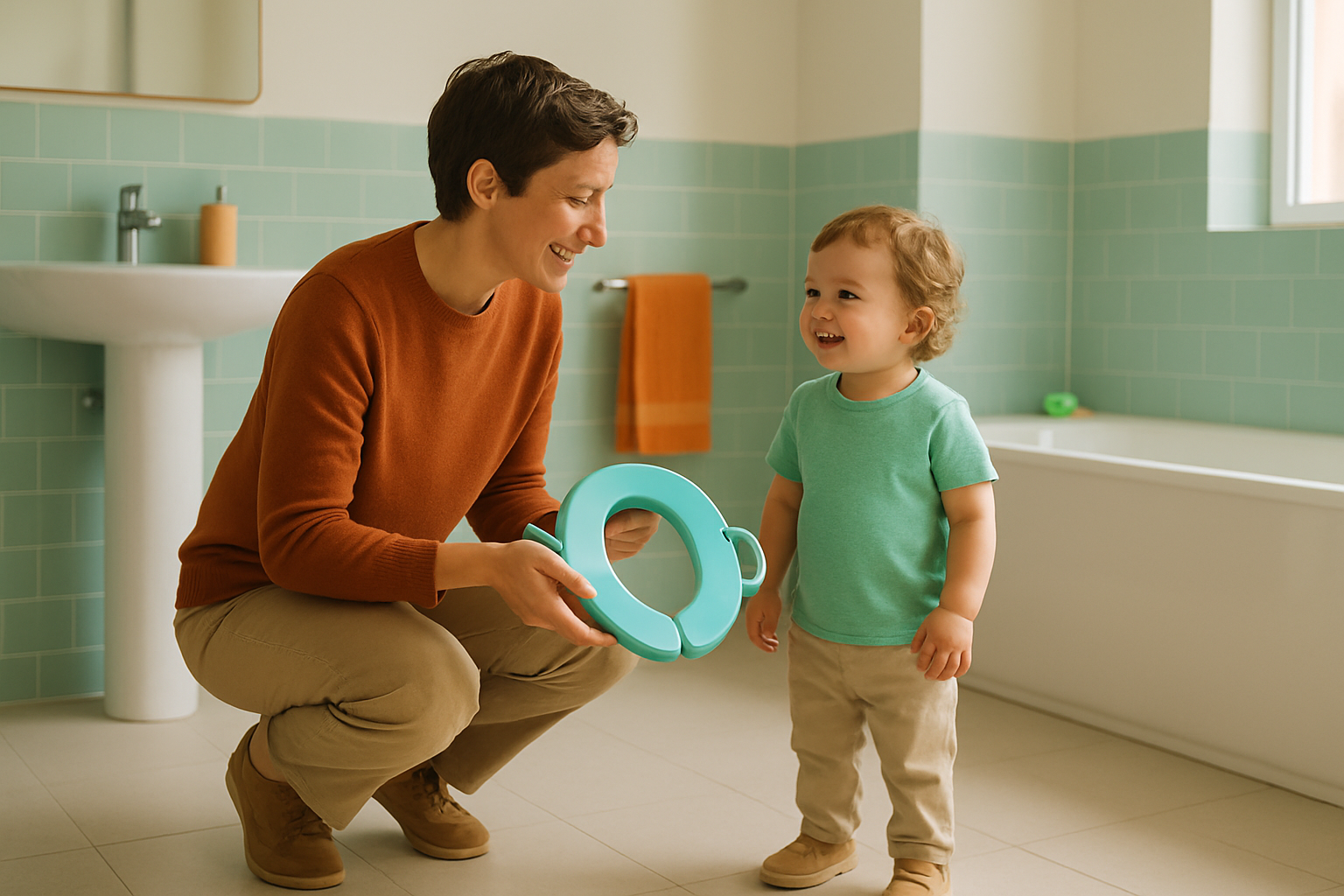
Pack more spare cotton underwear and pants than feels necessary, wipes, a wet bag or a plain grocery bag for anything soiled, and a towel or waterproof pad for the car seat. A travel potty or a folding toilet seat reducer makes public restrooms usable when the seat is enormous or the child is nervous of the flush. Bring a change of clothes for yourself too, accidents are not always tidy.
Cotton underwear, not training pants, is what the method uses, because your child actually feels wetness in cotton underwear, and that feeling is what teaches the connection between the sensation and the accident. Training pants absorb it the way a diaper does, which quietly undoes the lesson you are trying to teach.
How do you handle a long car trip without going back to diapers?
A toilet stop right before you buckle everyone in is the single most useful thing you can do before a car trip. After that, plan your route around real restrooms rather than around mile markers, and stop when your child says so, even if it feels too soon.
Put a waterproof pad under the car seat instead of reaching for a pull-up. On drinks, have your child finish a cup in one go rather than sipping steadily for an hour, the same way you would at home on the tracking schedule, because a full cup finished at once lets you read how long it takes before your child needs to go, information sipping does not give you.
If there is genuinely no exit for thirty miles, stay calm. A travel potty used on the shoulder, or set up in the trunk area with the hatch open for privacy, is a completely reasonable stopgap. What matters more than the logistics is the message: putting a newly trained toddler back in a pull-up for the drive tells them the rules just changed, and that confusion tends to cost more than the inconvenience of one more stop would have.
What about flights, trains, and long journeys?
Use the toilet right before boarding, and again as soon as the seatbelt sign turns off if it is safe to get up. Airplane bathrooms are loud, cramped and unfamiliar, so plan to hold your child rather than expect them to sit alone, and bring the folding toilet seat reducer so the seat itself is not the obstacle.
An aisle seat, if you can choose one, saves you from climbing over other passengers at the moment your child says they need to go right now. If the trip falls in the first week of training, it is worth asking whether waiting until afterward is realistic, since the first days are when routine matters most.
A child who is frightened of an airplane toilet, or of toilets in general, is not ready for that particular challenge yet. Build familiarity with ordinary toilets first, at home and on short outings, and let travel wait until the fear has eased rather than pushing through it mid flight.
Public restrooms are scary: how do you get your toddler to go in one?
Loud automatic flushers and hand dryers are one of the most common reasons a toddler refuses a public restroom outright. Covering the sensor with your hand or a sticky note, and warning your child before you flush rather than letting it happen unannounced, takes away most of the surprise.
Holding your child over the seat, or bringing your own folding reducer, solves the size problem most public toilets have. During the short-outing phase, let your child practice in a restroom they already know, a regular grocery store or coffee shop you visit often, before asking them to manage a brand new one.
Look for a seat reducer that’s light enough to live in your bag, so an oversized public toilet stops being the reason your child says no:
As an Amazon Associate we earn from qualifying purchases. Some links in this article are affiliate links: if you buy through them we earn a small commission, at no extra cost to you, and it does not affect what we recommend.
Praise the trying, not only the result. A child who sits down and says nothing happened has still done the hard part, which is being willing to sit on an unfamiliar toilet at all.
Your toddler had an accident in the car. Now what?
An accident in the car is part of learning, not a failure, and how you respond in the moment matters more than the accident itself. Keep it short and calm: ‘pee goes in the potty’, change your child, and move on without a long talk or a sigh.
No punishment and no drawn out explanation. A toddler who senses disappointment learns to hide the next accident rather than to tell you sooner, which works against exactly what the method is trying to build.
Watching this video together right after an accident gives your child a calm way to process what happened, in Charlie’s terms rather than yours.
Cleaning the car seat itself is mostly about not making it a bigger event than it is. Wipe it down, get back in the car, and let the moment pass without turning it into the topic of the rest of the trip.
Why does day 4 or 5 fall apart, and what does that have to do with going out?
Day four or five is often the hardest day of the week, not day two, because resistance tends to show up once the novelty wears off. Your child gets tired of being asked ‘will you tell me when you need to go?’ over and over, and starts pushing back against the question itself rather than against using the toilet.
The fix is to ask less often, not more. Handing over responsibility, waiting a beat longer before you prompt, tends to settle the resistance faster than repeating the question more insistently would.
This is also often exactly when the first outings land, since three days at home plus the ramp up puts day four or five right around the point you are heading out the door for the first time. That timing is why the outing itself sometimes gets blamed for a rough day that was actually about something else entirely.
Is a vacation or a move the right time to start?
A big routine change, a move, a new baby, starting daycare, a vacation, makes potty training harder to start well, because the method relies on a stable few days at home first. If one of these is coming up, it is usually better to either finish the week at home first, or wait until afterward to begin.
If an attempt genuinely is not working, stopping and leaving it a few weeks before trying again is part of the method, not a sign of giving up. A child who is not ready yet loses nothing by waiting, and the course keeps until you are both ready to try again.
How does the 7-Day method handle the first trips out?
The method behind the 7-Day Potty Training Video Course spends the first three days entirely at home, then moves into short, deliberate outings, positive and reward-based throughout, moving your child from potty to toilet as the week goes on. Nothing in it relies on a fixed schedule, the whole point is reaching the moment your child tells you themselves.
A tracking sheet is part of how that gets learned. It records the time your child drank, the time they sat on the toilet, whether nothing happened, a green mark for a successful pee or a red mark for an accident, the same for poop, and a notes column for anything worth remembering. Reading that pattern over a few days is what tells you when this particular child actually needs to go, rather than guessing.
| Trip type | What to pack | What to do before you leave |
|---|---|---|
| Quick errand, under 30 minutes | Spare underwear, wipes | One bathroom trip |
| 2 to 4 hour car trip | Underwear, wipes, waterproof pad, travel potty | Bathroom trip, finish one cup of a drink |
| Flight or long journey | Underwear, wipes, folding toilet seat reducer, change of clothes | Bathroom trip right before boarding and again once seated |
Rewards work the same way on the road as they do at home. Sticker cards come in four sizes, three, five, seven and nine squares, used in that order, so the reward comes quickly at first and then grows rarer as your child improves, which is what makes the habit outlast the stickers instead of stopping the moment they run out. A pee certificate and a poop certificate mark the milestones along the way.
The course itself is the same seven-day program delivered as about forty short videos of roughly three minutes each, grouped by day, with a digital AI coach available to answer questions at any hour. Printable sticker cards, a tracking schedule and certificates are included, along with the Potty Training Handbook as a written resource inside the course for parents who want the plan on paper too.
Frequently asked questions
Can you potty train without staying home for three days?
You can start with shorter stretches at home, but the first three days matter because that is when your child gets the most repetition and you can respond to every attempt. Skipping straight to outings usually means more accidents in public simply because the foundation was not built yet. If three full days genuinely are not possible, aim for at least a couple of quiet days before your first outing.
What is the 3 day potty training rule?
It refers to spending the first three days at home without diapers, using cotton underwear, so your child gets frequent chances to learn the feeling of needing to go and the connection to using the toilet. After those three days, most families move into short outings that build up gradually. It is a starting point, not a guarantee, since some children need longer.
Should you put a newly potty trained toddler in a pull-up for a long car ride?
Going back to a pull-up for the drive tends to send a confusing message right when your child is learning the rules have changed for good. A waterproof pad under the car seat, one last bathroom stop before buckling in, and planning your route around real restrooms usually works better than reverting to diapers for the trip.
How do you survive a long flight with a newly potty trained toddler?
Use the restroom right before boarding and again as soon as it is safe to get up, choose an aisle seat if you can, and bring a folding toilet seat reducer since airplane bathrooms are small, loud and unfamiliar. If the flight falls in the first week of training, it is worth considering whether to wait until afterward to start.
How often should you take your toddler to the bathroom when you are out?
The method is not built around a fixed interval. You prompt before and after sleeping and right before you leave the house, and otherwise you are working toward your child telling you themselves, using patterns you have already learned from the tracking schedule at home rather than a timer.
What do you do if your toddler refuses to use a public restroom?
Cover the sensor on an automatic flusher or hand dryer, warn your child before you flush, and hold them over the seat or use a folding reducer if the size is the problem. Practicing in a restroom they already know, like a regular grocery store, before asking them to manage an unfamiliar one usually helps more than pushing through a new one cold.
Ready for the next step?
The 7-Day Potty Training Video Course walks you through this program in forty short videos, grouped per day, with a digital AI coach you can ask a question at eleven at night on day four. The full handbook comes with it as a PDF to read and print. Nothing is shipped, so you can start today.
This article was written with AI assistance and checked by Dustin van de Sande.