How Do You Potty Train a Toddler? The Complete Step-by-Step Plan, Day by Day

Potty training a toddler means taking off the diaper, putting your child in cotton underwear, and staying home for the first three days while you learn their signals. Most children are dry in the daytime in about a week, sometimes sooner, sometimes a few weeks later. The goal is your child telling you they need to go, not you watching a clock.
That last part trips up a lot of well-meaning plans. It is tempting to sit your toddler on the potty every twenty minutes because a chart says so, but the point of this week is to reach the moment your child says it themselves, before you ask. Everything below builds toward that, including the parts that feel slower than you want them to be.
Is your toddler ready? The signs that actually matter
Most children show real readiness somewhere between 18 months and 4 years old, and the signs matter far more than the birthday on the calendar. A child who is not ready yet will usually tell you so, through resistance, fear, or simply not noticing anything is happening.
Look for these together, not just one of them in isolation:
- Staying dry for a stretch of an hour or two, not just right after a diaper change
- Noticing and reacting to a wet or dirty diaper
- Pulling pants up and down mostly on their own
- Following a simple two-step instruction, like bringing you a cup and putting it on the table
- Showing curiosity about the bathroom or wanting to watch you or a sibling use it
- Telling you, even after the fact, that they just went
If your child is scared of the potty or the toilet, that is not a sign to push harder. It is a sign to back off, let them sit on it fully clothed a few times, read a book about it together such as Potty, and try again in a few weeks once the fear has faded.
Not sure where your child stands? A short readiness check can help you decide whether this week is the right one to start.
What do you need to potty train? The supply list to have ready
As an Amazon Associate we earn from qualifying purchases. Some links in this article are affiliate links: if you buy through them we earn a small commission, at no extra cost to you, and it does not affect what we recommend.
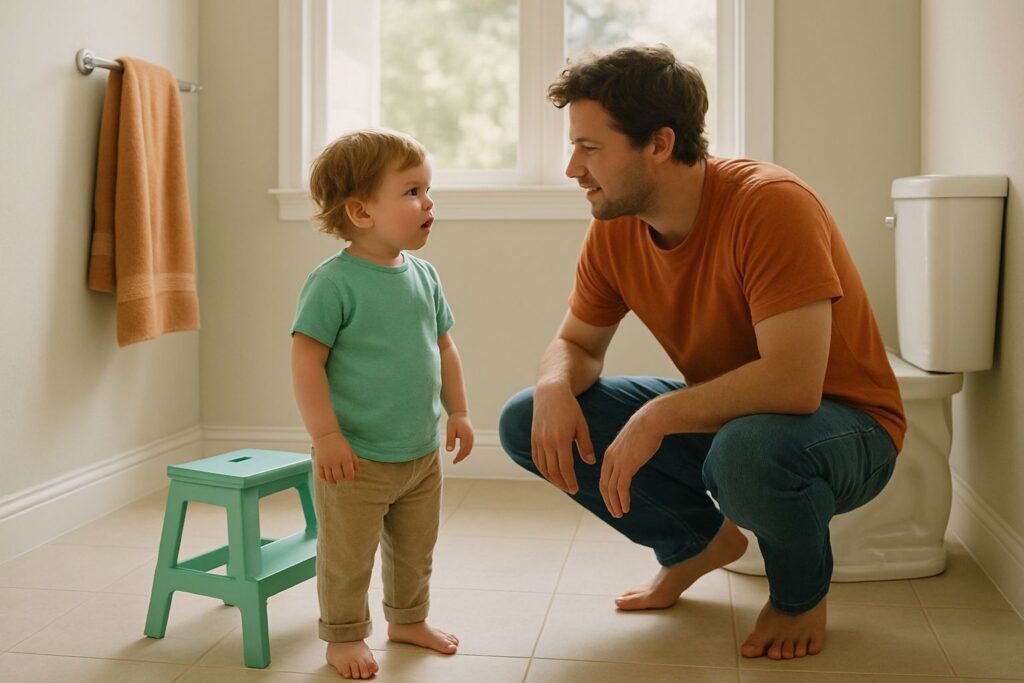
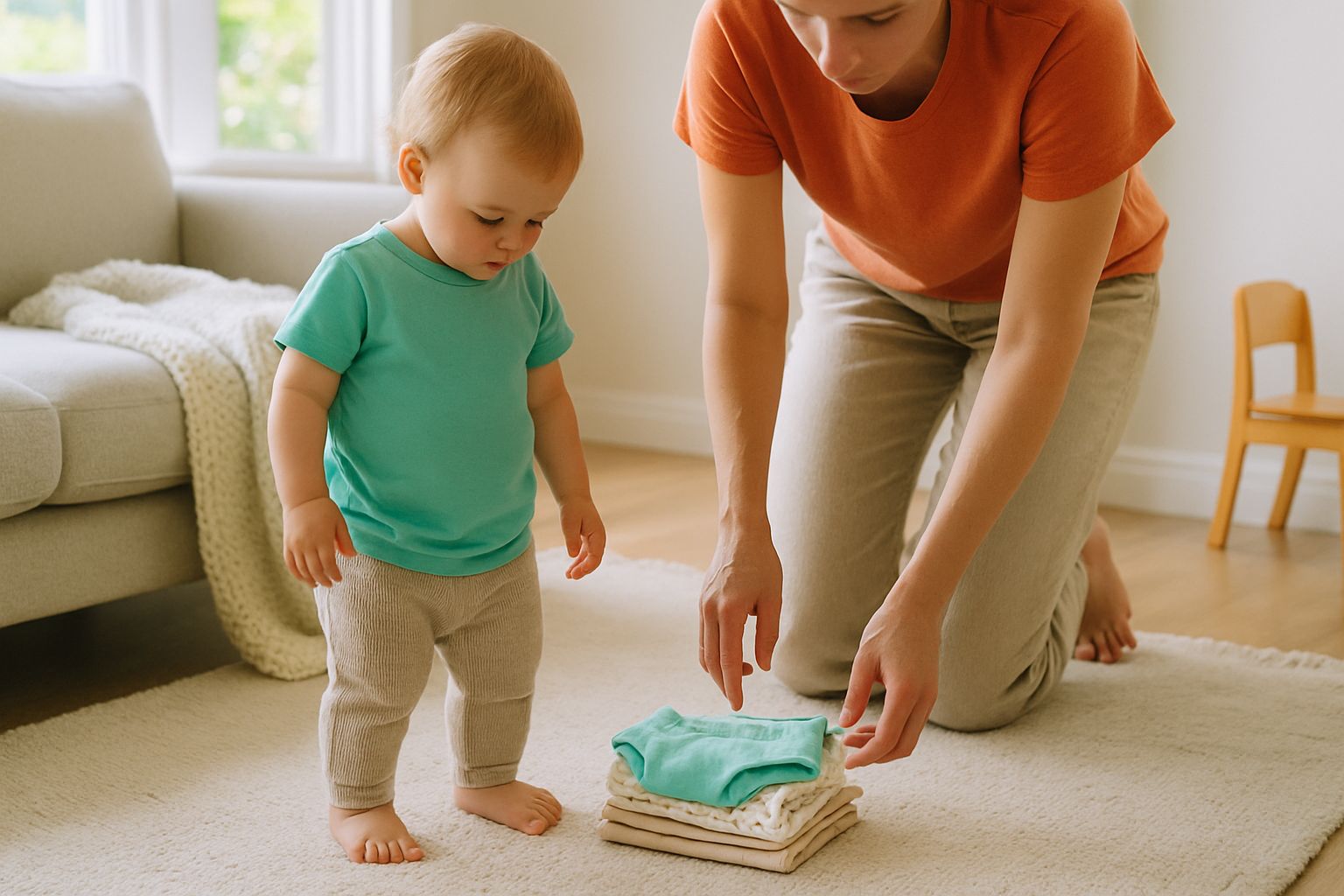
Before day one, have a potty such as the BabyBjörn Potty Chair, a toilet seat reducer such as the Munchkin Sturdy Potty Training Seat, and a step stool such as the Dreambaby Step Stool ready, since your child will likely move from the potty to the toilet partway through the week. Add at least 15 pairs of plain cotton underwear, not training pants, because a child feels wetness through cotton and does not feel it the same way through a padded training pant, which works against the whole point of the week.
Beyond that you will want something to protect the mattress and the sofa, a handful of small rewards for the early days, and pull-ups for sleep, since nighttime dryness is handled separately. For the full rundown with nothing missing, see the complete potty training checklist.
The one thing that matters more than any item on the list is your calendar. The first three days work best spent at home, with no errands, no visitors who will undo your consistency, and no pressure to be anywhere. That is the real requirement, more than any single product.
The Potty Training Box Method, explained in one paragraph
The Potty Training Box Method is a seven day program built around the child taking the initiative rather than the parent running a timetable. The first three days are spent at home, where the child learns the most, followed by short outings once the basics are holding. The child moves from potty to toilet over the course of the week, and instead of constantly offering the potty, the parent asks, will you tell me when you need to pee, so the child learns to recognize and announce the need themselves. The exceptions are a few fixed moments, before and after sleep and before leaving the house, both during the training and afterward.
The method is sold as The 7-Day Potty Training Video Course, roughly forty short videos of about three minutes each, grouped by day, walking a parent through what to do and what to expect, including the days that go badly. It includes a digital AI coach you can ask questions any time of day, along with printable tracking schedules, sticker cards, and a pee certificate and poop certificate you print at home once your child earns them.
Day by day: what happens from day one to day seven
No two children follow the week identically, but the shape of it is predictable enough to plan around. Here is what a typical week looks like, and what to actually do on day 1 in more detail if you want it.
| Day | What you do | What is normal that day |
|---|---|---|
| Day 1 | Diaper off at waking, cotton underwear on, potty kept in the main room you live in | Lots of accidents, almost no warning from the child |
| Day 2 | Keep asking, will you tell me when you need to pee, note any pattern in timing | Fewer accidents, first signs the child notices the feeling |
| Day 3 | Still home, introduce the toilet seat reducer and step stool alongside the potty | Pee improves faster than poop, which often lags a day or two |
| Day 4 | Ask less often, hand over more responsibility | Resistance and refusal are common, not a sign it is failing |
| Day 5 | Keep praise specific, stay patient with pushback | Often the hardest day of the week |
| Day 6 | First short outings, bathroom visit before leaving the house | Occasional accidents away from home are still normal |
| Day 7 | Longer outings, same questions and routine as at home | Most children are largely dry in the daytime by now |
By the end of the week, most children are telling you ahead of time most of the day, with occasional accidents still happening, especially when they are absorbed in play. That is still progress, not a setback.
Why day 4 or 5 is the hardest day, not day 2
Many parents brace for day two to be the hardest, but the real low point usually lands on day four or five, and it comes from a different cause than people expect. By then the child is not confused about what to do, they are tired of being asked the same question over and over, and that fatigue shows up as refusal, tantrums, or suddenly more accidents.
The fix is not to push harder. It is to ask less often and give your child more room to bring it up themselves. If you have been saying will you tell me when you need to pee every twenty minutes, stretch that out and let a few silences sit. Keep praise specific to what actually happened, you kept your pants dry all morning, rather than a generic good girl or good boy.
Accidents at this stage are still part of learning, not a sign the week has failed. For more on handling this particular slump, see why day 4 is the hardest day.
If an accident just happened and your child is upset about it, a short video together can help reset the mood before you both move on.
How often should you put your toddler on the potty?
Putting a toddler on the potty every fixed interval, like every twenty or thirty minutes regardless of what they are doing, is a different and competing approach, and it tends to slow down the handover to the child’s own signals rather than speed it up. The question worth asking instead is what your particular child’s pattern actually is, and that is what a tracking schedule is for.
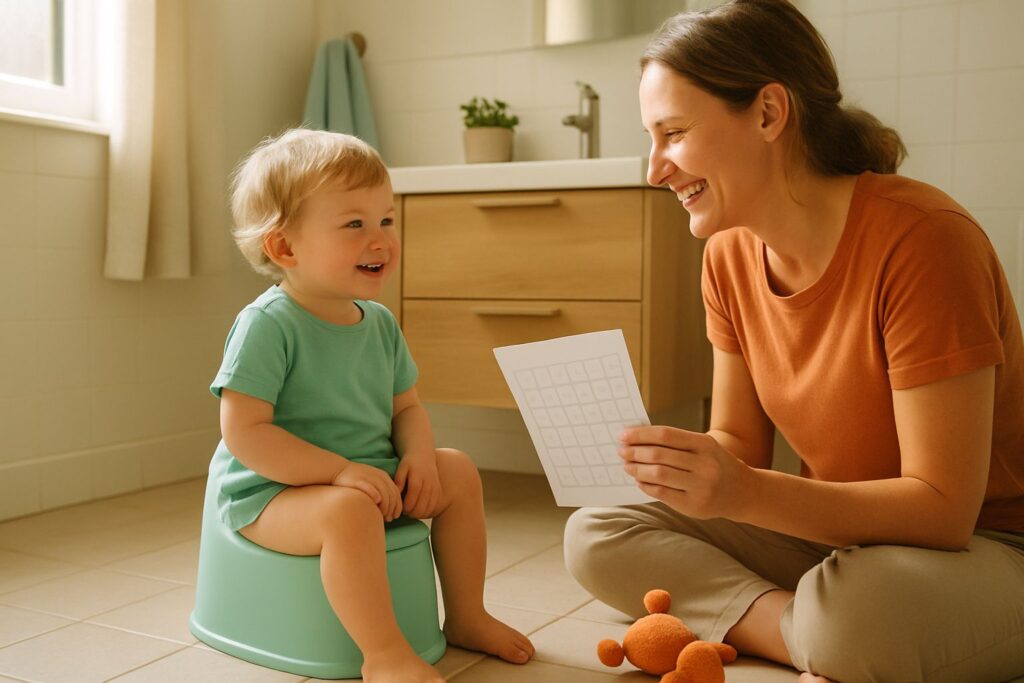
A tracking schedule records the time your child drank something, the time they sat on the toilet, whether nothing happened, and the result for pee and poop, marked green for a success and red for an accident, plus a notes column for anything else worth remembering. Patterns show up within a day or two once you have a few entries filled in.
| Column | What it tracks |
|---|---|
| Time of drinking | When your child had something to drink |
| Time on the toilet | When they sat on the potty or toilet |
| Nothing happened | Yes or no, a dry attempt |
| Pee | Green for success, red for an accident |
| Poop | Green for success, red for an accident |
| Notes | Anything else worth remembering |
One detail makes the schedule far more useful: let your child drink the cup in one go rather than in sips spread across the morning. Only then can you see how much went in and how long it took before they needed the potty, which is exactly the link between amount and timing the schedule is built to show you.
Outside of that, the only genuinely fixed moments are before and after sleep and before leaving the house, both during training and afterward. Everything else follows what the schedule tells you about this child, not a generic clock. For more on why timed sits can work against you, see why timed sits slow you down.
How to use rewards so the habit outlasts the stickers
Sticker cards in the method come in four sizes, 3, 5, 7, and 9 squares, used in that order rather than as one fixed card. The reward comes quickly at three squares so the child sees right away that the system works, then gets rarer as the squares grow, so the habit keeps going after the stickers taper off instead of stopping the moment they do.
Animal stickers and poop stickers give the child something to look forward to filling in, and a pee certificate and a poop certificate mark the end of the week as something worth celebrating. Praise works best when it names exactly what happened, you told me before you needed to go, rather than a vague good job, since specific praise tells the child precisely what to repeat.
What if it is not working? When to pause and try again later
If the week is clearly going badly, more accidents than successes, real distress, no sign of progress by day five or six, the method’s own advice is to stop and leave it a few weeks before trying again. A pause is not a failure, and a second attempt that starts once a child is genuinely ready usually goes faster than the first one did.
Children who are autistic, have Down syndrome, or are non-verbal are trained successfully with this same approach, usually over a longer stretch, by reading the child’s signals closely rather than waiting for them to say it in words.
Some things belong with a doctor or your child’s health clinic rather than with any potty training plan: ongoing constipation, a child who seems to be withholding stool, pain while peeing, or bedwetting that continues well past age six. Those are medical questions, and a structured program is not the right place to answer them.
Daycare, preschool and keeping it consistent outside the house
Daycare and preschool staff can usually mirror the plan if you tell them plainly what you are doing: cotton underwear, no training pants, the same question, will you tell me when you need to pee, and the same calm, no-big-deal response to accidents that you are using at home. Consistency between home and daycare is one of the biggest factors in how smoothly the week goes.
Pack a spare clothes bag, more than you think you need, and brief a grandparent or sitter the same way you briefed daycare. A five minute conversation about what to say and how to respond to an accident saves a confusing afternoon later.
Outings in the first week should stay short and always start with a bathroom visit before you leave the house. For car trips, a travel potty in the trunk covers most emergencies. Avoid sliding back into diapers for the sake of convenience during an outing, since that sends a mixed signal about what is expected now.
How this plan compares with the three-day methods you have read about
Approaches like Oh Crap! Potty Training and Potty Training in 3 Days share the same core idea with the Potty Training Box Method: diaper off, cotton underwear on, stay home for the first stretch, and let the child lead. Where they differ is mostly in pacing and promise. A strict three day framing can leave a parent feeling like something went wrong when day four turns out to be the hard one, when in fact that is simply how the week tends to unfold for a lot of families.
A full week with the hard days named in advance, rather than promised away, tends to match what actually happens more closely. If you want a closer look at how the popular books stack up against each other, see how the popular potty training books compare.
What a structured program adds over a free article or a book read once is a plan for what to actually do on day one, day two, and day three, including the days that go sideways, plus somewhere to ask a question when one comes up. The 7-Day Potty Training Video Course covers that same ground with short videos grouped by day and a coach you can message any time, which a static article or a book cannot offer once you have finished reading it.
Night dryness is handled on its own timeline and is not part of this week at all. If that is the question on your mind once daytime training is holding, see our guide to night potty training.
Frequently asked questions
What is the fastest way to potty train a toddler?
The fastest results tend to come from staying home for the first three days, putting your child in plain cotton underwear instead of a diaper, and watching for their own signals rather than sitting them on the potty on a fixed schedule. Most children who are genuinely ready are dry in the daytime within about a week using this approach. A child who is not yet showing readiness signs will not go faster no matter how structured the plan is, so readiness matters more than speed.
At what age should I potty train my toddler?
There is no single correct age. Many children show real readiness somewhere between 18 months and 4 years old, and the signs your child gives, such as noticing a wet diaper or staying dry for an hour or two, matter more than the number on the calendar. Starting before those signs appear usually means a longer, harder week rather than a faster one.
Is it normal for a 2 year old to not be potty trained?
Yes, this is completely normal. Many 2 year olds are still in diapers full time and show few or no readiness signs yet, and that is not a cause for concern on its own. If your 2 year old is not showing interest, it is usually easier to wait a few months and try when the signs are clearer rather than pushing early.
What is the 10, 10, 10 rule for potty training?
This is not part of the method described here, and it is not something we recommend, because it relies on timed sits rather than the child's own signals. Instead of a fixed interval rule, a tracking schedule records when your particular child actually goes, so you learn their pattern instead of imposing one on them.
How many days does potty training usually take?
Most children are dry in the daytime in about a week. Some manage it in as few as three days, and others take two to three weeks, particularly if they started before every readiness sign was in place. Night-time dryness is separate and typically comes later, sometimes much later.
Should my toddler wear a diaper at night during potty training?
Yes, nighttime dryness is a separate skill that develops on its own timeline, so pull-ups or nighttime diapers during sleep are normal and expected during and after daytime training. Daytime success does not predict when nighttime dryness will happen. For more detail on that separate stage, see our guide to <a href='https://pottytrainingbox.com/night-potty-training-guide/'>night potty training</a>.
Ready for the next step?
The 7-Day Potty Training Video Course walks you through this program in forty short videos, grouped per day, with a digital AI coach you can ask a question at eleven at night on day four. The full handbook comes with it as a PDF to read and print. Nothing is shipped, so you can start today.
Sources
This article was written with AI assistance and checked by Dustin van de Sande.