Potty Training a 2-Year-Old: Is She Ready, and How the Week Actually Goes

Yes, two is squarely inside the normal window for potty training, which typically runs from about 18 months to 3 years. Readiness, not age, decides when to start. Once a child shows the signs, most are dry in the daytime in about a week, though some take three days and others two to three weeks.
According to the American Academy of Pediatrics, signs of bladder and bowel control usually appear between 18 and 24 months, and in the United States toilet training on average begins somewhere between 2 and 3 years of age, with most children trained by 4. Age alone tells you almost nothing about an individual child, though. A 2-year-old who shows the signs below is ready. A 2-year-old who does not is better off waiting a few weeks than being pushed into a start that stalls.
How do you know your 2-year-old is ready?
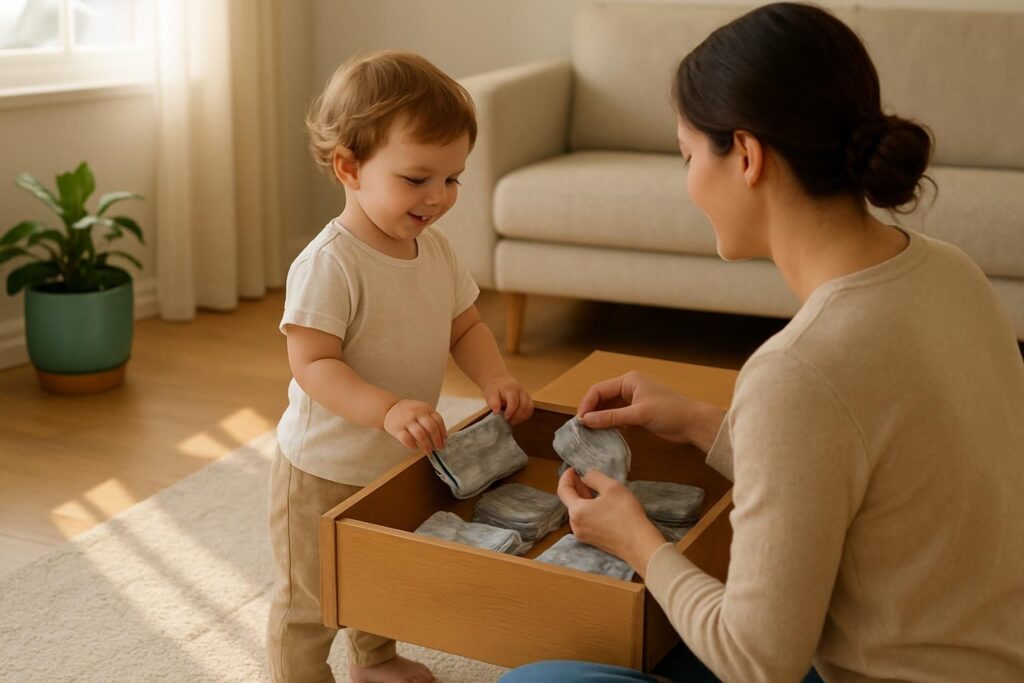
A toddler who is ready to potty train usually shows most of these signs at once, not just one of them in isolation.
- Stays dry for roughly an hour and a half to two hours at a stretch, rather than needing a diaper change every twenty minutes
- Notices a wet or dirty diaper and shows it, by tugging at it, telling you, or getting uncomfortable
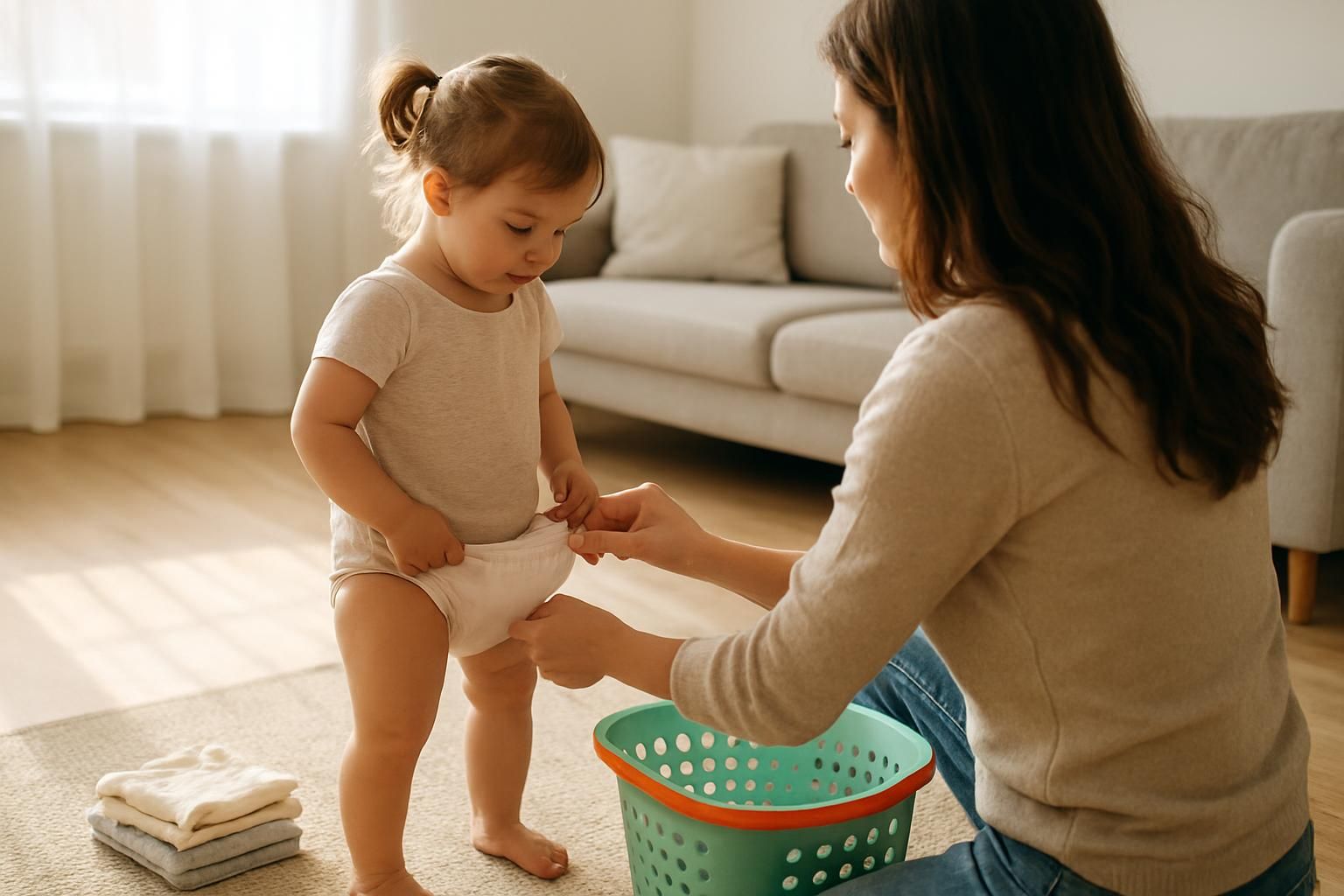
- Can pull pants up and down with a little help, and can walk to the bathroom and sit down on her own
- Shows curiosity about the toilet, or wants to come in and watch when you go
- Can follow a simple two-step instruction, like get the potty and sit down
Being able to say the words pee or poop helps, but it is not required. Plenty of toddlers train successfully before their vocabulary catches up, by pointing, grunting, or simply walking to the bathroom. If you want a clearer read on where your own child stands, the real signs your child is ready goes through each one in more depth.
Not sure whether what you are seeing adds up to readiness? A short readiness quiz can help you see it more clearly.
What to do first if she is scared of the potty or says no
If your toddler cries, runs off, or flatly refuses to go near the potty or the toilet, that is not stubbornness to push through. It means she is not ready yet, and the honest move is to back off and build familiarity first, then try again in a week or two.
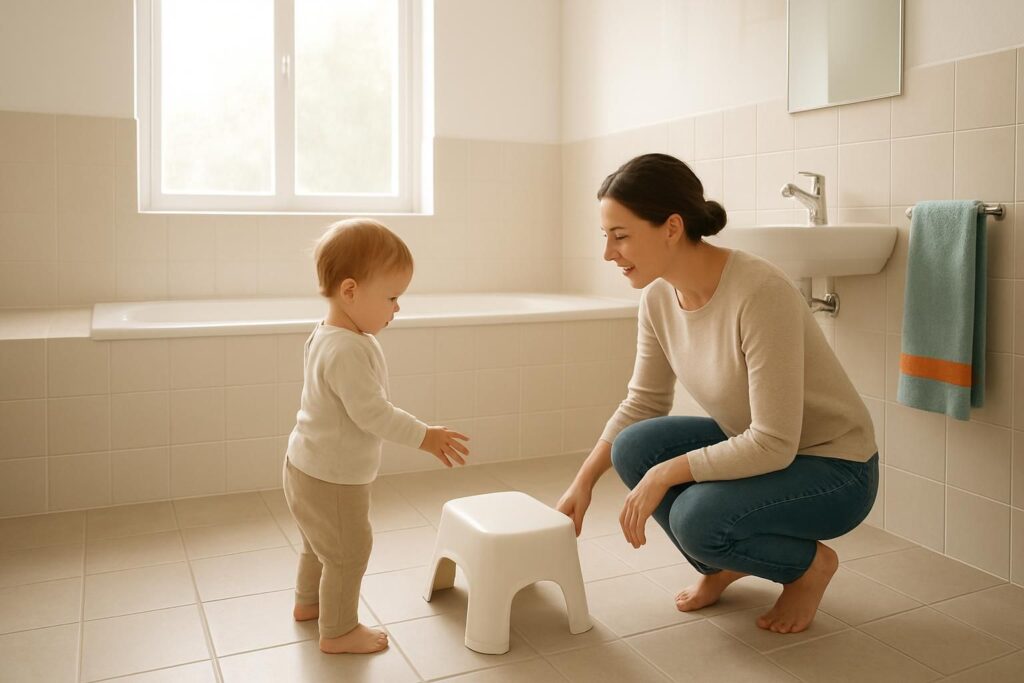
Building familiarity has no deadline attached to it. Keep the potty in the bathroom where she can see it without being asked to use it. Let her sit on it fully dressed while you brush your teeth. Read Potty together in there. Flush together and wave bye to the water. None of this is training yet, it is just making the room and the object ordinary instead of frightening.
Watching something together like the video above, where a child character works through the same hesitation, can take some of the pressure off without a single word from you. Never bribe her onto the potty, never hold her there, and never make her feel foolish for being scared. Fear fades with exposure, not with pressure.
What to have ready before day one
Before you start, it helps to have a few things on hand so you are not improvising mid-week: a potty for the first few days, a toilet seat reducer and step stool for the move to the big toilet, at least 15 pairs of regular cotton underwear, something to protect the mattress and sofa, a handful of small rewards, and pull-ups for sleeping only.
Use plain cotton underwear from day one, not training pants. A child feels wetness far less in a training pant, which is built to absorb like a diaper, and feeling it is exactly the point: it is what teaches her to notice and eventually to signal. Block out three clear days at home with nothing on the calendar, because the first three days are where most of the learning happens.
For the full list with nothing left off, the complete what-you-need checklist walks through it item by item.
As an Amazon Associate we earn from qualifying purchases. Some links in this article are affiliate links: if you buy through them we earn a small commission, at no extra cost to you, and it does not affect what we recommend.
| Item | Why you need it | Link |
|---|---|---|
| Potty | Low to the ground and easy to reach for the first few days at home | Ingenuity My Size Potty Pro |
| Toilet seat reducer | Makes the regular toilet feel stable and secure once you move off the potty | Frida Baby Drop Down Potty Training Seat |
| Step stool | Lets her climb up and down on her own, which matters for independence | Dreambaby Step Stool |
How the week actually goes, day by day
The first three days are spent entirely at home, because that is when a toddler learns the most: no car seats, no waiting rooms, no distractions pulling her attention away from her own body. Short outings come later in the week once she has had practice.
| Day | What you do | What to expect |
|---|---|---|
| Day 1 | Diaper off from the start, lots to drink, stay close and track what happens | Frequent accidents. This is normal and expected, not a sign it is not working |
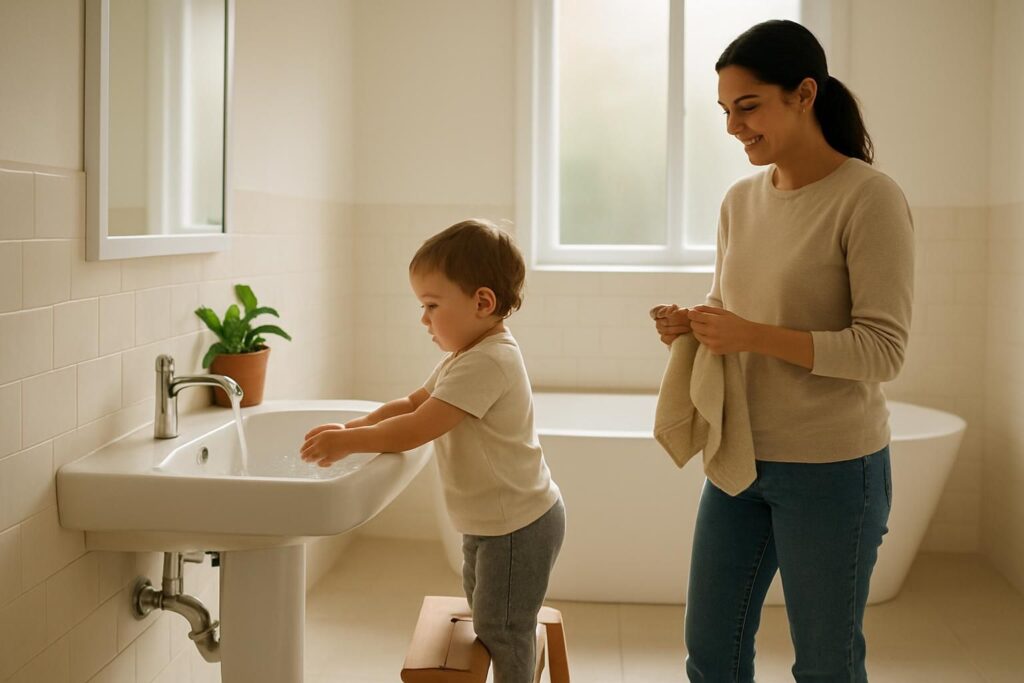
| Days 2 to 3 | Keep tracking, start introducing the toilet with the seat reducer and step stool | Fewer accidents, more moments where she gets to the potty in time |
| Days 4 to 5 | Ask less often, hand her more of the responsibility for noticing | Often the hardest stretch. She may push back or ignore the potty out of boredom with being asked |
| Days 6 to 7 | Short outings, 15 to 30 minutes at first, building up from there | Growing confidence away from home |
It is common to assume day two is the roughest day, but most resistance actually shows up on day four or five, once the novelty has worn off and the child is simply tired of being asked do you tell me when you need to pee every twenty minutes. The fix is not to push harder, it is to ask less and let her carry more of the noticing herself.
This staged approach, three days at home followed by short outings, moving from potty to toilet and working toward the child signalling on her own, is the shape of the Potty Training Box Method: a seven-day program that coaches a parent through each day in turn, including the days that go sideways. For more on how a popular competing approach plays out once the early excitement fades, how 3-day potty training really plays out after day 4 is worth a read. Night dryness is a separate skill that develops later and is not something any method promises on this timeline.
How often should you put her on the potty?
Instead of putting her on a timer, ask the question directly: do you tell me when you need to pee? The goal from the very start is the moment she tells you herself, not a schedule you impose on her.
There are a few fixed moments worth keeping even once training is well underway: before and after sleep, and before you leave the house. Outside of those, offering the potty on a fixed interval, every twenty or thirty minutes by the clock, trains you to watch the clock rather than training her to notice her own body. It can also create a habit that is hard to unwind later, because she learns to wait to be asked instead of learning to notice and say so herself.
Early on, offering the potty at natural moments, after a drink, after a nap, does create useful opportunities and gathers information about her timing. That is scaffolding, and it comes down quickly as she starts signalling on her own.
What the tracking schedule tells you about your own child
A tracking schedule is simply a record of what your particular child actually does and when, so you can read her patterns instead of guessing. A typical schedule has columns for the time she drank, the time she sat on the toilet, whether nothing happened, pee marked green for a success or red for an accident, poop marked the same way, and a notes column.
When you fill it in, have her drink the cup in one go rather than sipping it over an hour. That is the only way to see how much went in and how long it takes afterward before she needs to go, and that gap between drinking and needing to pee is exactly what the schedule is meant to reveal. It is a record of her timing, not a timetable you then impose on the next day.
In The 7-Day Potty Training Video Course, the tracking schedule, sticker cards, and certificates are included as printables you print at home as you go through the forty short videos.
Rewards that keep working after the first day
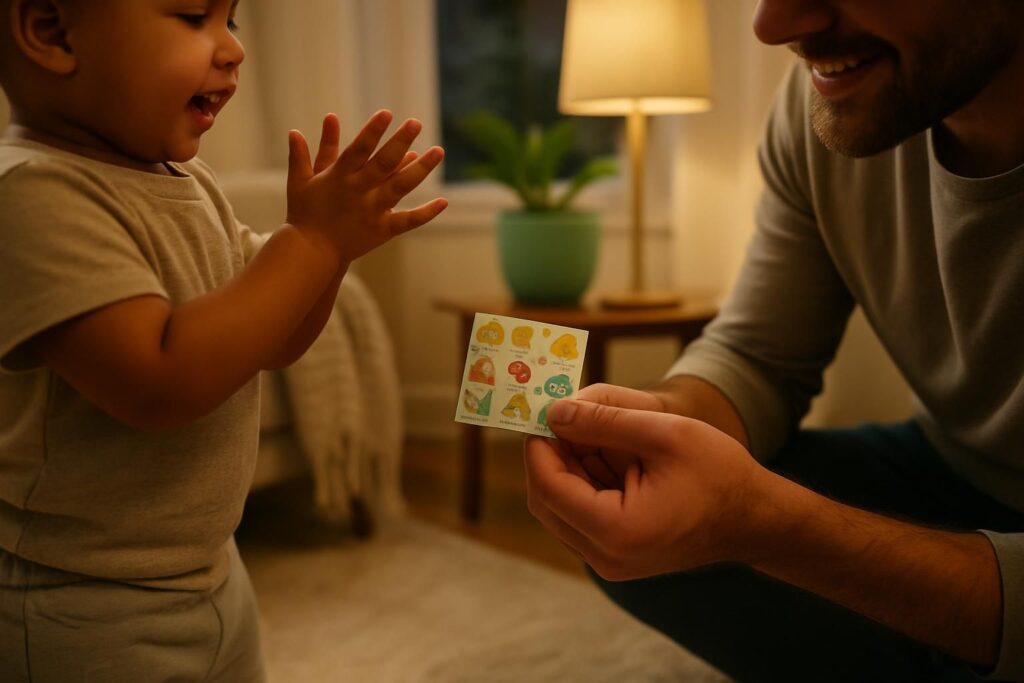
A flat sticker chart tends to lose its pull by day three. Sticker cards built in four increasing sizes, 3, then 5, then 7, then 9 squares, solve that by rewarding quickly at the start, when she needs to see that this works, and then spacing the reward out as she improves, so the habit outlasts the stickers instead of stopping the moment they do. For more on why an escalating chart beats a flat one, see why a sticker chart should get harder.
A pee certificate and a poop certificate at the end give the week a clear finish line worth celebrating. Day to day, small and specific praise, you did it, you told me in time, beats a big promised prize every time.
Accidents, resistance, and when to pause
Accidents are part of how a toddler learns this, not a sign that something has gone wrong. Clean up calmly and without comment, and move on. Making a big deal of it, in either direction, tends to slow things down rather than speed them up.
Resistance in the middle of the week, especially around day four or five, is usually a sign you are asking too often, not a sign you picked the wrong moment to start or the wrong child. Pull back on the asking and give her room to notice on her own.
If, after a genuine attempt, it still is not working, the honest move is to stop and leave it alone for a few weeks before trying again. That pause is part of the method, not a failure of it. If your child shows signs of constipation, withholds stool, cries with pain while peeing, or has repeated urinary symptoms, that belongs with a doctor or your child’s well-child clinic rather than with an article. If you find yourself comparing her to an older sibling or a friend’s toddler who trained faster, whether it is normal at 2 or 3 to still be in diapers is worth reading before you draw any conclusions.
What about a 2-year-old who is autistic, nonverbal, or developing differently?
The same general approach is used successfully with children who are autistic, have Down syndrome, or are nonverbal, usually over a longer stretch than a week and built around reading the child’s own signals rather than waiting for her to say so in words. Consistent routine and visual steps, the same potty, the same spot, the same simple sequence every time, tend to help more than verbal instruction alone.
The American Academy of Pediatrics has specific guidance on toilet training a child with a disability or developmental delay, and any concern about her broader development is a conversation for her pediatrician, not something to work out from an article.
Where to get the full day-by-day plan
If you want the whole week laid out for you rather than piecing it together, The 7-Day Potty Training Video Course covers the same seven-day plan in forty short videos of about three minutes each, grouped by day, along with a digital AI coach you can ask questions of at any hour. The tracking schedule, sticker cards, and both certificates are included and printed at home as you go.
Whatever you decide, the heart of it stays the same: watch for the signs, three clear days at home, less asking as the week goes on, and the goal always pointing toward the moment she tells you herself.
Frequently asked questions
Is it normal for a 2 year old to not be potty trained?
Yes. The American Academy of Pediatrics notes that toilet training in the United States typically begins somewhere between 2 and 3 years of age, with most children trained by 4, so a 2-year-old still in diapers is well within the ordinary range. What matters more than age is whether she is showing the specific readiness signs, not whether she has hit a particular birthday.
What is the best age to potty train?
There is no single best age. Readiness signs most commonly appear somewhere between 18 months and 3 years, and the right time for any individual child is when she shows most of those signs, not a set number on the calendar.
What are the signs of potty training readiness?
Look for staying dry for an hour and a half to two hours at a time, noticing and showing a wet or dirty diaper, being able to pull pants up and down with some help, curiosity about the toilet, and the ability to follow a simple two-step instruction. Being able to say the words helps but is not required.
What is the 3 day potty method, and does it work for a 2-year-old?
The 3-day potty method is an intensive approach that compresses most of training into three days at home. It can work for a ready 2-year-old, but many families find the real test comes after day three, when short outings and everyday life resume and old habits try to creep back in.
How long does it take to potty train a 2-year-old?
Most children are dry in the daytime in about a week once they show genuine readiness. Some manage it in as little as three days, while others take two to three weeks, and both are completely normal.
Should I use training pants or regular underwear for a 2-year-old?
Regular cotton underwear works better during active training, because a child feels wetness in cotton underwear far more than in a training pant, which is built to absorb much like a diaper. Training pants and pull-ups have their place for sleep, but daytime training goes faster when she can actually feel what happened.
Ready for the next step?
The 7-Day Potty Training Video Course walks you through this program in forty short videos, grouped per day, with a digital AI coach you can ask a question at eleven at night on day four. The full handbook comes with it as a PDF to read and print. Nothing is shipped, so you can start today.
Sources
- American Academy of Pediatrics, HealthyChildren.org (Signs of bladder and bowel control appear between 18 and 24 months, and toilet training…)
- American Academy of Pediatrics, HealthyChildren.org (Guidance on toilet training a child with a disability or developmental delay.)
This article was written with AI assistance and checked by Dustin van de Sande.