At What Age Should a Kid Be Fully Potty Trained? Day, Night, and Everything In Between

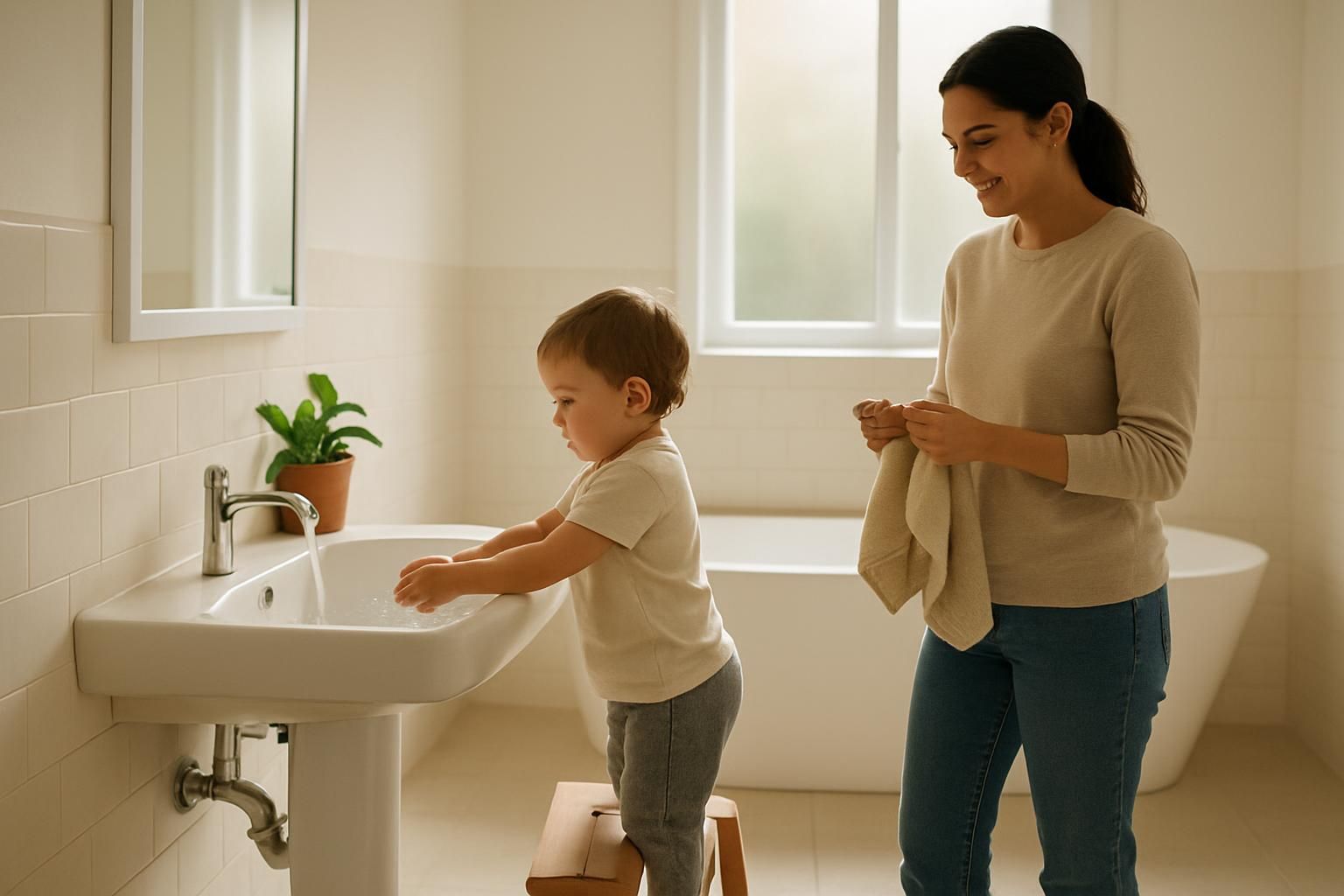
Most children are reliably dry and clean in the daytime somewhere between 2 and 3.5 years old, though the normal range is wide. Pooping on the toilet often lags behind peeing by weeks or months. Night dryness is a separate skill that usually arrives later, often between 4 and 6, and depends on physical development rather than training.
According to the American Academy of Pediatrics, toilet training in the United States typically begins between ages 2 and 3, and most children are fully trained by age 4. There is no single correct age on the calendar. A child who is physically and emotionally ready at 22 months and a child who is ready at 3 and a half are both right on time for themselves.
What does “fully potty trained” actually mean?
Fully potty trained means the child tells you they need to go, rather than you asking them on a schedule or catching accidents before they happen. That shift from parent-prompted to child-initiated is the real finish line, not a fixed number of accident-free days.
A child who is daytime dry but still has the occasional accident, especially when excited, sick, or in a new place, still counts as trained. Pooping on the toilet, needing help wiping, and managing the bathroom independently at daycare are separate layers that build on top of basic dryness, not requirements for the first milestone. Night and nap dryness are not part of the daytime definition at all. If you want the fuller breakdown of where that line actually sits, our page on what counts as potty trained walks through each layer.
Daytime, poop, and night: three timelines, not one
Treating potty training as one event is where a lot of the confusion starts. It is really three separate milestones, each with its own typical age range and its own driver.
| Milestone | Typical age range | Depends mostly on |
|---|---|---|
| Daytime dryness | 2 to 3.5 years | Bladder awareness and readiness signs |
| Pooping on the toilet | Often weeks to months after peeing | Comfort with the sensation, not resisting the urge |
| Dry at night | 4 to 6 years, sometimes later | Bladder capacity and a hormone-driven sleep signal |
Daytime dryness is usually the fastest piece once a child is ready, and most children are dry in the daytime in about a week of focused effort. Poop lagging behind pee by days or months is extremely common and not a sign anything has gone wrong; many children happily pee on the toilet while still asking for a diaper to poop in for a while. Night dryness is on its own clock entirely, governed by bladder capacity and a hormone that reduces urine production overnight, which develops on its own schedule. Pull-ups for sleeping are perfectly normal and expected while daytime training is underway.
Is 3, 3.5 or 4 too late to still be in diapers?
No. Plenty of children are not daytime trained at 3, and that alone is not a medical concern. Age ranges in guidance from the American Academy of Pediatrics are wide on purpose, because readiness varies more than birthdays do.
A child who is genuinely frightened of the potty or the toilet is not ready yet, whatever their age. The honest move is to build familiarity first, let them watch, sit on it clothed, flush it for fun, and start the actual training later. If that sounds like your situation, this short video is worth watching together before you try again.
There are a few things worth mentioning to a doctor or child health clinic rather than troubleshooting alone: ongoing constipation or stool withholding, pain when peeing, bedwetting that continues past age 6, or broader developmental concerns. Those are medical questions, not training ones, and deserve a medical answer.
If you are specifically wondering whether where your child is at 2 or 3 is within the normal range, our page on whether that is normal at 2 or 3 goes through it in more detail. Children who are autistic, have Down syndrome, or are non-verbal are also potty trained successfully, usually over a longer stretch and by reading the child’s own signals rather than waiting for them to announce readiness verbally, as the American Academy of Pediatrics notes for children with disabilities.
How do you tell your child is ready, whatever their age?
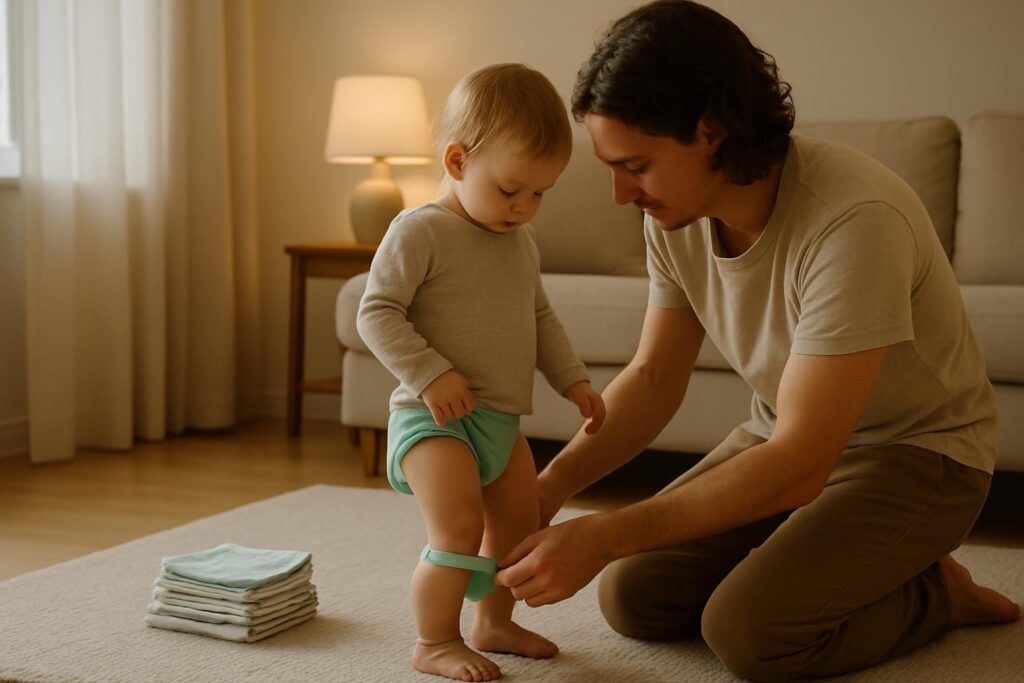
Readiness is a cluster of signs, not one single moment. Look for a child who stays dry for two hours or more at a stretch, shows awareness during or right after they go, shows interest in the bathroom or in wearing underwear, can pull pants up and down, and can follow a simple two-step instruction.
- Dry diaper for longer stretches during the day
- Tells you, or shows on their face, that they are going or have gone
- Curious about the toilet or potty, wants to watch others
- Can pull pants down and back up with little help
- Follows simple instructions, like “get the ball and bring it here”
Readiness beats the calendar every time. If a child is not showing these signs yet, waiting a few more weeks usually makes the whole process shorter, not longer. If you want a quick way to check where your own child stands, take the readiness quiz.
Why does the average age keep going up?
Several ordinary, non-worrying things push the average age later than it was decades ago. Modern disposable diapers are extremely absorbent, so a child feels wet much less than children did with cloth diapers, which delays the physical sensation that used to prompt early training. Daycare schedules, two working parents, and a general shift toward waiting for clear readiness signs instead of starting on a fixed birthday all play a part too.
None of this means parents who start later are doing anything wrong. It simply means the comparison to a parent’s or grandparent’s memory of “trained by 18 months” is comparing different diapers and different expectations, not different children. If the age anxiety is the real thing bothering you, our piece on the hardest age to potty train is worth a read.
Once your child is ready, how long does it actually take?
Once a child is actually ready, most children are dry in the daytime in about a week, with some managing it in as little as three days and others needing two to three weeks. A child who shows no readiness signs at all is better off waiting than being pushed through a week that will not stick.
The Potty Training Box Method is a structured seven-day program: the first three days are spent at home, where the child learns fastest with the fewest distractions, followed by short outings once the basics are solid. It moves the child from potty to toilet over the week and is built around tracking when this particular child actually drinks and goes, rather than running the child on a fixed clock. That tracking is what lets a parent read their own child’s timing instead of guessing.
Day 4 or 5 is usually the hardest day in that week, not day 2, because that is when a child typically starts pushing back against being asked constantly whether they need to go. The fix is to ask less often at that point and hand the child a bit more responsibility for noticing it themselves. We cover that stretch in more detail in why day 4 is the hardest. Accidents through all of this are part of learning, not a sign of failure, and if an attempt genuinely is not working, the method’s own advice is to stop and try again later rather than push through.
For parents who want the full day-by-day structure, The 7-Day Potty Training Video Course covers the same seven-day program across forty short videos grouped by day, with a digital AI coach available for questions at any hour, plus printable tracking schedules, sticker cards, and certificates you print at home.
What to have ready before you start
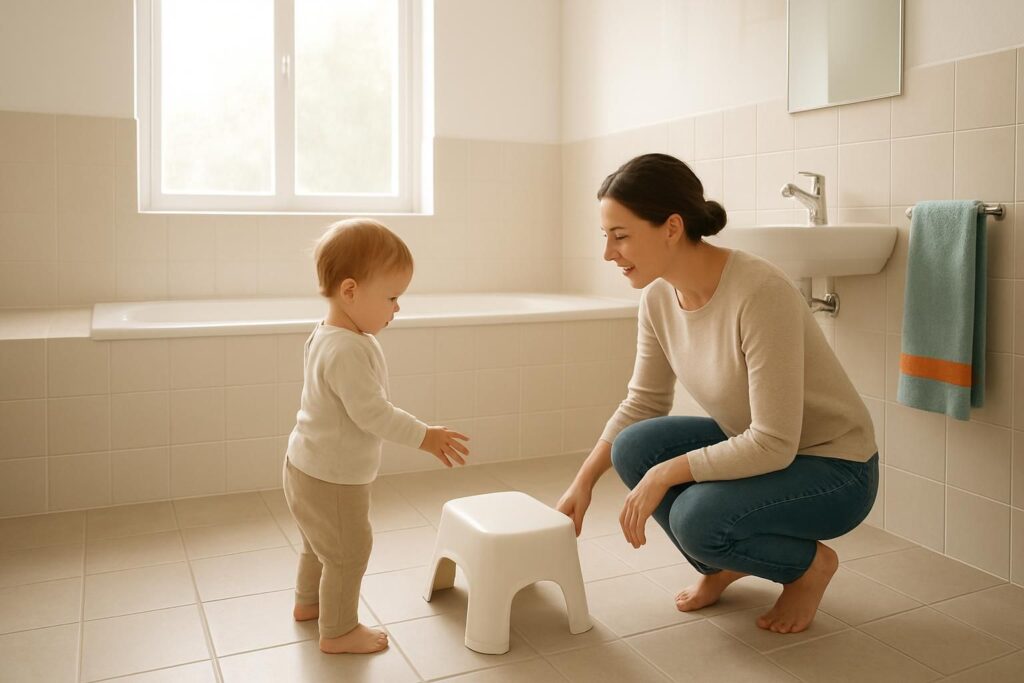
Have a few things ready before day one rather than scrambling mid-week: a potty for the first few days, a toilet seat reducer once you move to the toilet, a step stool, at least 15 pairs of cotton underwear, something to protect the mattress and sofa, a handful of small rewards, and pull-ups for sleeping. Cotton underwear matters more than it seems, because a child needs to actually feel wet to learn the signal, which is why the training works with regular underwear rather than thick training pants.
As an Amazon Associate we earn from qualifying purchases. Some links in this article are affiliate links: if you buy through them we earn a small commission, at no extra cost to you, and it does not affect what we recommend.
If you need to pick these up, a simple option is the Ingenuity My Size Potty Pro, 2-in-1 for the first few days, a Frida Baby Drop Down Potty Training Seat for the move to the toilet, and a Dreambaby Step Stool so your child can reach the sink and the seat on their own.
When should your child be dry at night, and what helps?
Night dryness arrives when a child’s body is ready, not when they are trained to be, and that is commonly somewhere between 4 and 6 years old, sometimes later. It depends on bladder capacity and an overnight hormone signal developing on its own timetable, which is a physical process rather than a habit a parent teaches.
A good sign that the night may be close is a run of mornings with a dry pull-up, several days in a row, without you waking the child to use the bathroom. Bedwetting that continues past age 6 is worth discussing with a doctor, according to guidance from the American Academy of Pediatrics and the National Institute of Diabetes and Digestive and Kidney Diseases, since there are straightforward things that can help. For the full approach to this stage, see our guide on how to night potty train.
Frequently asked questions
At what age should a kid be fully potty trained, including nights?
Daytime dryness is typically reached between 2 and 3.5 years old, while night dryness is a separate milestone that usually arrives later, often between 4 and 6. There is no single age that covers both, since night dryness depends on physical bladder development rather than training.
Is potty training harder for boys than girls?
There is no strong evidence that one sex is reliably harder to train than the other, and individual readiness varies far more than sex does. Some commonly cited patterns suggest boys sometimes start slightly later on average, but the range within each sex is wide enough that it rarely predicts one specific child.
What is the average age kids are potty trained in the United States?
According to the American Academy of Pediatrics, toilet training in the United States typically begins between ages 2 and 3, with most children fully trained by age 4. The exact age varies a lot by child and depends more on readiness signs than on a birthday.
Is it normal for a 3 year old to still be in diapers during the day?
Yes, it is common and not a medical concern on its own. Many children are not daytime trained at exactly 3, and the normal range given by pediatric guidance extends well past that age for children who simply were not showing readiness signs yet.
Why is my child dry during the day but still wetting the bed?
Daytime control and nighttime control are separate skills, and nighttime dryness depends on bladder capacity and a hormone-driven signal that develops on its own schedule, often well after daytime training is complete. This is expected and not something a parent failed to teach.
Were babies really potty trained earlier in the 1950s?
Many children were started earlier in previous decades, partly because cloth diapers made children feel wet sooner than today's highly absorbent disposables do, which encourages earlier readiness signs. It reflects a difference in diapers and daily routines more than a difference in children.
Ready for the next step?
The 7-Day Potty Training Video Course walks you through this program in forty short videos, grouped per day, with a digital AI coach you can ask a question at eleven at night on day four. The full handbook comes with it as a PDF to read and print. Nothing is shipped, so you can start today.
Sources
- American Academy of Pediatrics (healthychildren.org) (Toilet training in the United States typically begins between ages 2 and 3, and most ch…)
- American Academy of Pediatrics (healthychildren.org) (Children who are autistic, have Down syndrome, or are non-verbal are often potty traine…)
- American Academy of Pediatrics (healthychildren.org) (Bedwetting that continues past age 6 is worth discussing with a doctor.)
- National Institute of Diabetes and Digestive and Kidney Diseases (NIH) (Night dryness depends on bladder capacity and a hormone-driven signal that develops on…)
This article was written with AI assistance and checked by Dustin van de Sande.