Should You Put Your Toddler on the Potty Every 15 or 30 Minutes?


No, there is no fixed interval, not every 15 minutes and not every 30. A timer teaches your child to wait for the clock instead of noticing their own body. Instead, ask your child to tell you when they need to go, record when accidents and successes actually happen, and let that pattern guide you.
Timers are popular for an honest reason: nobody wants a puddle on the kitchen floor, and a timer feels like something concrete you can do. But a timer that rings every 15 or 30 minutes puts you in charge of the clock, not your child in charge of their own body. The goal of potty training is not a dry floor on a schedule, it is the moment your child says, unprompted, that they need to go.
There are two moments where a fixed check stays useful for good, and they never go away even after training is finished: before and after sleep, and before you leave the house. Outside of those two moments, the aim is to hand the timing back to your child as fast as you reasonably can. You can read more about why timed sits slow you down if you want the fuller picture before you start.
What happens when the timer runs the potty training week
A child who is sat down every 15 or 30 minutes learns to wait for the prompt rather than notice the feeling in their own body. That is the opposite of the skill you are trying to build, and it tends to show up later as a child who still needs reminding months into training.
Frequent timed sits also mean a lot of sits where nothing happens. An empty potty fifteen times a day gets boring fast, and a bored toddler starts squirming off, refusing to sit, or turning the whole thing into a fight. It also muddies your read on what is actually going on: if your child happens to go during a scheduled sit, you cannot tell whether that was a real signal or a lucky catch.
Resistance often peaks around day four or five of training, not day two as some guidance suggests. By then your child is often simply tired of being asked, over and over, whether they need to go. The fix is not more sits, it is fewer: ask less often and let your child carry more of the responsibility themselves. You can read more about resistance around day 4 if that sounds like where you are right now.
If you have been running a timer up to this point, nothing is broken. Plenty of parents start here because it is the advice that is easiest to find. You can hand the timing back to your child starting today, and the switch itself does not cost you any progress you have already made.
What to ask instead of setting a timer
Instead of offering the potty on a schedule, ask your child directly: “you tell me when you need to pee.” That single sentence shifts the responsibility onto your child, which is exactly where it needs to end up by the time training is done.
Say it less often as the days go on, not more. On day one you might ask frequently to build the habit of checking in. By day four or five, pull back and let longer stretches of silence sit there. A child who is still being asked constantly on day six has less reason to notice their own body, because someone keeps doing that noticing for them.
When your child tells you too late and there is an accident, treat it as information rather than a setback. It tells you that the feeling arrived and your child recognized it, just a little late, which is actually progress from not recognizing it at all. Note it, change into dry clothes without a fuss, and move on.
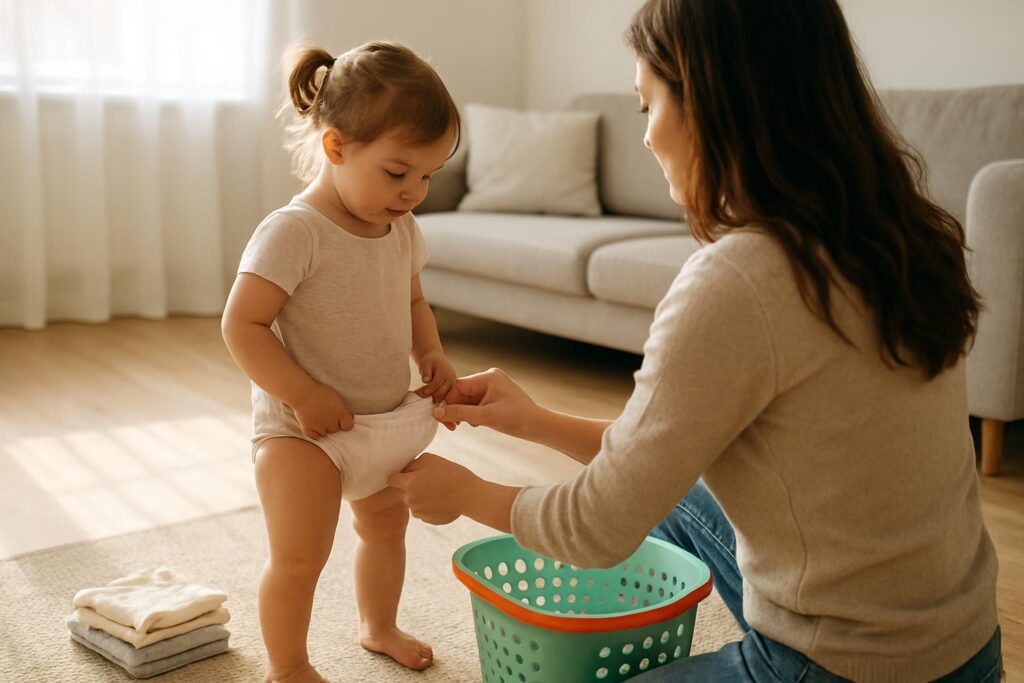
During this stage, skip training pants and go with diaper off and plain cotton underwear instead. A child feels wetness in cotton underwear in a way training pants are designed to prevent, and that feeling is exactly what teaches the body to recognize the sensation before it happens again. This matters more than it sounds: it is the physical feedback loop the whole week is built around.
How do you know when your child actually needs to go? Use a tracking schedule
A tracking schedule exists to record when this particular child actually goes, not to impose a timetable your child has to follow. Used correctly, it is the opposite of a timer: instead of deciding in advance when to offer the potty, you write down what actually happened and let the pattern tell you.
A typical tracking card has these columns: time of drinking, time on the toilet, whether nothing happened (yes or no), pee marked green for a success or red for an accident, poop marked the same way, and a notes column for anything worth remembering. Green means it worked, red means an accident happened, and neither one is a judgment on the day.
One detail makes the schedule far more useful: let your child drink a cup in one go rather than in sips spread across an hour. Only then do you actually know how much went in and how long it took after that for your child to need to pee. That link between quantity and timing is exactly what the schedule is meant to make visible, and sipping all day blurs it completely.
After a day or two of honest tracking, a pattern usually appears, for example that this child tends to need to go about 20 minutes after a full cup, or always right after waking from a nap. That pattern, not a generic interval, is what should guide when you offer the potty during this early phase. The 7-Day Potty Training Video Course runs on the same seven-day program grouped into roughly forty short videos, one set per day, with a digital AI coach that answers questions whenever they come up. The tracking schedules, sticker cards and certificates are part of the course and are printed at home as you go.
Timed sits vs. child-led potty training: what changes day by day
The two approaches look similar from a distance, offering the potty, dealing with accidents, but they differ in who decides when. The table below lays out where they split.
| Situation | Timed-sit approach | Child-led approach |
|---|---|---|
| Start of the day | Sit on waking, by the clock | Offer once, then watch for the child’s own signal |
| After a drink | Sit again after a set number of minutes | Check the tracking schedule for this child’s usual gap |
| After a meal | Sit on a fixed timer | Offer once, since a meal often triggers a need to poop anyway |
| Before leaving the house | Sit regardless of signals | Same, this is one of the two standing exceptions |
| After a nap | Sit immediately by rule | Same, the other standing exception |
| Mid-afternoon | Sit every 15 or 30 minutes | Ask “you tell me when you need to pee” and wait |
In practice, the first three days of training happen at home, where your child learns fastest without the distraction of being out and about, and short outings follow once things are settling down. This is the shape of the Potty Training Box Method: a child-led, reward-based approach that spends the first three days at home building the habit of signaling, then extends it to short trips out, moving the child from potty to toilet over the course of about a week.
Most children are dry in the daytime in about a week using this approach. Some manage it in as little as three days, and others take two or three weeks, which is still well within normal. Night-time dryness is a separate skill that tends to come later on its own and is not something any potty training approach promises on a timeline. For the full breakdown of what each day looks like, see the full day-by-day plan.
What about sitting after meals, or for poop?
A meal is genuinely a good moment to offer the potty, since many children’s bodies move toward a bowel movement shortly after eating. That makes it a sensible cue to offer, not a rule to enforce with a timer, and the difference matters: offering invites, enforcing creates resistance.
Keep any sit short and pleasant, a minute or two is plenty. A long sit teaches a child to dread the potty rather than use it, and a child who is bored or uncomfortable will start fighting the whole routine. If nothing happens quickly, let them get up and try again a little later.
Offer, do not insist. A child who is physically made to stay seated learns to associate the potty with being trapped, which works directly against what you are trying to build. If you notice your child holding stool back, straining, in visible pain, or showing other signs of constipation, that belongs with your child’s doctor or child health clinic rather than something to work through with a training schedule.
Is your child ready to lead this? Quick check
A few signs tend to show up together when a child is ready to take the lead on potty training: staying dry for longer stretches between diaper changes, noticing and reacting to a wet diaper, showing interest in the bathroom or in family members using it, being able to pull pants up and down, and being able to follow a simple two-step instruction.
Not sure where your child stands right now? A quick readiness quiz can help you see which signs are already in place.
A child who is genuinely scared of the potty or the toilet is not ready yet, and pushing ahead usually backfires. Build familiarity first with no pressure attached, let your child sit on it fully clothed, flush the toilet together, read about it, and start the actual training later once the fear has eased.
If an attempt stalls and your child seems to be fighting it at every turn, the method’s own advice is to stop and leave it alone for a few weeks rather than pushing through. That pause is part of the plan, not a failure of it. If signals are hard to read because your child is nonverbal or communicates differently, reading signals instead of waiting for words covers how that works in practice.
Rewarding the right thing: the moment your child tells you
The reward should land on the moment your child signals, not on hitting a scheduled sit. That keeps the praise tied to the actual skill you want to reinforce: noticing their own body and saying so.
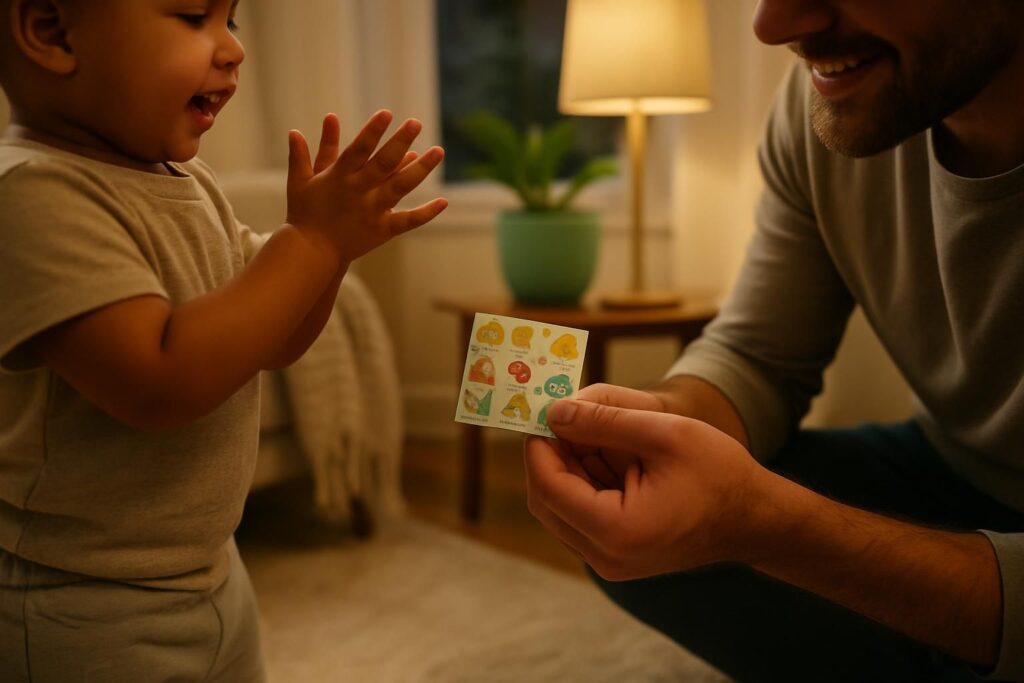
Sticker cards come in four sizes, with 3, 5, 7 and 9 squares, used in that order rather than as a single fixed card. The reward comes quickly at three squares so your child sees right away that it works, then grows rarer as the squares increase, so the habit outlasts the stickers instead of stopping the moment they do. A pee certificate and a poop certificate mark the finish, something your child can be genuinely proud of at the end of the week.
Celebrating a first real success, out loud and together, helps more than most parents expect. If you want to share that moment with your child, this one is made for exactly that.
What to have ready before you start
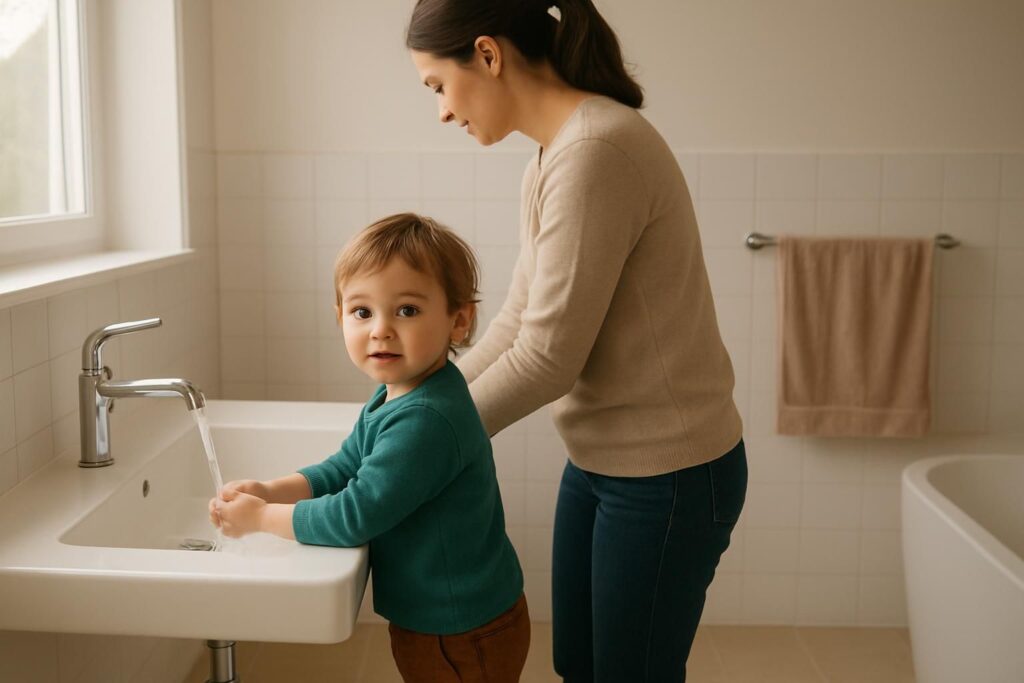
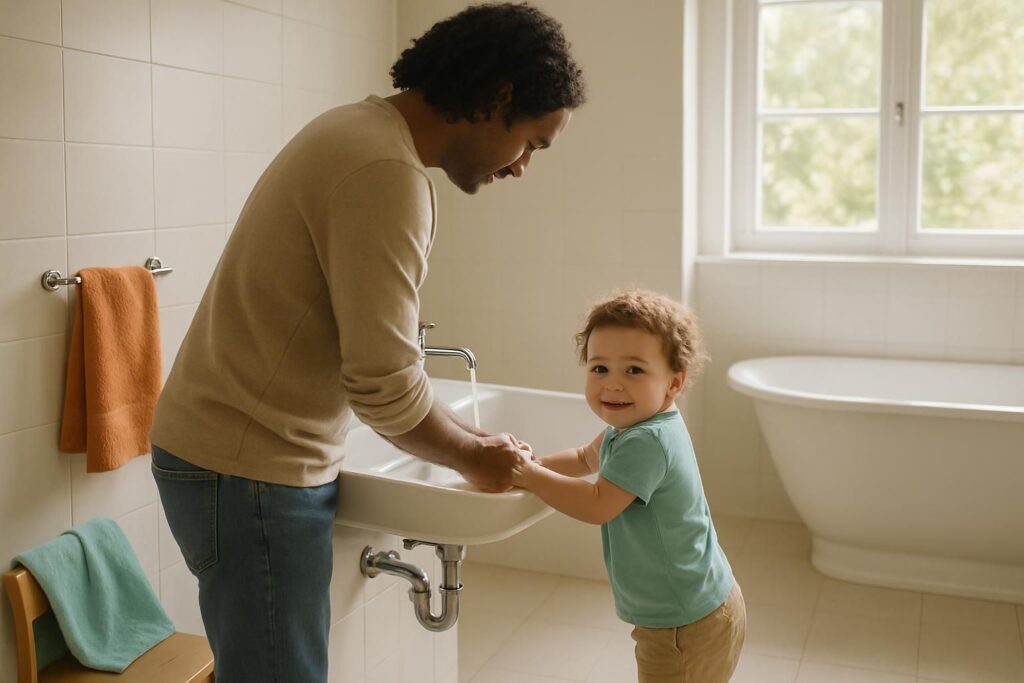
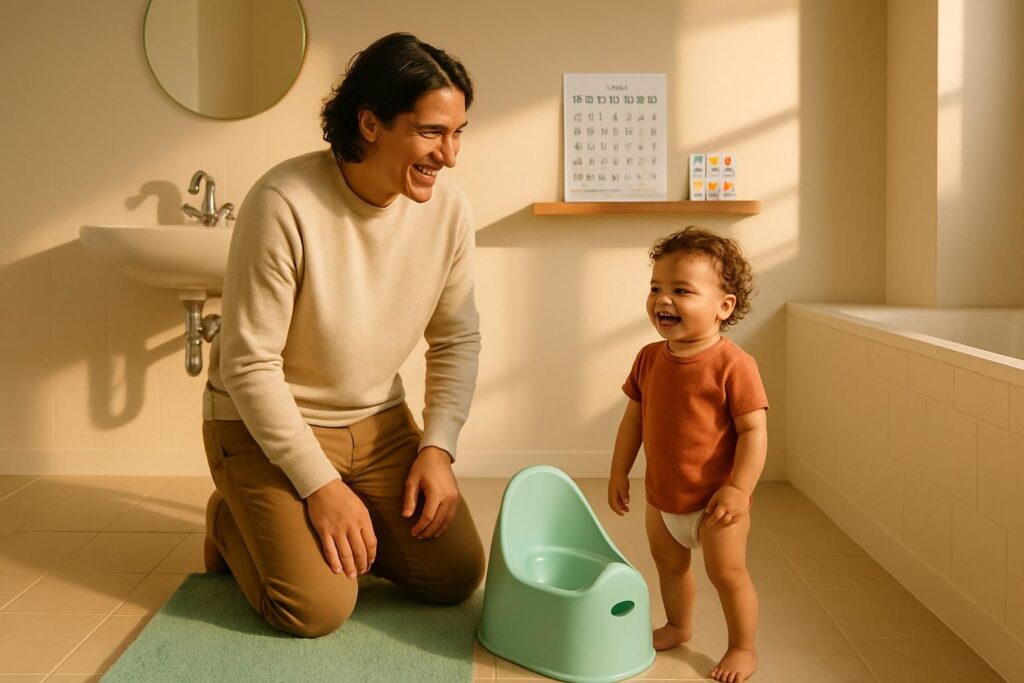
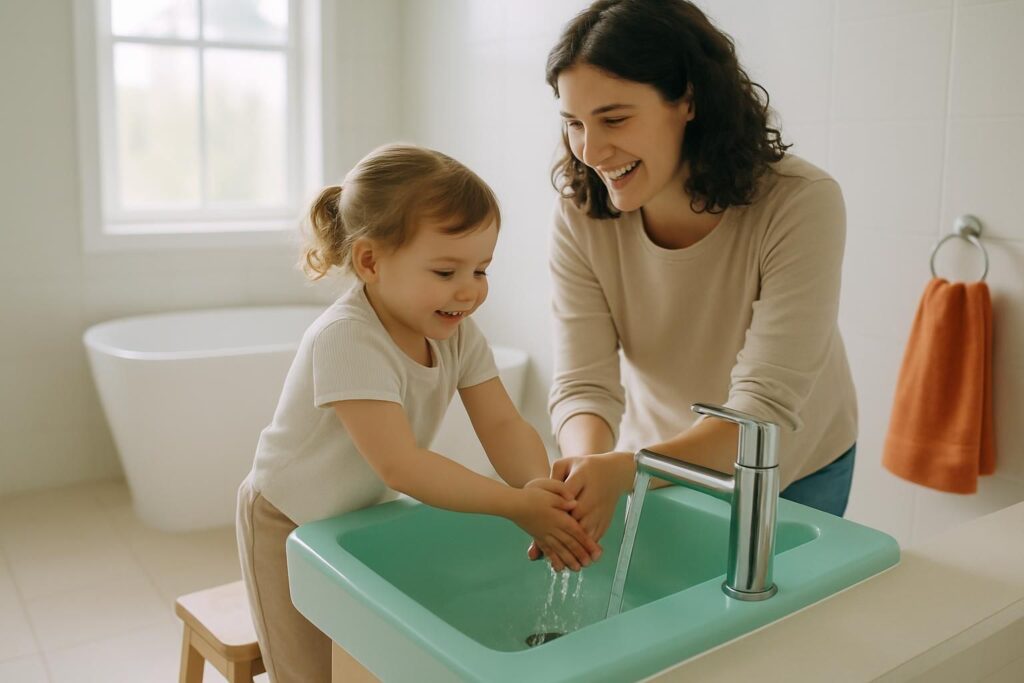
Before you begin, it helps to have a few things on hand: a potty for the first few days, a toilet seat reducer for when you move to the big toilet, and a step stool so your child can climb up and reach the sink independently. None of this needs to be elaborate, just within reach when the moment comes.
As an Amazon Associate we earn from qualifying purchases. Some links in this article are affiliate links: if you buy through them we earn a small commission, at no extra cost to you, and it does not affect what we recommend.
A BabyBjörn Potty Chair is a simple, low option that works well for the first few days at home, while a Munchkin Sturdy Potty Training Seat is a common choice once you move to the regular toilet. A small Dreambaby Step Stool lets your child climb up and reach the sink on their own, which matters more for independence than it might seem.
You will also want at least fifteen pairs of cotton underwear, since accidents are part of the process and you do not want laundry dictating the pace, plus something to protect the mattress and sofa while the week plays out. A handful of small rewards and a supply of pull-ups for sleeping round out what most parents keep nearby.
Once your child is doing well in the daytime, a few things tend to stall progress if you are not watching for them, including slipping back into timed sits out of habit. mistakes that stall a toddler covers the common ones worth avoiding as the week goes on.
Frequently asked questions
Is it better to potty train every 15 or 30 minutes?
No. A fixed interval teaches your child to wait for the clock instead of noticing their own body's signals, which slows down the skill potty training is actually trying to build. It works better to ask your child to tell you when they need to go, and to ask that less often as the days pass.
How often should my 2 year old pee during potty training?
There is no set number to aim for, and it varies from child to child, so it is not useful to train around a fixed frequency. A tracking schedule that records when your own child actually goes, over a day or two, will show you their real pattern far better than any general number would.
What is the 10, 10, 10 rule for potty training?
Some parents use this to mean sitting the child for ten minutes, waiting ten minutes, then repeating that ten times a day. It is not part of the Potty Training Box Method, because sitting your child on a fixed count still puts you in charge of the timing instead of your child, and the goal is for your child to tell you when they need to go.
My toddler seems to need to pee every 10 minutes. Is that normal?
A sudden pattern of very frequent urination, pain, or straining is worth mentioning to your child's doctor or child health clinic rather than working through on your own, since it can sometimes point to something other than normal training adjustment. If your child seems otherwise comfortable and this settles within a day or two, it is often just part of the early training days while the bladder habit is still forming.
Should I wake my child at night or set a timer for nighttime?
No. Night-time dryness is a separate skill from daytime training and tends to come later on its own, so the Potty Training Box Method does not promise it or build a nighttime schedule around it. Pull-ups for sleeping are the practical choice during this stage, and ongoing bedwetting that continues well past the early school years is worth discussing with your child's doctor.
How long should my toddler sit on the potty?
Keep it short, a minute or two is plenty, since a long sit teaches a child to dread the potty rather than use it. If nothing happens quickly, let them get up and try again a little later rather than waiting it out.
Ready for the next step?
The 7-Day Potty Training Video Course walks you through this program in forty short videos, grouped per day, with a digital AI coach you can ask a question at eleven at night on day four. The full handbook comes with it as a PDF to read and print. Nothing is shipped, so you can start today.
This article was written with AI assistance and checked by Dustin van de Sande.