Potty Training Videos for Toddlers: Which Ones Actually Help (and When to Watch Them)

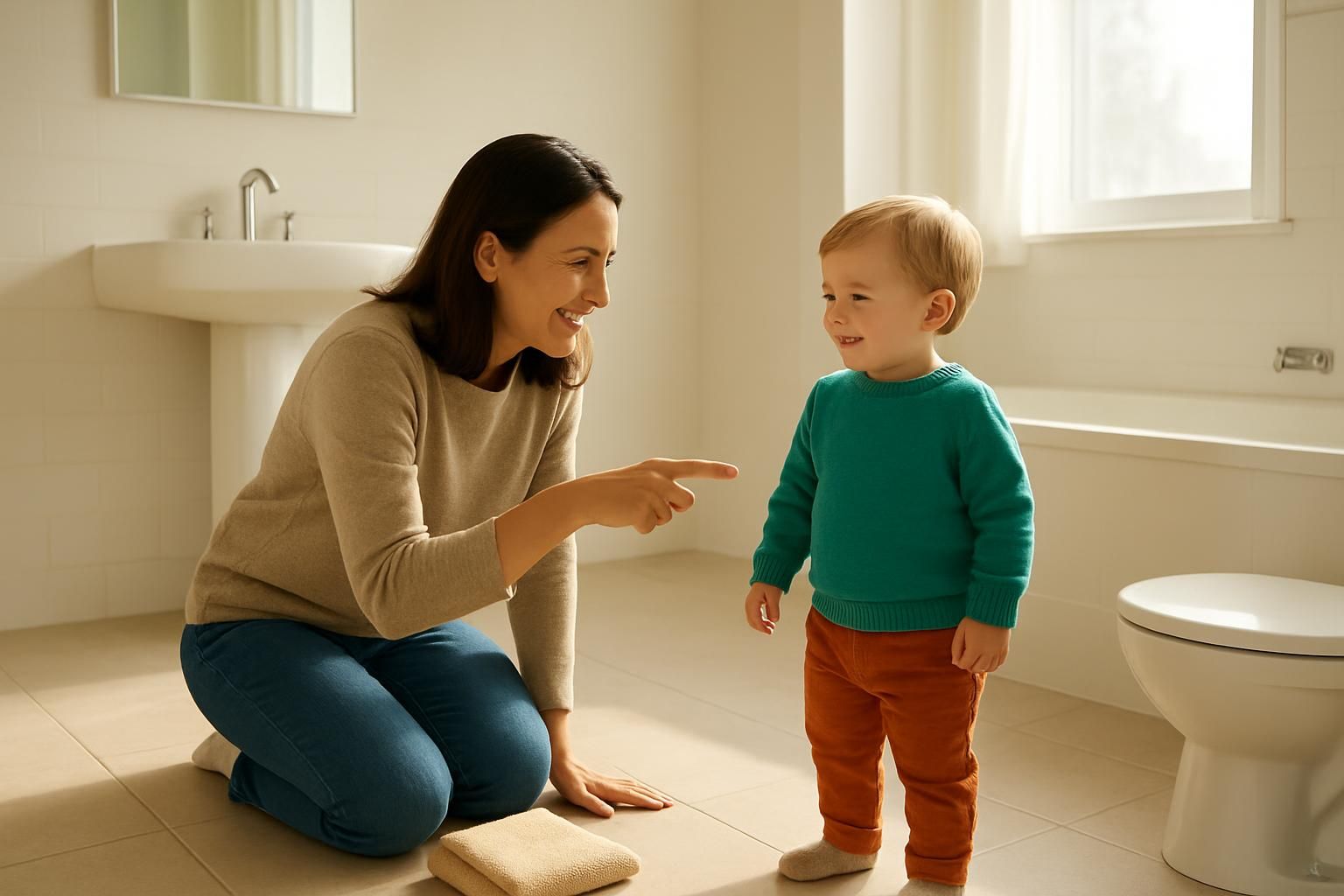
Yes, short potty training videos (2 to 5 minutes) can help a toddler by naming body signals and normalizing the toilet, but they work best watched together, not alone, and they cannot replace a day-by-day plan. Use story clips before you start, celebration clips after a success, and calm clips right after an accident.
A toddler’s attention holds for a few minutes, not an hour, which is why the videos that actually help are the short ones: a 2 to 5 minute clip aimed at children 18 months to 4 years old does its job and gets out of the way. A video can put words to a feeling your child has never named before, show a character pulling down their own pants, and make the whole idea of the toilet feel ordinary instead of strange.
What a video cannot do is replace you standing in the bathroom with your child, and it cannot make a frightened child feel safe after one viewing. It will not tell you when your particular child needs to go, and it will not run the week for you. Think of it as one small tool among several, not the plan itself.
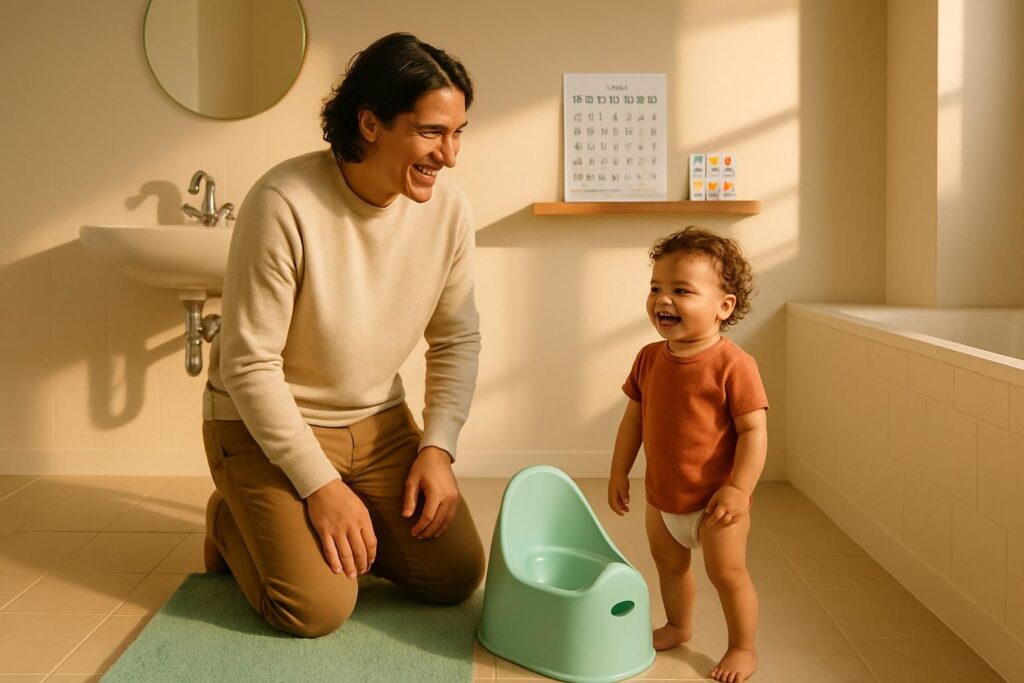
Watch it together and talk about it afterward: ask what the character did, point out that your child’s potty or toilet works the same way. Handing over a tablet and walking away turns a useful few minutes into just more screen time, and screen time choices are yours to make. Nobody is grading you on how many minutes your child watches this week.
What are some good potty training videos to watch with your toddler?
Good potty training videos for toddlers fall into three categories: short story clips made for the child, simple potty songs, and parent-facing instructional video, and knowing which is which matters more than any ranked list.
Story clips are the ones your child watches: a character feels the urge, finds the potty or toilet, and is proud afterward. Songs work the same way through rhythm and repetition, the way the familiar potty song from the children’s show Daniel Tiger’s Neighborhood has stuck in a lot of households for exactly that reason. Parent-facing instructional video is a different thing entirely: it is for you, not your child, and it walks through what to actually do, not just what the character does.
As an Amazon Associate we earn from qualifying purchases. Some links in this article are affiliate links: if you buy through them we earn a small commission, at no extra cost to you, and it does not affect what we recommend.
If your child responds better to a book at bedtime than a screen, Daniel Tiger’s Potty Time! covers the same ground on paper, which can be a calmer way to end the day than another video.
This site’s own Charlie clips sit in the first category: short videos made to watch with your child at a specific moment, not an endless series to leave running. One is for celebrating a first success.
Watch that one together right after your child’s first win on the potty, as a way to mark the moment rather than as background noise.
Be careful with YouTube’s autoplay. A single chosen 3-minute clip does a job and ends; an hour-long compilation that autoplays into the next thing and the next becomes passive screen time with no connection to what is actually happening in your bathroom. Pick the clip, watch it, and close the app.
When to watch each kind of video: before you start, during the week, and after an accident
The timing matters as much as the content. In the week before you start, short story videos build familiarity and vocabulary: your child hears the words pee, poop, potty and toilet in a low-stakes setting, before any of it is actually expected of them.
During the first three days at home, which is when what day 1 actually looks like is worth reading before you begin, save video for after a success, as a celebration, not as a distraction while your child sits. A video playing on the potty teaches a child to tune out their own body exactly while they are supposed to be learning to notice it.
Right after an accident, a short 2-minute clip that shows accidents happening to someone else can take the sting out of the moment and let you move on without a meltdown. Then you move on. It is not a reward for the accident, it is a reset.
A child who is genuinely frightened of the potty or the toilet needs familiarity first, through calm, repeated exposure, and a later start rather than a pushed one. That is not a failure of the plan, it is the plan working correctly: wait until the fear has worn off, then try again.
Videos for your child vs. a video course for you: what is the difference?
Videos made for your child are entertainment and familiarity. A video course made for you is a day-by-day plan, and the two solve different problems even when they share a screen.
The 7-Day Potty Training Video Course is built on the Potty Training Box Method, a seven-day, reward-based approach that starts with three full days at home and works toward the moment your child tells you themselves that they need to go, rather than you running them to the toilet on a schedule. The course itself is roughly 40 short videos of about three minutes each, grouped by day, plus a digital AI coach you can ask questions of at any hour. It also includes sticker cards, a tracking schedule and a pee certificate and poop certificate that you print at home as part of the course.
If your child is more interested in a story than a program, Noa’s Potty Training Journey (Ebook) follows one child through the same kind of week in picture-book form, something to read together rather than watch.
| Type of video | Best moment to watch it | What it actually does for you |
|---|---|---|
| Child story clip | The week before starting, or to celebrate a success | Builds familiarity and vocabulary, normalizes the toilet |
| Potty song | Anytime, as a light, repeatable ritual | Reinforces words and routine through repetition |
| Parent day-by-day course | Before and during the training week | Gives you the actual plan: what to do, and what to do when it goes badly |
What to watch for in a video before you press play
A video worth your child’s time runs under five minutes, shows the character saying they need to go rather than an adult parking them on a schedule, and treats an accident as no big deal. Those three things separate a useful clip from a time-filler.
- Length under 5 minutes for a toddler’s attention span
- Shows the character noticing and saying the need, not an adult imposing a time
- Shows regular underwear and pants coming down, not training pants, since cotton underwear lets a child actually feel wet in a way padded training pants do not
- Handles accidents calmly, without making them the joke
- Uses the same words you use at home (pee, poop, potty, toilet), so your child is not learning two vocabularies at once
- Nothing that shames a character or makes a scared character the punchline
If you are putting together what to have ready before the week starts, this is a good moment to look at what to have ready before you start, alongside whatever videos you choose.
Does your child even need this yet? Reading the signals first
A video will not tell you whether your child is ready, and age alone will not either. According to the American Academy of Pediatrics, signs of bladder and bowel control typically appear between 18 and 24 months, and most children in the United States start toilet training sometime between 2 and 3 years old.
- Stays dry for a couple of hours at a stretch
- Tells you, in words or gesture, that a diaper is wet or soiled
- Shows interest in the bathroom or in watching others
- Can pull pants up and down with some help
- Follows a simple two-step instruction
Not sure where your own child stands? A short readiness quiz is the fastest way to find out.
A child who is frightened or clearly not showing these signs should wait. Nothing about the plan expires: it keeps until your child is ready to start.
How watching turns into doing: the one question that replaces the clock
You do not sit your child on the potty every 20 or 30 minutes by the clock. Instead you ask one question, repeatedly, over the course of the day: will you tell me when you need to pee? That single habit is how child-led training actually works, and it is the opposite of a fixed schedule.
The tracking schedule is what makes that question answerable. It records the time your child drank something, the time they sat on the toilet, whether nothing happened, and the result for pee and poop marked green for a success and red for an accident, with a notes column alongside. Give your child a full cup to drink in one go rather than a few sips spread out, so you can actually see how long it takes afterward: that gap between drinking and going is exactly what the schedule is built to reveal.
The only fixed moments in the whole approach are before and after sleep, and before leaving the house, both during the training and afterward. Everything else follows your child’s own signals, not a timer.
Day 4 or 5 is usually the hardest day, more than day 2, because by then your child is often tired of being asked the same question and pushes back. The fix is to ask it less, not more, and hand a bit more responsibility back to your child. Read what happens on day 4 before you get there so it does not catch you off guard.
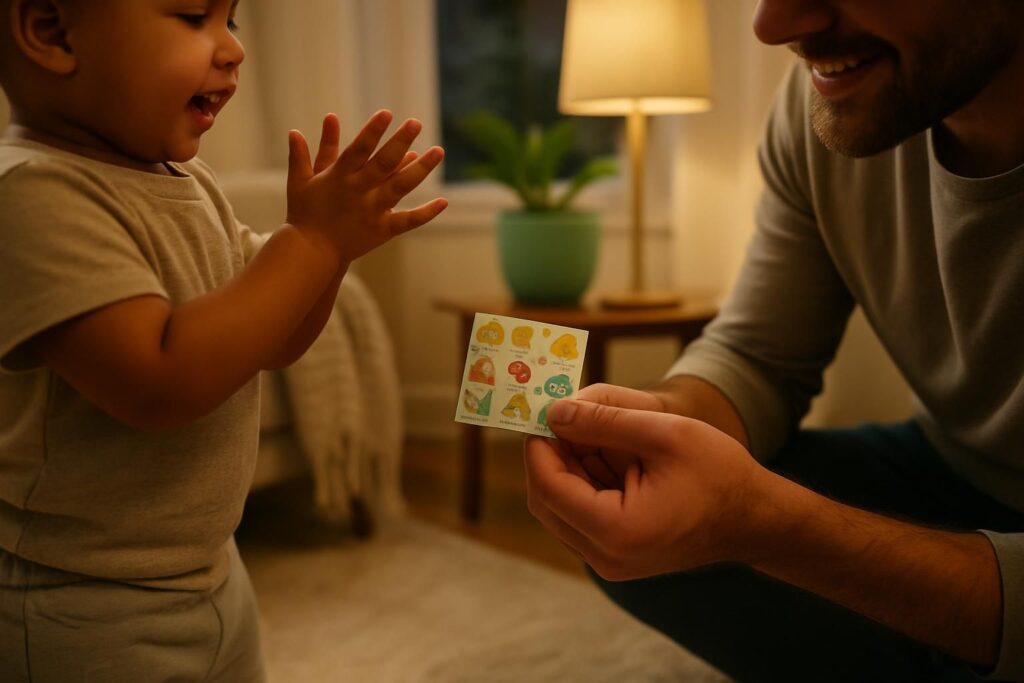
The sticker cards in the course build the same way: starting at 3 squares, then 5, then 7, then 9, so the reward comes fast at first and gets rarer as your child improves. That is deliberate, and why a sticker chart should get harder explains the thinking behind it.
What most “best potty training videos” lists leave out
Most roundup lists rank videos by popularity and never say when in the week to actually use one, which leaves a parent with a playlist and no plan. A clip that is perfect the week before starting can work against you if it is used as a distraction on the potty on day one.
They also tend to mix child entertainment with parent instruction without labeling which is which, so a parent ends up watching a cartoon looking for a plan, or handing their child a video meant for adults.
Children who are autistic, have Down syndrome, or are non-verbal are almost never mentioned, even though video modeling over a longer stretch, paired with careful reading of that child’s own signals, often matters more than simply being told what to do. The American Academy of Pediatrics has specific guidance for toilet training a child with a disability or developmental delay, and it is worth reading directly rather than guessing.
Most lists also skip the honest timeline. Most children are dry in the daytime in about a week on this kind of plan, some manage it in three days, and others take two or three weeks, which is normal, not a sign anything went wrong. Night-time dryness is a separate skill that typically comes later and is not something any video or program promises.
Frequently asked questions
What are some good potty training videos for toddlers?
The useful ones are short, under five minutes, and fall into two child-facing types: story clips where a character notices the need and uses the potty or toilet, and simple potty songs built around repetition. A parent course, by contrast, is instructional video meant for you rather than your child, and the two should not be confused.
Is it okay to let your toddler watch videos while sitting on the potty?
It is better avoided. A video on the potty distracts a child from noticing their own body signals, which is the exact skill this stage is trying to build. Save video for celebrating a success afterward instead of entertaining the wait.
Is there a potty training show for a 2 year old that actually helps?
Short, well-made clips and songs aimed at this age can build familiarity and vocabulary, and the potty song from Daniel Tiger's Neighborhood is a widely recognized example many families already know. No single show replaces a plan, so pair whatever your child enjoys with a clear approach for the actual week.
How long should a potty training video be?
Aim for 2 to 5 minutes for a toddler between 18 months and 4 years old. Anything longer loses attention, and an autoplaying compilation stops being a chosen activity and turns into passive screen time.
Can watching videos alone potty train your child?
No. Videos can build familiarity with the words and the idea of the toilet, but they cannot read your child's individual timing, cannot replace you being present in the bathroom, and cannot substitute for a day-by-day plan. Use them as one small piece alongside an actual approach, not as the approach itself.
Do videos help if your toddler is scared of the potty?
Calm, repeated story videos can help build familiarity over time, but a single viewing will not undo real fear. A child who is frightened of the potty or toilet needs more exposure first and a later start, which is a normal part of the process rather than a setback.
Ready for the next step?
The 7-Day Potty Training Video Course walks you through this program in forty short videos, grouped per day, with a digital AI coach you can ask a question at eleven at night on day four. The full handbook comes with it as a PDF to read and print. Nothing is shipped, so you can start today.
Sources
- American Academy of Pediatrics (HealthyChildren.org) (Signs of bladder and bowel control typically appear between 18 and 24 months, and most…)
- American Academy of Pediatrics (HealthyChildren.org) (Toilet training a child with a disability or developmental delay has specific guidance…)
This article was written with AI assistance and checked by Dustin van de Sande.