The Fastest Way to Potty Train a Toddler (And Why Timed Sits Slow You Down)

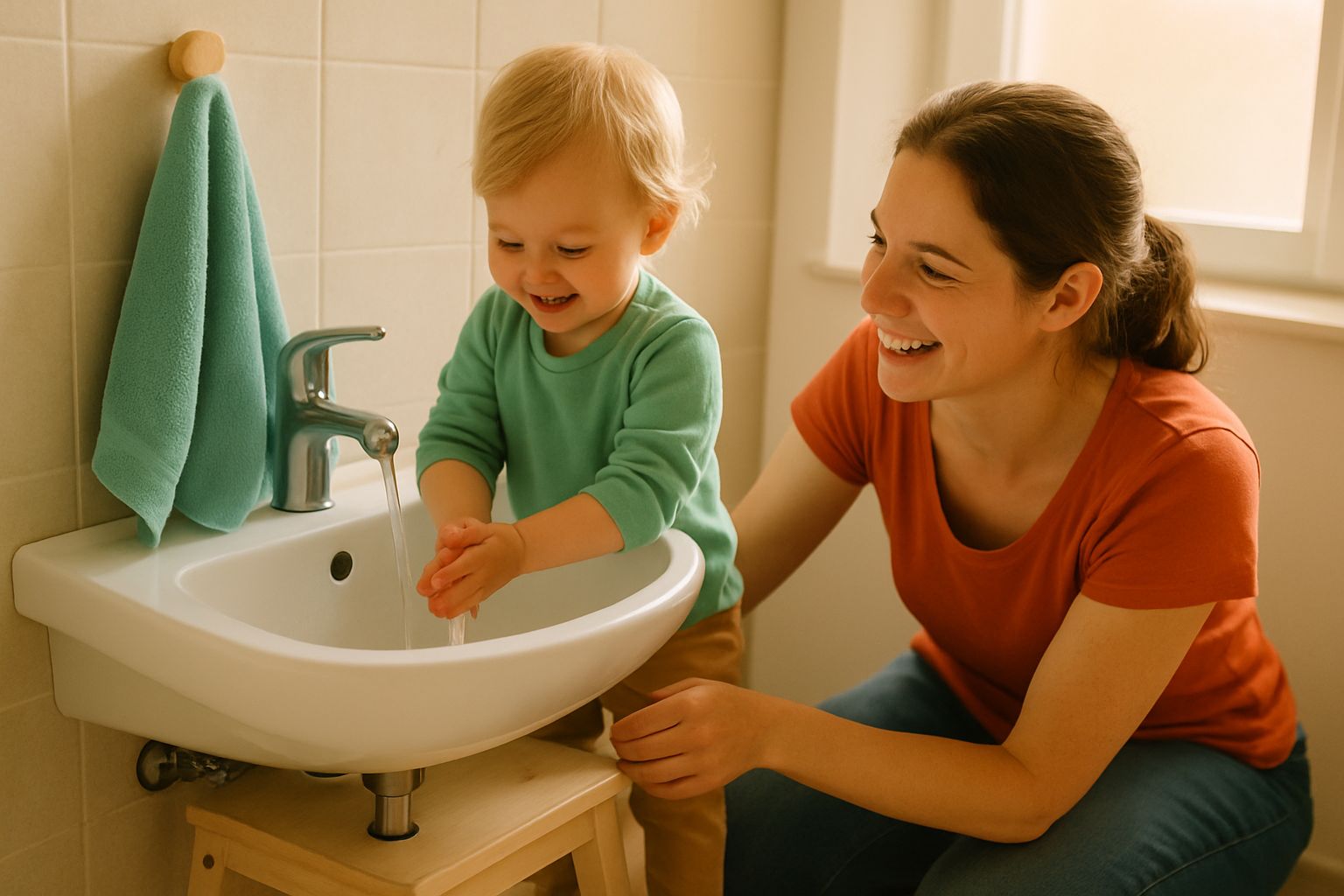
The fastest way to potty train a toddler is three focused days at home, out of diapers, while tracking when this specific child actually goes. Most children reach daytime dryness in about a week this way; some take three days, others two to three weeks. Speed comes from the child learning to signal their own need, not from an adult running the clock. A child who is scared of the potty or toilet should wait and try later.
The day by day program behind this approach is the 7-Day Potty Training Video Course, which coaches a parent through what to do each day, including the days that do not go well, with the full handbook included as a PDF.
Why the first three days at home do most of the work
Three days at home means no daycare drop offs, no car seat, no interruptions between the moment a child needs to go and the moment they get there. That uninterrupted stretch is what lets a parent notice a pattern in a single day instead of guessing over weeks.
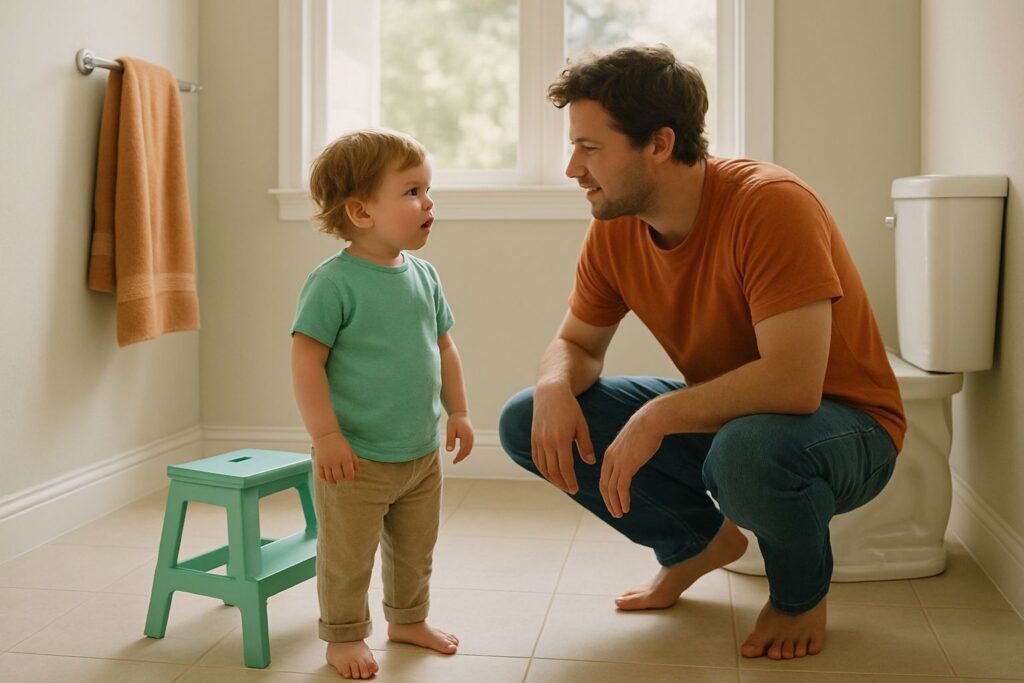
The potty is mostly used for these first three days. Once a child is reliably signaling and getting there in time, the Potty Training Box Method moves toward the toilet, with a toilet seat reducer and step stool so the child can climb up and feel steady without help.
Short outings follow only once a child is showing they can hold on and signal. A quick walk to the mailbox or a trip down the driveway on day three looks very different from a full day at the grocery store on day one.
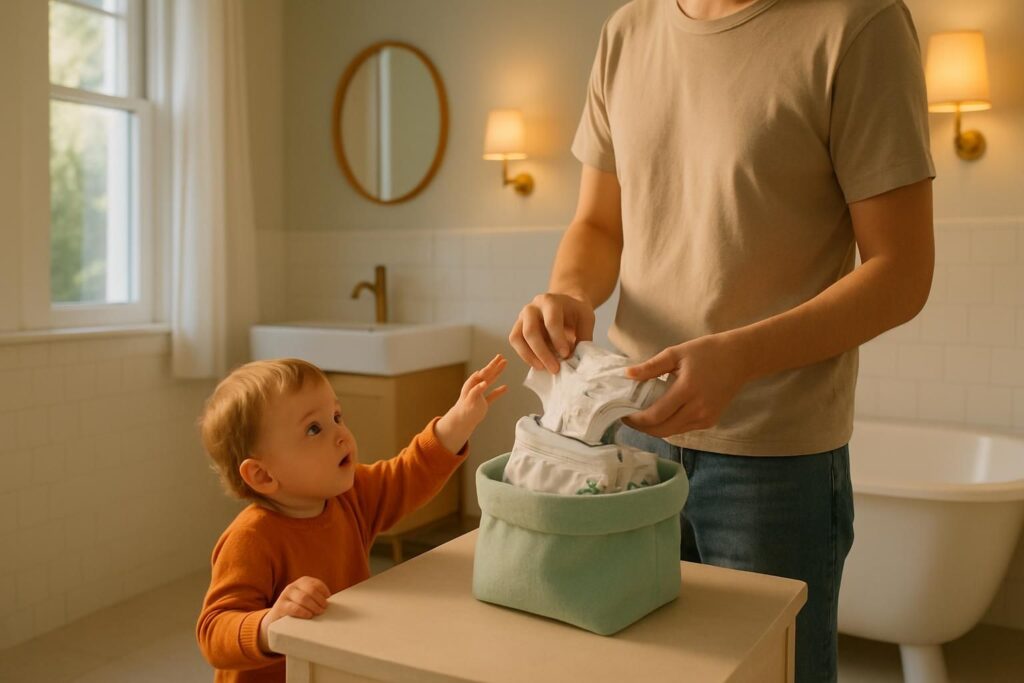
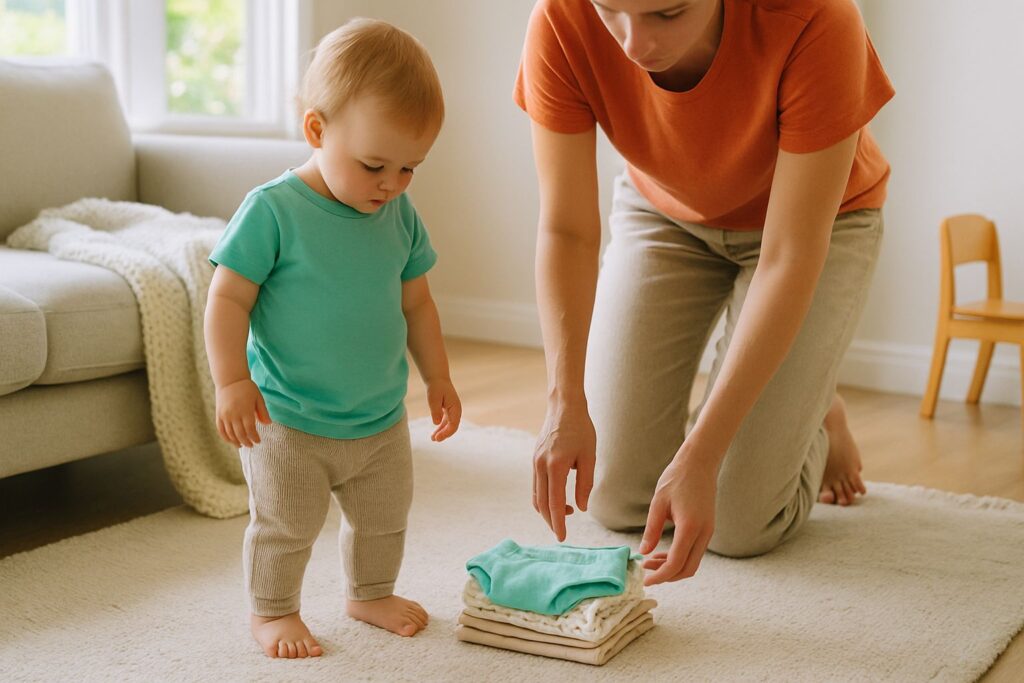
Accidents during this stretch are part of how the child learns, not a sign that something has gone wrong. A parent who plans for laundry rather than dreading it tends to stay calmer, and staying calm is part of what keeps the child relaxed enough to keep trying. Most families find at least 15 pairs of underwear necessary for the first week, since a wet pair goes straight in the hamper rather than back in rotation.
What is the 10, 10, 10 rule for potty training?
The 10, 10, 10 rule is popular parenting shorthand that some parents use to describe sitting a child on the potty for about 10 minutes, several times a day, over roughly 10 days of focused practice. It is a rough, informal idea that circulates among parents rather than a clinical guideline, and the exact numbers vary depending on who is describing it.
Long or repeated timed sits often turn the bathroom into a negotiation. A toddler who is told to stay seated until something happens tends to resist, delay, or simply disengage, which can slow progress rather than speed it up.
A short sit that ends when the child says they are done, paired with tracking of when the child actually goes, tends to work better. The goal is not minutes logged on a seat, it is information about this child’s own timing, gathered without a fight.
Is it better to potty train every 15 or 30 minutes? A better question to ask
Neither interval is the fastest route, because potty training by the clock teaches a child to wait to be told rather than to notice their own body. A fixed schedule of offering the potty every 15 or 30 minutes treats the parent’s timer as the signal, when the entire point of the method is for the child’s own body to become the signal.
Instead of offering the potty on a schedule, ask the child directly: will you tell me when you need to pee? Asking the question, rather than placing the child on the potty automatically, shifts the responsibility for noticing onto the child from the very start.
The only fixed moments worth keeping, during training and afterward, are before and after sleep and before leaving the house. Outside of those two situations, offering the potty on a strict interval is scaffolding, and scaffolding is meant to come down.
Early prompting in the first day or two is normal and useful. It should fade within a few days as the child starts announcing the need on their own, rather than becoming a permanent routine that continues for months.
Parents who stick with a fixed interval for weeks often report a plateau: the child sits when placed there and produces nothing, or waits for the next scheduled sit instead of speaking up between them. That pattern usually means the schedule has become the habit instead of the child’s own awareness.
How the tracking charts learn your child’s timing instead of imposing one
The tracking schedule in the program records what a specific child actually does over the first days of training, rather than telling the child what to do on a fixed timetable. Each chart uses the same columns, filled in as the day goes.
| Column | What the parent writes | Why it matters |
|---|---|---|
| Time of drinking | When the child had a full cup | Shows how long until they need to pee |
| Time on the toilet | When the child sat | Lines up sitting time with drinking time |
| Nothing happened | Yes or no | Rules out a false pattern |
| Pee | Green for success, red for accident | Shows what is working |
| Poop | Green for success, red for accident | Tracked separately from pee |
| Notes | Anything else noticed | Catches details a chart cannot |
The chart works best when the child drinks a full cup in one go rather than sipping it across an hour. A parent who lets the child sip slowly loses the link between how much went in and how long it takes before that child needs to go, and that link is exactly what the chart is designed to reveal.
None of this is a timetable imposed on the child. It is a record built from what this particular child actually did, which a parent then uses to offer the potty at the moments that matter and to stop offering it everywhere else. The parent has the cup, the potty, the toilet seat reducer and the step stool ready to use alongside it.
Why the reward system speeds things up instead of stalling at day four
The course includes 20 printable sticker cards in four sizes, 3, 5, 7 and 9 squares, used in that order as the child progresses. The reward comes quickly at three squares, so the child sees early on that the new behavior works, then becomes rarer as the child improves.
That build-up matters because a reward that never changes tends to stop motivating after a few days, while a reward that vanishes all at once can cause a step backward. A slowly lengthening card lets the habit outlast the stickers instead of stopping the moment the rewards do. A parent supplies a handful of small rewards of their own choosing to use alongside the cards.
What you need on the counter before day one
Before day one, it helps to have a potty, a toilet seat reducer, a step stool, at least 15 pairs of underwear, something to protect the mattress and sofa, a handful of small rewards, and pull-ups for sleeping all ready to go.
Parents who do not already own a potty should have it in the house and familiar to the child before day one starts, not bought that same morning.
Look for a sturdy potty with a removable bowl so cleanup takes seconds, like this one:
As an Amazon Associate we earn from qualifying purchases. Some links in this article are affiliate links: if you buy through them we earn a small commission, at no extra cost to you, and it does not affect what we recommend.
Clearing the calendar for three days matters as much as any item on the list. A weekend with visitors, travel, or a full daycare schedule folded into it works against the method rather than with it.
Night dryness is a separate matter that comes later and is not something a week of daytime training promises. Many children stay in pull-ups overnight for months after they are reliably dry during the day, and that gap is normal rather than a sign that daytime training did not work.
What to do when three days pass and nothing has clicked
The method’s own advice, when an attempt is not working, is to stop and leave it a while before trying again, rather than pushing through frustration on both sides. A pause is part of the method, not a departure from it.
Signs a child is not ready include fear of the potty or toilet, no interest in imitating a sibling or parent in the bathroom, and no ability to communicate needs at all yet. When fear is present, building familiarity first, letting the child sit on the potty fully dressed, watching others use the toilet, comes before another attempt at training itself.
A second attempt weeks or months later is normal and not a setback for the child or the parent. Many families try once, pause, and succeed fully on the second run once the child has grown a little more ready in the meantime.
Some situations belong with a doctor or child health clinic rather than a training method: constipation, a child holding in stool on purpose, repeated urinary tract infections, or bedwetting that continues past age 6. According to HealthyChildren.org, a resource of the American Academy of Pediatrics, bedwetting is common in younger children and typically resolves on its own over time, but a doctor should be involved if it continues well past age 6 or if it starts again after a long dry stretch.
The method is also used successfully with children who are autistic, have Down syndrome, or are non-verbal. These families usually work over a longer stretch than a week, reading the child’s own signals closely rather than waiting for the child to say the words out loud.
How the program lays out day one, day two and day three
The 7-Day Potty Training Video Course contains the same day-by-day program in forty short videos, with the full handbook as a PDF, 20 printable sticker cards in the 3, 5, 7 and 9 square sizes, a tracking schedule with a filled-in example, a pee certificate and a poop certificate, a preparation checklist, and a digital AI coach. Everything is printed at home rather than arriving in the mail.
It is the do-it-yourself version of the program and does not include community support. What it does include is a plan for what to do on the days that go badly, not only the days that go well, which is the part a free article rarely covers.
The method itself can be followed without buying anything: choosing three days at home, tracking a child’s own timing on paper, offering a full cup of liquid at once, and asking the child to say when they need to go rather than placing them on a schedule. The course exists for parents who want the day-by-day structure and the ready-made tracking charts and reward cards already laid out, rather than building all of it from scratch.
Frequently asked questions
What is the 10, 10, 10 rule for potty training?
The 10, 10, 10 rule is popular parenting shorthand describing a routine of sitting a child on the potty for about 10 minutes, several times a day, over roughly 10 days. It is not a clinical guideline and the exact numbers vary depending on who describes it. Long or repeated timed sits often turn the bathroom into a negotiation, which tends to build resistance rather than reduce accidents. A short sit that ends when the child is done, paired with tracking when they actually go, tends to work better and faster.
Is it better to put my toddler on the potty every 15 or 30 minutes?
Neither interval is the fastest route, because potty training by the clock teaches a child to wait to be told rather than to notice their own body. Instead of offering the potty on a schedule, ask the child directly, will you tell me when you need to pee, so they start doing the noticing themselves. The only fixed moments worth keeping, during training and afterward, are before and after sleep and before leaving the house. Early prompting outside those moments is scaffolding meant to come down within a few days, not a permanent routine.
What is the 3 day potty training trick?
The 3 day trick refers to spending the first three days entirely at home, out of diapers, so a child gets constant, immediate feedback about their body instead of a diaper absorbing the evidence. During those days a parent tracks when the child actually drinks, sits, and goes, which reveals that particular child's timing rather than a generic schedule. It is not a guarantee and does not work identically for every child, but many families see the bulk of the learning happen in this window. A child who is not showing any readiness signs yet is usually better off waiting than pushing through three difficult days.
Can you really potty train a toddler in a week?
Most children reach daytime dryness in about a week using a structured, tracked approach, though the range is wide: some manage it in three days and others take two to three weeks. Night dryness is a separate skill that typically comes later and is not part of what a week of daytime training promises. A child who is not developmentally ready yet should wait rather than start on a deadline. Progress that stalls after a few days is common and usually means pausing and trying again later, not that the child has failed.
Is age 3 too late to potty train?
Age 3 is not too late. According to the Mayo Clinic, most children show signs of being ready sometime between 18 months and 3 years, and readiness depends more on the individual child's signals than on a specific birthday. What matters more than age is whether the child stays dry for stretches, shows interest in the bathroom, or tells a parent after an accident has already happened. A pediatrician or child health clinic can help if there is a specific concern about delay rather than simple variation in timing.
Is it normal for a 2 year old to not be potty trained?
Yes, it is entirely normal for a 2 year old to still be in diapers. The Mayo Clinic notes that readiness for potty training commonly develops between roughly 18 months and 3 years and varies from child to child. Comparing one toddler's timeline to another's, including a sibling's, rarely predicts anything useful. If a parent has concerns about a specific developmental delay rather than ordinary variation, that is a conversation for a pediatrician or child health clinic.
Ready for the next step?
The 7-Day Potty Training Video Course walks you through this program in forty short videos, grouped per day, with a digital AI coach you can ask a question at eleven at night on day four. The full handbook comes with it as a PDF to read and print. Nothing is shipped, so you can start today.