Potty Training an 18-Month-Old: Too Early, or Just Right?

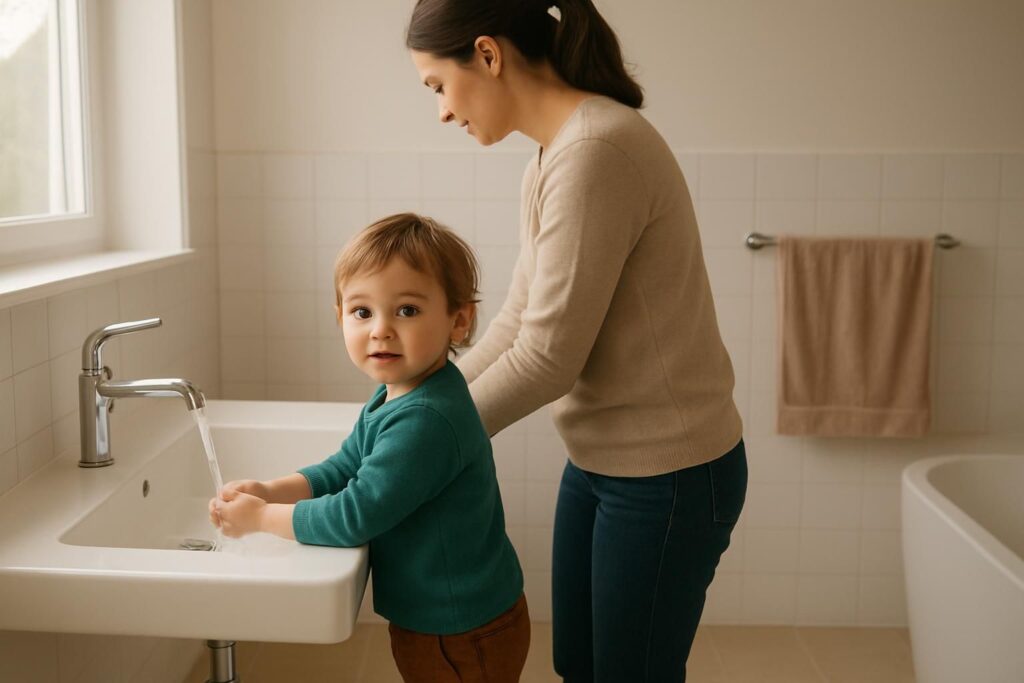
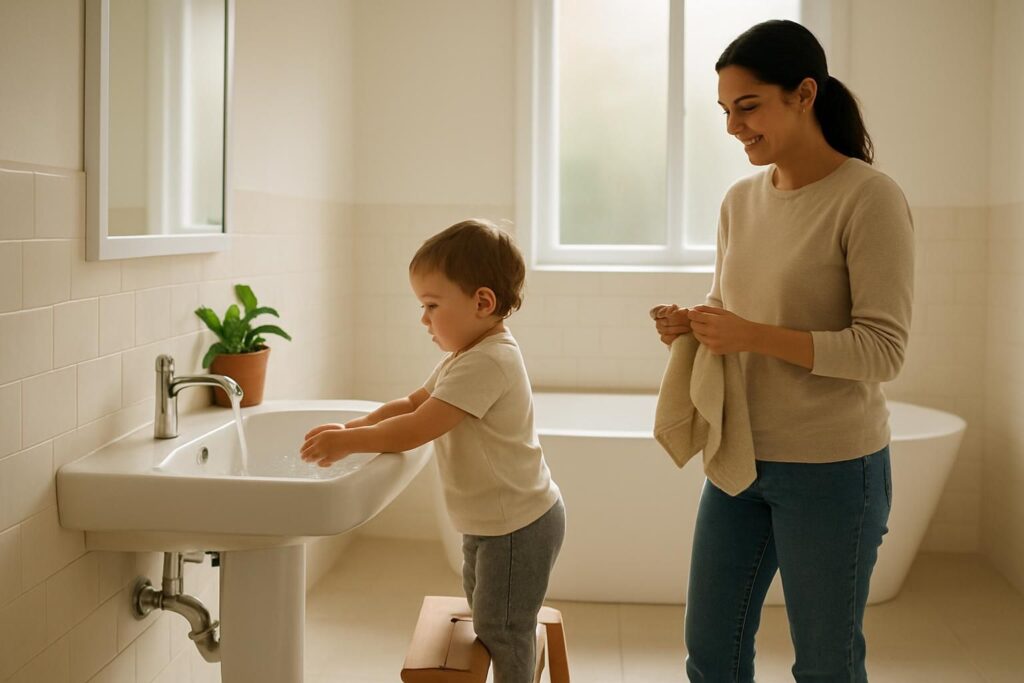
For some 18-month-olds, yes, it works, and for many it is still early. The number on the calendar matters less than the signs your child shows you. Watch for staying dry for an hour or two, telling you after (then during, then before) a wet diaper, and real interest in the bathroom. If those are missing, waiting a few weeks costs nothing.
Once a toddler is actually ready, most children are dry in the daytime in about a week. Some manage it in three days, and others take two or three weeks, which is still completely normal. A child who shows none of the readiness signs yet is better off waiting a bit longer rather than starting into a wall of accidents and frustration.
There is no shame on either end of this. Starting at 18 months because your child is clearly showing you they are ready is not pushy, and waiting until closer to 3 because they are not is not lazy. The American Academy of Pediatrics notes that signs of bladder and bowel control typically appear between 18 and 24 months, but toilet training itself more often begins between 2 and 3 years of age, so an 18-month-old who is ready is on the early end, not the only acceptable start.
What readiness actually looks like at 18 months
Readiness is a set of specific, observable behaviors, not a feeling or a guess. At 18 months, look for three kinds of signs together: physical, communication, and interest.
Physically, your toddler can stay dry for an hour or two at a stretch, walks steadily enough to get to the bathroom, can sit down on a potty and get back up without help, and can manage pulling pants down and up with some assistance. These are the basic mechanics the body needs before training can go anywhere.
Communication signs matter more than almost anything else, and they tend to arrive in a sequence. First your child tells you after a wet diaper. Later they tell you during. Eventually, and this is the one worth waiting for, they tell you before. That last step is the whole point of the approach this brand teaches, because the aim is a child who signals the need themselves rather than one who is caught and placed on a potty on someone else’s schedule.
Interest signs round it out: following you into the bathroom, pulling at a wet diaper wanting it off, or naming pee and poop when they happen. A toddler who is not yet talking much can still show all of this without words, through pointing, pulling at their diaper, or physically leading you to the bathroom, so a late talker is not automatically a child who is not ready.
If you want a quick way to check where your child actually stands rather than guessing from a list, this short readiness quiz walks through the signs for you.
The signs that mean you should wait a while longer
Fear is the clearest stop sign there is. If your toddler cries, stiffens, or refuses to go near the potty or the toilet, that is not a child who is ready, and pushing through the fear tends to make the next attempt harder, not easier. Build familiarity first, through books, a potty left out to explore, and no pressure, and start the actual training later.
A few other signals are worth watching for too. If every single diaper is soaked with no dry stretches at all, the bladder simply is not holding yet. If a big change is underway, a new baby, a daycare switch, a house move, it is worth waiting until things settle. And if your toddler is in a stage of saying “no” to everything, that is ordinary toddler development, not a personal verdict on potty training, and it usually passes.
If your child is clearly not showing readiness yet, is it normal for a 2 or 3 year old not to be potty trained is worth reading, because waiting is far more common than the loudest success stories online suggest. Stopping and trying again in a few weeks is a planned, legitimate part of this approach, not a failure to be fixed.
Why three-day horror stories happen (and what goes wrong)
The “out of diapers in one weekend” story sets an expectation that quietly guarantees disappointment for most families. When day four or five does not look like the viral post, parents often conclude they did something wrong, when really the timeline itself was never realistic for most toddlers.
What usually goes wrong is some combination of starting before the signs were there, having no plan for the harder middle days, and treating every accident as a setback instead of information. An accident tells you something useful: the bladder was fuller than expected, or the signal came too late for your toddler to act on in time. That is data, not a verdict on how training is going.
The honest timeline looks like this: most children are dry in the daytime in about a week once they are genuinely ready, some take three days, and others need two or three weeks. None of those outcomes is a failure. Night-time dryness is a separate skill that develops later and on its own schedule, and it is not part of what a daytime training week is meant to achieve.
How a week of potty training actually runs at this age
The first three days are spent entirely at home, because that is when a toddler learns the most, with short outings added once the basics are holding. Diapers come off during the day and your toddler wears regular cotton underwear from the start, because they can actually feel wetness in cotton in a way they cannot in a diaper or in training pants, and that feeling is part of how the learning happens.
The question that matters most during the week is not “do you need to go” asked on a timer. It is some version of “will you tell me when you need to pee?”, asked of the child rather than imposed by the clock. The exceptions are a handful of fixed moments that make sense on their own: before and after sleep, and before you leave the house, both during the training week and afterward.
Day four or five is usually the hardest day at this age, not day two. By then your toddler is often a little tired of being asked so often, and some pushback shows up. The fix is to ask less, not more, and to hand a bit more responsibility back to your child for noticing the feeling themselves.
A potty works well for the first few days, with a move to the toilet, a seat reducer, and a step stool once your child is more confident. The 7-Day Potty Training Video Course walks through exactly this structure as around forty short videos of about three minutes each, grouped by day, with a digital AI coach available for questions whenever they come up, and the sticker cards, tracking chart, and certificates included for you to print at home as part of the course. This is the shape of the Potty Training Box Method: a seven-day plan that starts at home, records when your particular child actually goes, and builds toward the child saying it themselves, rather than a fixed schedule applied from outside.
What the tracking chart tells you about an 18-month-old
The tracking chart is a record of what your child’s body actually does, not a timetable you impose on them. Over the first few days you write down when they drink, when they sit, and what happens, and a pattern specific to your toddler starts to show up within a day or two.
It is worth letting your toddler drink a cup in one go rather than in sips spread across the morning, because that is what lets you actually see the connection: a full cup at a known time, followed by a wait of a known length before they need to pee. A half cup sipped slowly over an hour tells you much less.
| Column | What you write in it | Why it matters |
|---|---|---|
| Time of drinking / Time on the toilet | When your child drank and when they sat | Shows the gap between drinking and needing to go |
| Nothing happened (yes/no) | Whether a sit produced anything | Tells you when offering is too early or too often |
| Pee / Poop, green or red | Green for a success, red for an accident | Builds a picture of your child’s actual timing |
| Notes | Anything else worth remembering | Catches context numbers alone miss |
Offering the potty early in the week is scaffolding, not the method itself. As the chart fills in and your child starts signaling on their own, the offering comes down, and the asking and the telling move toward the child.
Rewards that keep working after week one
The sticker cards used in this approach come in four sizes, with 3, 5, 7, and 9 squares, used in exactly that order rather than as a single fixed card. The reward arrives fast at three squares, so your toddler sees quickly that the whole thing works, and then it gets rarer as the squares grow, so the habit is what remains once the stickers stop being the point.
Praise costs nothing and never runs out, so lean on it heavily between the sticker moments. Keep any small physical rewards genuinely small, since the goal is a child who uses the toilet because it feels good to be grown up about it, not because a treat is waiting every time.
Once the week is going well, celebrating a real first success helps it stick in your toddler’s mind as a good memory.
Watching that together right after your own child’s first success gives them a moment to connect what just happened with something they recognize. At the end of the week, a pee certificate and a poop certificate give the whole thing a proper finish line your toddler can be proud of.
What to have ready before you start
Before the first morning, have a potty ready for the first few days, along with a toilet seat reducer and a step stool for the move to the big toilet. Stock at least 15 pairs of cotton underwear, something to protect the mattress and the sofa, a handful of small rewards, and pull-ups for sleeping only, since nighttime is handled separately from the daytime week.
Clear three days on the calendar with nothing else planned. The first three days at home are where most of the learning happens, and a packed schedule on top of a new skill is a recipe for a harder week than it needs to be.
This article contains affiliate links to products on Amazon. As an Amazon Associate we earn from qualifying purchases. Some links in this article are affiliate links: if you buy through them we earn a small commission, at no extra cost to you, and it does not affect what we recommend.
| Item | Option | Why it helps |
|---|---|---|
| Potty | Ingenuity My Size Potty Pro | Low to the ground, easy for a new walker to climb onto |
| Toilet seat reducer | Frida Baby Drop Down Potty Training Seat | Stays attached to the toilet for a smooth switch from potty |
| Step stool | Dreambaby Step Stool | Lets your toddler climb on and off the toilet independently |
Starting at 18 months versus waiting until 2 or 3
Starting at 18 months, when a toddler is genuinely showing the signs, often means fewer entrenched habits and fewer strong opinions to work around, and many toddlers this age are more naturally willing to be guided than they will be a year later. The tradeoff is that language and bladder control are still developing, so an early start can sometimes mean a longer stretch of accidents along the way.
Waiting until 2.5 or 3 usually means stronger language and more bladder control, which tends to shorten the learning curve once training begins, though by then some toddlers have firmer opinions about doing things their own way. Neither path is the right answer for every child; both the 2 to 3 year old stage and starting later, closer to three are completely normal places to begin.
If this is not quite the right moment for your 18-month-old, nothing is lost by waiting. Noa’s Potty Training Journey is a gentle way to build familiarity with the potty in the meantime, through a story rather than pressure, and the digital products will be just as ready whenever your child is.
If you start and it does not work
If a week of training is clearly not landing, stop and go back to diapers without making a production of it. Say nothing that could leave your toddler feeling they failed at something, because at 18 months they have no framework for understanding that kind of disappointment, only the feeling of it.
Give it a few weeks, then look again for the same readiness signs: staying dry longer, telling you before rather than after, real interest in the bathroom. A pause like this is part of the approach, not a restart from zero, and most of what your toddler learned the first time around is still there when you pick it back up.
If accidents are paired with pain, straining, or signs of constipation, or if wetting continues well past the age where it is typically expected, that is a question for your pediatrician rather than something to work out through trial and error at home.
Frequently asked questions
Can an 18-month-old be fully potty trained?
Some 18-month-olds can be, if they are showing clear readiness signs like staying dry for an hour or two and telling you about a wet diaper. Many are not quite there yet, and that is completely normal too. The signs matter far more than the age itself, so check readiness before assuming either way.
What are the signs of potty training readiness at 18 months?
Look for staying dry for an hour or two, walking steadily, sitting down and standing up alone, and telling you after (then during, then before) a wet diaper. Interest signs like following you to the bathroom or wanting a diaper off also count, and they can show up without words in a toddler who is not talking much yet.
How often should you put an 18-month-old on the potty?
Rather than placing them on a fixed schedule, the approach is to track when your particular child actually drinks and goes, using a simple chart, so you learn their real timing. Offering the potty early on is a short-term way to gather that information, and it gives way to the child telling you themselves as the week goes on.
Is three days enough to potty train a toddler?
For some children, yes, especially once they are clearly ready. For many others it takes about a week, and for some it takes two or three weeks, all of which are normal. Expecting three days as the standard sets parents up to feel like they failed when it takes longer.
Should you use training pants or regular underwear at 18 months?
Regular cotton underwear works better than training pants during the day, because your toddler can actually feel wetness through cotton, which is part of how they learn to notice and respond to the sensation. Training pants are padded enough that the feeling is dulled, which works against what the training week is trying to teach.
What age should you start trying to potty train?
There is no single right age; it depends on your child's own readiness signs rather than the calendar. Signs of bladder and bowel control typically appear between 18 and 24 months according to the American Academy of Pediatrics, though many families do not begin training in earnest until closer to 2 or 3 years old.
Ready for the next step?
The 7-Day Potty Training Video Course walks you through this program in forty short videos, grouped per day, with a digital AI coach you can ask a question at eleven at night on day four. The full handbook comes with it as a PDF to read and print. Nothing is shipped, so you can start today.
Sources
This article was written with AI assistance and checked by Dustin van de Sande.