Potty Training in One Day: Can It Really Be Done?

A single focused day at home can get a toddler out of diapers and into cotton underwear, with several successful trips to the potty, but one day rarely gives a child time to notice the urge, say it out loud, and hold on. Most children reach daytime dryness in about a week.
Can you potty train a toddler in a day?
Yes and no. One good day can genuinely get the diaper off, cotton underwear on, and several wees landing in the potty instead of the pants. Your child starts to understand what you are asking, and that first ‘I did it!’ moment often happens before bedtime.
What one day usually does not buy you is self-initiation (your child noticing the urge and telling you before it happens), holding on for a stretch, staying dry once you leave the house, or nighttime dryness, which is a separate skill that comes later. Most children are dry in the daytime in about a week. Some manage it in three days, others take two or three weeks, and that range is normal, not a sign anything went wrong.
Where does the one-day potty training idea come from?
The classic one-day approach comes from the book Toilet Training in Less Than a Day, first published in the 1970s. The original method is more structured than the social-media version: a concentrated day at home, lots of drinks so the child needs to go often, frequent practice trips to the potty, a doll that ‘wets’ to demonstrate the steps, and heavy, immediate praise for every success.
The one-day framing spread widely on blogs and social media, often stripped down to just the headline and none of the structure underneath it. What is reasonable about it is this: a dedicated, distraction-free day at home does speed up the first successes. What parents commonly report afterward is a strong first day followed by a run of accidents over the next few days, which is normal learning rather than the method failing.
What can realistically happen in the first 24 hours?
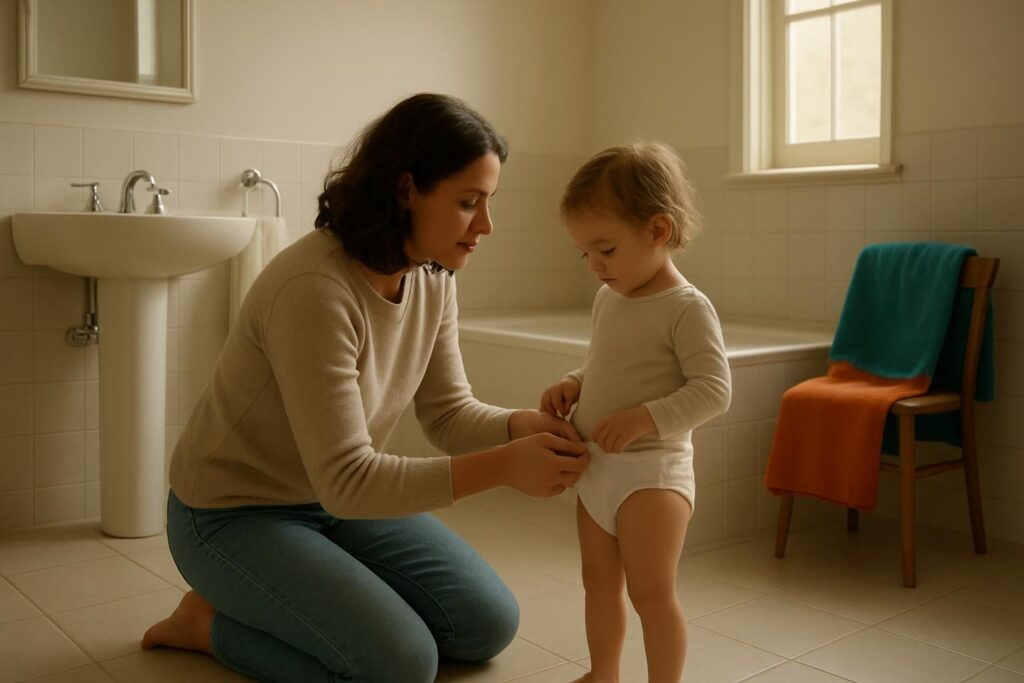
Here is what a typical first day looks like. In the morning, the diaper comes off, cotton underwear goes on, and the potty sits in the room where you are actually spending the day, not tucked away in the bathroom. You can read what day one actually looks like, morning to bedtime for the hour-by-hour version.
A common pattern is a few accidents before the first success, then one or two more successes by the evening as your child starts connecting the feeling with the action. You are watching and writing down what you see, not running a stopwatch: a tracking schedule records the time your child drank, the time they were on the potty, and whether it was a success or an accident, so a pattern for this particular child starts to show. Pull-ups for sleeping are a separate, sensible choice and are not a step backward; nighttime and daytime are different skills learned at different speeds. Treat the day as information gathering about your child, not a pass or fail test.
Why the child saying it themselves takes longer than a day
The real goal is the moment your child says ‘I need to go’ before it happens, and that recognition takes repetition across several days, not a single afternoon. Instead of sitting your child on the potty every thirty minutes by the clock, you ask something closer to ‘will you tell me when you need to pee?’ and let them try to notice it themselves.
The only moments worth fixing in place are before and after sleep and before you leave the house, both during training and afterward. Offering the potty on a strict interval is a different method, and it teaches a child to wait for you to ask rather than to notice the feeling themselves, which is the opposite of what you want by the end of the week.
This is exactly what the tracking schedule is for: it is a record of when this particular child actually goes, built from real observations, not a timetable you impose on them. One detail matters here. Have your child drink a full cup in one go rather than small sips spread across the morning, so you can actually see the link between how much went in and how long it takes before they need to pee. A half cup sipped slowly over an hour tells you nothing useful.
One day, three days or a week: what actually differs
| Timeframe | What usually happens by then | What is still missing |
|---|---|---|
| One day | Diaper off, several successes, child understands the idea | Self-initiation, holding on, staying dry outside the house |
| Three days | Fewer accidents, pattern of timing becomes clear | Reliable self-initiation, outings |
| About a week | Daytime dryness for most children, child starts to tell you first | Nighttime dryness, which comes later |
Three days at home is really the learning core of any approach, and the 3-day approach and what happens on day 4 is worth reading before you commit to a timeframe. The week that follows is where self-initiation and holding on actually get built. The honest note is that the day count is a label, not a result: your child’s readiness sets the pace, not the calendar.
The Potty Training Box Method is a seven-day, reward-based program that starts with three focused days at home, moves the child from potty to toilet, and works step by step toward your child telling you themselves instead of being asked.
Is your child ready for a fast start?
Common signs of readiness include staying dry for longer stretches, showing interest in the bathroom, telling you after a dirty diaper, pulling pants up and down on their own, and following a simple two-step instruction. According to the American Academy of Pediatrics, bladder and bowel control signs typically appear between 18 and 24 months, and toilet training in the United States most often begins between ages 2 and 3, with most children trained by age 4 (healthychildren.org).
A child who is frightened of the potty or the toilet is not ready yet. Building familiarity first, with no pressure to sit or perform, and starting the actual training later, is the right call. A simple picture book like Potty can help a nervous child get comfortable with the idea before you start.
Not sure where your child stands? Answer a few quick questions in the readiness quiz.
Children who are autistic, have Down syndrome, or are non-verbal are often trained successfully too, usually over a longer stretch and by reading the child’s own signals rather than waiting to be told; the American Academy of Pediatrics has a page specifically on toilet training children with developmental differences (healthychildren.org).
What to have ready before you start
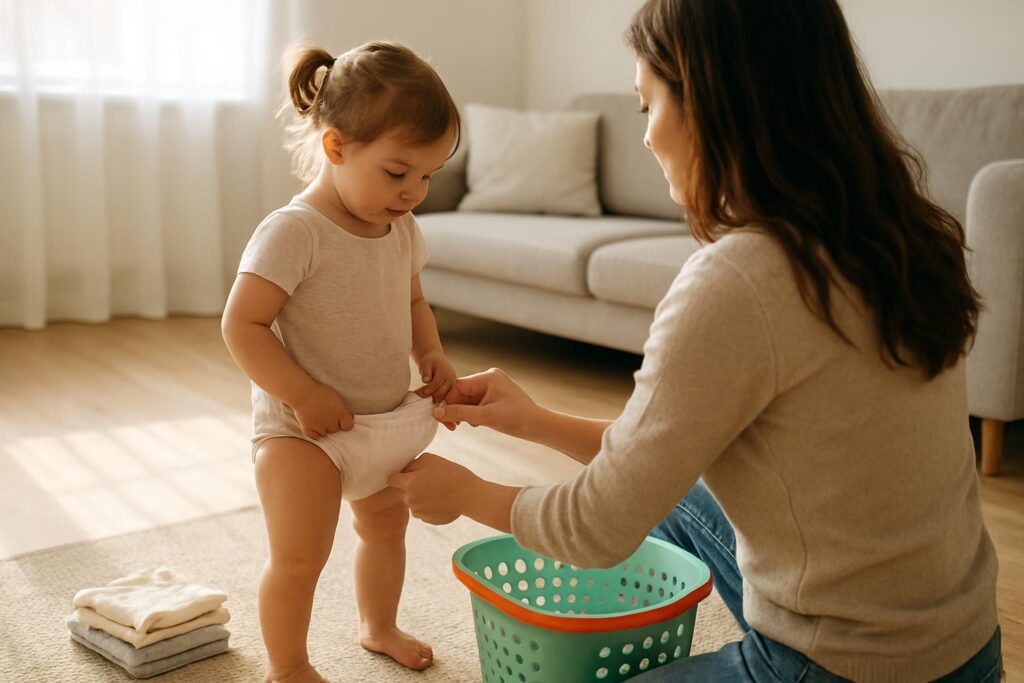
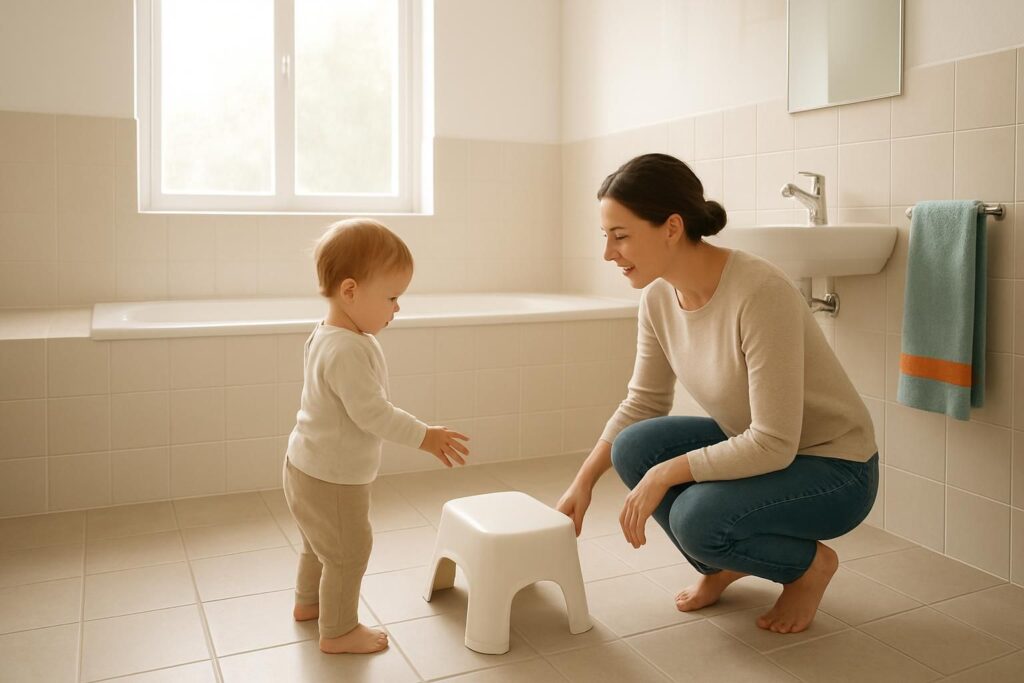
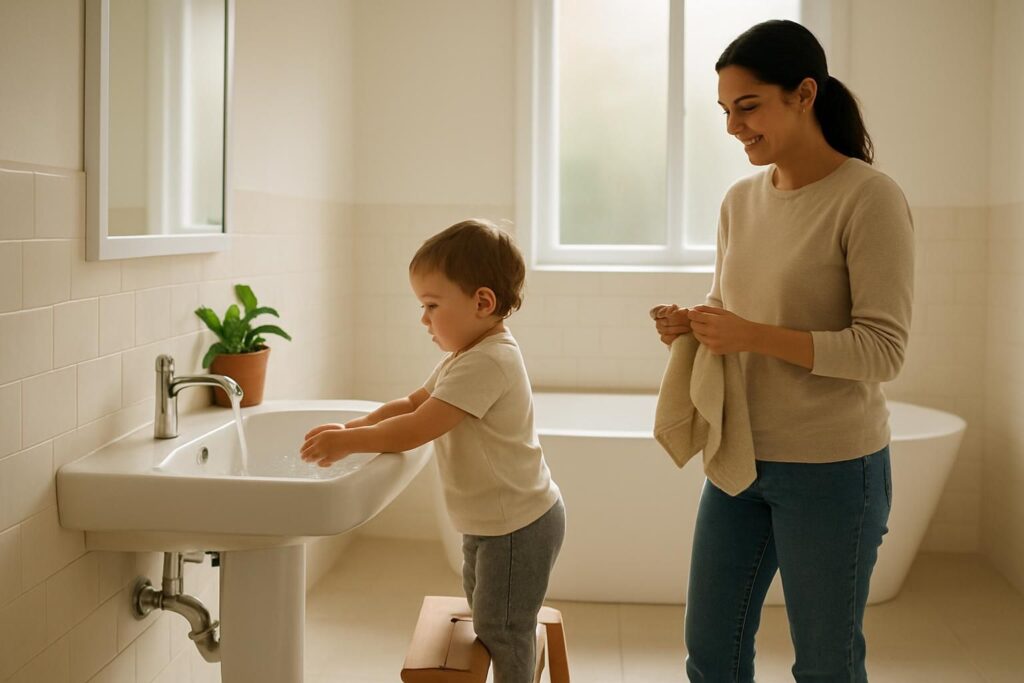
Before the day you have picked, have ready a potty (mostly useful for the first three days), a toilet seat reducer, a step stool, at least 15 pairs of cotton underwear, something to protect the mattress and sofa, a handful of small rewards, and pull-ups for sleeping. Clear two or three days on the calendar and keep the plan boring: stay close to home and skip the errands.
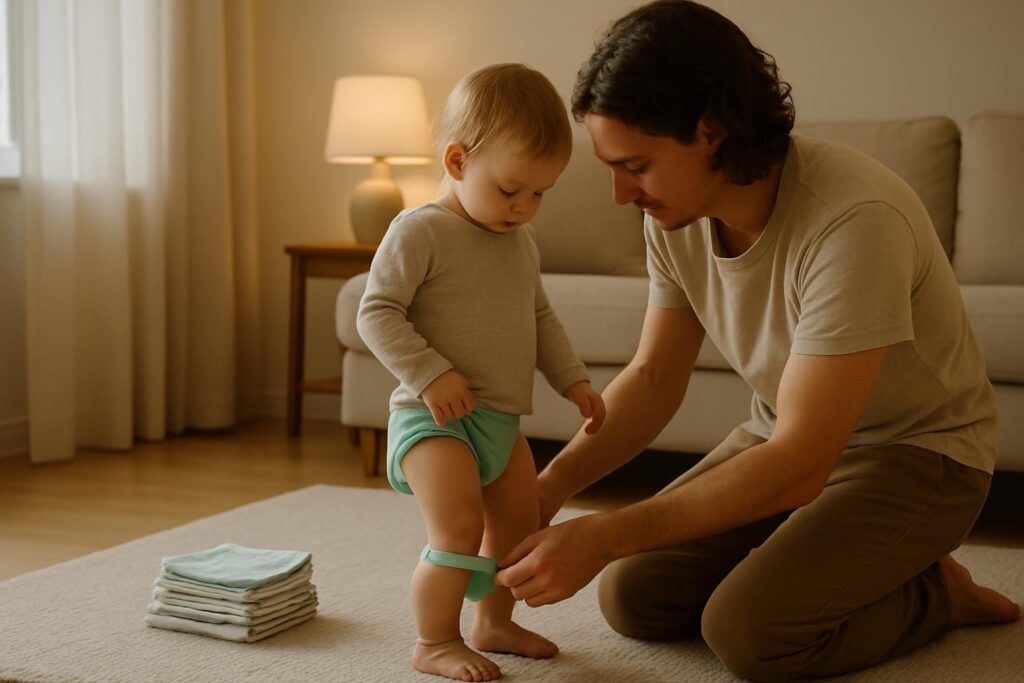
Cotton underwear works better than training pants for this, because your child actually feels it when they go, and that feeling is what teaches them to notice the urge next time; read why cotton underwear beats pull-ups during the day for the reasoning.
As an Amazon Associate we earn from qualifying purchases. Some links in this article are affiliate links: if you buy through them we earn a small commission, at no extra cost to you, and it does not affect what we recommend.
| Item | Option |
|---|---|
| Potty | BabyBjörn Potty Chair |
| Toilet seat reducer | Munchkin Sturdy Potty Training Seat |
| Step stool | Dreambaby Step Stool |
What if day one goes badly, or day four falls apart?
A rough first day is common, and so is a rough fourth or fifth day. Day 4 or 5 is often the hardest day of the whole process, because your child gets tired of being asked ‘will you tell me when you need to pee?’ over and over and starts pushing back. The fix is usually to ask less often, not more, and hand your child more of the responsibility for noticing it themselves. Read why day 4 is usually the hardest for how to handle that particular stretch.
Accidents at any point are part of learning, never a sign of failure. If an attempt genuinely is not working after a real try, stopping and waiting a few weeks before trying again is part of the method, not giving up on it. Regression weeks or months later is also common and worth talking through calmly with your child; it is not a reason to start the whole training over from scratch as if it were a new product to try.
Celebrating the first success without losing the habit a week later
Rewards work best when they come fast at first and get rarer as your child improves. Sticker cards in four sizes, with 3, 5, 7 and 9 squares used in that order, mean the reward lands quickly at three squares so your child sees that it works, then space out as the habit takes hold, so the habit outlasts the stickers instead of stopping the moment they do. These cards and the pee and poop certificates that mark the end point are the built-in reward system of the method, not something you need to build yourself.
Here is a video worth watching together right after that first potty success, to celebrate it with your child.
If you want a structured plan instead of a one-day sprint
If a one-day sprint does not fit your family, or you would rather have a plan for every day instead of just the first one, The 7-Day Potty Training Video Course covers the same seven-day program as about forty short videos of roughly three minutes each, grouped by day, with a digital AI coach that answers questions at any hour. Printable sticker cards, a tracking schedule, and certificates are included with the course.
What a structured plan adds over a single free article is the part that matters most: what to actually do on day one, day two and day three, including the days that go badly, plus somewhere to ask when they do. For the full arc from day one through the week, see the full step-by-step plan for the first week.
Frequently asked questions
Can you really potty train in 24 hours?
A focused 24 hours can get the diaper off, cotton underwear on, and several successful trips to the potty, which is a real result. It rarely gives a child enough time to learn to notice the urge on their own, say it out loud, or hold on, which usually take closer to a week.
What is the one day potty training method?
It refers to an approach popularized from the book Toilet Training in Less Than a Day by Nathan Azrin and Richard Foxx, first published in the 1970s. In practice it means a concentrated day at home with frequent drinks, frequent potty practice, and heavy praise, though the social-media version is often a stripped-down copy of the original.
Is three days better than one day for potty training?
Three days at home gives a child more repetition to connect the feeling of needing to go with the action of using the potty, so accidents usually drop faster than after a single day. It still is not the same as full self-initiation, which tends to build over the week that follows.
How many accidents are normal on the first day?
Several accidents before the first success is typical, followed by one or two successes by the end of the day as the child starts to make the connection. The exact number varies a lot by child, which is why recording what actually happens matters more than counting against a target.
What age is best to start potty training?
According to the American Academy of Pediatrics, signs of bladder and bowel control usually appear between 18 and 24 months, and most children in the United States begin toilet training between ages 2 and 3, with most trained by age 4. Readiness signs matter more than the calendar age, since children reach them at different times.
My 3 year old still isn't potty trained, what should I do?
A 3 year old who is not yet trained is well within the typical range, since most children are trained by age 4. Check for genuine readiness signs first, and if there are ongoing concerns around constipation, withholding, or developmental delay, bring those specifically to your child's doctor rather than troubleshooting them yourself.
Ready for the next step?
The 7-Day Potty Training Video Course walks you through this program in forty short videos, grouped per day, with a digital AI coach you can ask a question at eleven at night on day four. The full handbook comes with it as a PDF to read and print. Nothing is shipped, so you can start today.
Sources
- American Academy of Pediatrics (HealthyChildren.org) (Bladder and bowel control signs typically appear between 18 and 24 months, and toilet t…)
- American Academy of Pediatrics (HealthyChildren.org) (Children with developmental differences are often trained successfully, usually over a…)
This article was written with AI assistance and checked by Dustin van de Sande.