What Is the Best Potty to Start Potty Training With?

The best potty to start with is a low, stable, one-piece floor potty that lets your toddler plant both feet flat on the floor and climb on and off without help. Feet flat matters because a child pushes with their feet when they pee or poop. Look for one that is light enough to carry from room to room and simple to rinse out, with no splash guard that pinches.
Brand-name sophistication matters a lot less than whether your particular child will actually sit on it. A toddler who refuses a fancy potty with lights and sounds gets you nowhere. A plain bowl shape that your child picked out themselves and can climb onto alone gets you most of the way there.
Potty chair or toilet seat reducer: which do you start with?
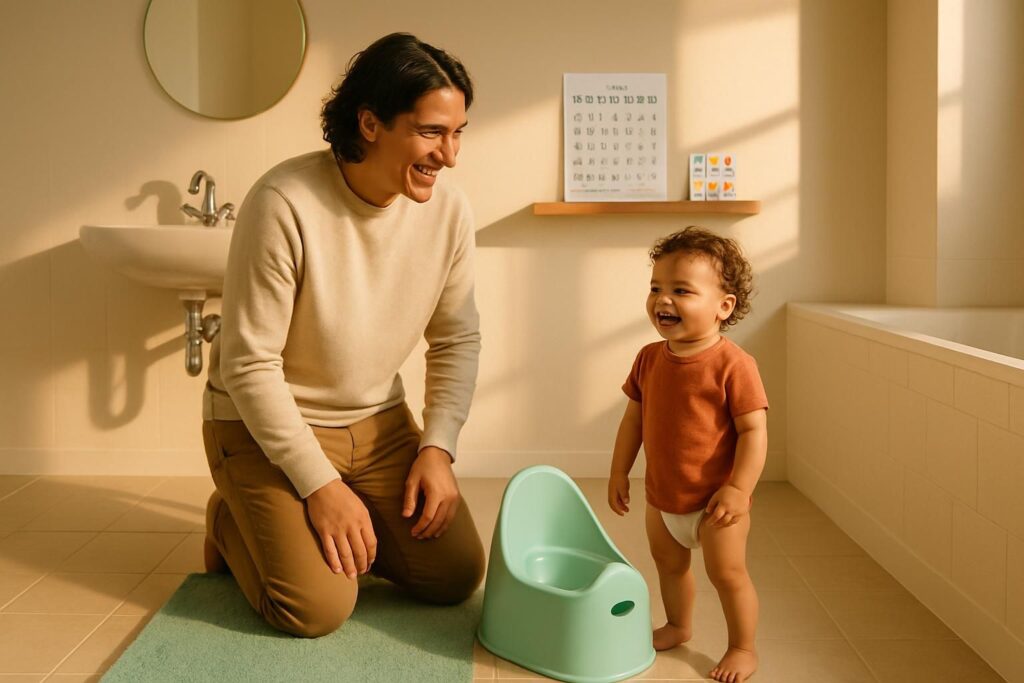
Start on the floor potty. Most of the real learning happens in the first three days at home, and a potty that sits low to the ground lets your toddler get there without asking for help every time.
A toilet seat reducer and a step stool are where you are heading, not where you start. Once your child is getting on and off the potty confidently and starting to signal ahead of time, moving to the real toilet with a reducer and stool is the natural next step. You can read the complete 7-day method for how that progression is meant to work day by day.
Some children skip the floor potty altogether and go straight for the toilet, and that is completely fine. Others are wary of the toilet early on because of the height, the fear of falling in, or the noise of the flush, which is exactly why the potty exists as a smaller, friendlier first step.
Which potties are actually worth buying (and which features to skip)
As an Amazon Associate we earn from qualifying purchases. Some links in this article are affiliate links: if you buy through them we earn a small commission, at no extra cost to you, and it does not affect what we recommend.
A simple one-piece floor potty like the BabyBjörn Potty Chair suits most families starting out, because there is nothing to disassemble and nothing to pinch little legs. A 3-in-1 convertible such as the Ingenuity My Size Potty Pro works if you would rather buy one seat that later converts into a toilet topper, though it has more parts to rinse.
For the move to the real toilet, pair a reducer like the Frida Baby Drop Down Potty Training Seat with a sturdy Dreambaby Step Stool, so your child can climb up, sit securely, and get back down without you lifting them. For car trips and outings once training is underway, a fold-flat option like the 2-in-1 potty training toilet travels better than a bulky bowl.
| Potty type | Best for | Watch out for |
|---|---|---|
| Simple floor potty, such as the BabyBjörn Potty Chair | The first three days at home | Make sure it is easy to lift and empty one handed |
| 3-in-1 convertible, such as the Ingenuity My Size Potty Pro | Families who want one seat long term | More pieces to wash after every use |
| Toilet seat reducer and step stool, such as the Frida Baby Drop Down Potty Training Seat with the Dreambaby Step Stool | Moving from potty to the real toilet | Check it feels stable before your child trusts it |
| Travel potty, such as the 2-in-1 potty training toilet | Outings, car rides, grandma’s house | Bulky designs that do not fold are a hassle |
Skip anything musical, anything that plays a flushing sound, and anything with a tall, deep splash guard. A high front shield is meant to stop splashback but often just gets in the way or bruises a small body as they climb on. For boys, teaching them to aim down while seated beats any shield, and it is simpler to clean besides.
What else do you need besides the potty?
A potty on its own will not get you through the week. Have ready at least 15 pairs of regular cotton underwear, not training pants, because cotton lets a child actually feel when they are wet, which is what teaches them to notice and hold on. You will also want a step stool, a toilet seat reducer for later in the week, something to protect the mattress and the sofa, a handful of small rewards, and pull-ups for sleeping only.
Training pants with extra absorbent layers feel almost identical to a diaper against the skin, so the child feels wet much less, and that dulls the exact sensation you are trying to build. For a full rundown of everything worth having on hand before day one, see the complete potty training checklist.
How long does the potty actually matter?
The potty itself matters most on days one to three, which are spent at home on purpose, because that is when a child learns the most about their own body. Short outings follow once your toddler is starting to signal ahead of time, and the toilet with a reducer and stool takes over as confidence grows.
Most children are dry in the daytime in about a week. Some manage it in as few as three days, others take two or three weeks, and a child who simply is not ready yet is better off waiting than being pushed through it. Night dryness is a separate skill that comes later on its own timeline; if that is what you are weighing right now, night potty training covers it on its own.
How often should you put your child on the potty?
The goal is not a fixed schedule, it is the moment your child tells you they need to go on their own. Rather than sitting them down every twenty or thirty minutes by the clock, ask directly: will you tell me when you need to pee? Fixed-interval sits, sometimes described online under names like a strict 10-10-10 routine, are a different approach built around a timetable rather than the child’s own signals, and why timed sits slow you down goes into why that can actually work against you.
A few moments stay fixed regardless: before and after sleep, and before you leave the house, during training and afterward too. Outside of those, a tracking schedule is what tells you when this particular child actually goes, so you learn their pattern instead of guessing. Have your child drink a full cup in one go rather than sipping it over time, because that is the only way to see the real link between how much they drank and how long it takes before they need to go.
A tracking schedule like the one used in the Potty Training Box Method records the time your child drank, the time they sat on the potty, whether nothing happened, whether they peed (marked green for a success, red for an accident), whether they pooped (same green and red system), and a notes column for anything worth remembering. That record shows you when your child really needs to go, so you need to ask them less and less as the days go on.
What if your toddler refuses to sit on the potty?
A child who is genuinely frightened of the potty or the toilet is not ready yet, and the honest move is to back off, build familiarity, and try again later. Let them sit on it fully clothed, read a book together while they sit there, such as Potty, and if you can, let them pick the potty out themselves at the store.
Many parents expect day two to be the hardest, but it is usually day four or five, once a child gets tired of being asked will you tell me when you need to pee and starts pushing back. The fix is to ask less often and hand a little more responsibility back to them, which is exactly why day 4 is the hardest day and what to do about it.
If an attempt simply is not working, the method’s own advice is to stop and leave it a few weeks before trying again, rather than pushing through a bad stretch. A short video can help take the pressure off in the moment.
Is your child ready for any of this yet?
Common signs a toddler is ready include staying dry for a couple of hours at a stretch, showing interest in the bathroom, telling you when their diaper is wet, and being able to pull their own pants up and down. Readiness can show up anywhere from around 18 months to 4 years, and there is no shame in a later start.
If you are unsure whether now is the right moment, when to start potty training walks through it in more detail. A quick test can also help you see where your child stands.
The potty is a tool, the plan is what gets you out of diapers
The seven-day potty training method this site is built around puts the child’s own initiative at the center: the goal is a child who says they need to go, not a parent running a timer. It is positive and reward-based, spends the first three days at home, and moves outward into short outings and then the real toilet as confidence builds.
What a structured program adds over a potty and good intentions is a plan for exactly what to do on day one, two and three, including what to do when a day goes badly, plus somewhere to ask when it does. The 7-Day Potty Training Video Course carries this same method as about forty short videos of roughly three minutes each, grouped by day, along with a digital AI coach you can ask questions of at any hour. The printable sticker cards, which run in four sizes of 3, 5, 7 and 9 squares used in that order so the reward comes fast at first and then tapers off, along with the tracking schedule and the pee and poop certificates, are included and printed at home.
Frequently asked questions
What is the best potty for potty training?
A low, one-piece floor potty that your toddler can climb on and off alone, with both feet flat on the floor, is usually the best place to start. Feet flat lets a child push properly when they pee or poop. Look for something light to move between rooms and easy to rinse, and skip extra features like sound effects or deep splash guards.
What is the 10-10-10 rule for potty training?
It is a fixed-interval approach that circulates online under a few different versions, generally meaning you sit your child on the potty for a set number of minutes at a set interval, regardless of whether they actually need to go. That is a timetable-based approach, which is different from a method built around the child's own signals. A tracking schedule that records when your particular child actually goes is a more reliable way to learn their pattern than any fixed interval.
Should I buy a potty chair or a toilet seat reducer?
Start with a potty chair, since most of the learning happens in the first three days at home and a low potty lets your child get on and off without help. A toilet seat reducer paired with a step stool is where you move once your child is confident and starting to signal ahead of time. Some children skip the potty entirely and go straight to the toilet, which is also fine.
Do I need training pants to potty train?
No, regular cotton underwear works better than training pants for learning. Training pants have absorbent layers that feel almost like a diaper, so a child feels wet much less and that slows down the sensation they need to learn from. Plan on at least 15 pairs of cotton underwear and save pull-ups for sleep only.
How many pairs of underwear do I need for potty training?
At least 15 pairs of regular cotton underwear is a reasonable amount to have ready, since accidents are a normal part of the first few days. Having enough on hand means you are never stuck washing one pair while waiting for it to dry. Cotton, rather than any padded training pant, is what actually lets a child feel when they are wet.
What do I do if my toddler is scared of the potty?
A child who is frightened of the potty or the toilet is not ready yet, and the honest move is to build familiarity first rather than push through fear. Let them sit on it clothed, read a book nearby, or pick the potty out themselves at the store. If it still is not working after a few tries, stop and leave it a few weeks before trying again.
Ready for the next step?
The 7-Day Potty Training Video Course walks you through this program in forty short videos, grouped per day, with a digital AI coach you can ask a question at eleven at night on day four. The full handbook comes with it as a PDF to read and print. Nothing is shipped, so you can start today.
This article was written with AI assistance and checked by Dustin van de Sande.