Potty Training Regression: Why It Happens and What to Do When Your Child Backslides

Potty training regression is when a child who was reliably using the potty or toilet suddenly starts having accidents, holding it, or asking for diapers again. It is common, usually tied to a specific trigger like illness, a new sibling, or constipation, and most cases pass within a couple of weeks once that trigger eases or is addressed.
This is different from a child who never quite got the hang of it in the first place. A child in regression has already shown you they can do it: they held it, signaled, and used the potty or toilet reliably for a stretch of time. Something changed, and their body or their emotions are telling you about it the only way they can.
Why does a potty trained child suddenly start having accidents?
Most regressions trace back to one specific change in the child’s world, even when it does not look connected on the surface. Spotting the trigger is most of the work.
- A new baby in the house, a move, starting daycare or preschool, a new caregiver, or a custody change
- Illness: a cold, a fever, or a course of antibiotics can all throw off bladder and bowel control for a few days
- Constipation and stool withholding, which is probably the most underestimated cause of all, because the accidents look like a potty problem when the real issue is a sore, backed-up gut
- Tension at home, a parent traveling, or any disruption to the daily routine
- A developmental leap: a burst of new words, new physical skills, or big feelings can temporarily pull attention away from toileting
- Sometimes an accident is simply a way of asking for more of you, especially right after a sibling arrives
The Cleveland Clinic notes that stress and change are among the most common causes of a potty trained child suddenly having accidents again.
| Common trigger | What it usually looks like | What helps first |
|---|---|---|
| New sibling | Accidents, asking for diapers, wanting to be a baby too | One-on-one time, a small job tied to the new baby |
| Moving house | Clinginess, accidents in the new, unfamiliar bathroom | Keep the same potty routine in the new space |
| Starting daycare | Accidents at drop off or pick up time | Talk to the teacher, keep spare pants on hand |
| Illness | Sudden accidents during or just after being sick | Expect a short dip, do not restart training |
| Constipation | Skid marks, straining, large or hard stools | A call to the pediatrician |
| Tension at home | General clinginess plus accidents | More calm, predictable routine, less pressure |
| Developmental leap | Distracted, forgetting to go, big emotions | Patience, fewer reminders, not more |
How do you tell a behavior problem from something physical?
Some signs mean this belongs with a doctor rather than being solved from an article. Call your pediatrician if you notice pain or burning when your child pees, blood in the urine or stool, sudden intense thirst alongside a lot of urination, hard or infrequent stools, belly pain, or dribbling that never fully stops.
Constipation is easy to miss because it rarely looks dramatic. Watch for skid marks in underwear, stools that are unusually large or rock hard, visible straining, going several days without a bowel movement, or a toddler who clings to a corner or goes stiff and still right before a poop. These are physical signs, and getting them checked is not an overreaction. It is the fastest way to rule out the one cause that no amount of patience or routine will fix on its own.
What makes regression worse: four things to stop doing today
None of these make a parent a bad parent. Nearly everyone reaches for at least one of them during a hard week, and all of them tend to make accidents more frequent, not less.
- Punishing wet pants, taking away a toy, or any consequence tied to an accident
- Shaming, sighing, or commenting on it in front of siblings or other adults
- Going straight back to diapers full time as the very first move
- Asking about the potty constantly, which usually produces exactly the resistance you are trying to avoid
If you have already done one or more of these, that is a completely normal response to a stressful stretch, not a mistake you need to undo with anything more than a calmer next few days.
What actually works: go back to basics for a few days and stay boringly neutral
Stay home more for two or three days so there are fewer surprises and more chances to notice what is actually going on. Fewer outings, fewer new bathrooms, fewer transitions in one day.
When an accident happens, keep your reaction flat: change the clothes, rinse off, move on. No lecture, no big sigh, no retelling it later. Put your child back into regular cotton underwear rather than training pants, since cotton lets a child feel wetness the way bare skin does, which is part of what makes the whole method work in the first place.
Instead of putting your child on the toilet on a fixed schedule, ask will you tell me when you need to pee? The only moments worth keeping fixed are before and after sleep and right before you leave the house. Everything else works better coming from your child’s own signal than from the clock.
Rebuild quick wins with small, close-together rewards before stretching them out again, the same way you did the first time around. If your child doesn’t care about rewards anymore, that is common after the novelty wears off, and it usually means the reward needs to shrink and come faster for a few days, not disappear. If the trigger is a new sibling or a move, give your child a small job and carve out a bit of one-on-one time each day. It often does more than anything said about the potty itself.
What about writing down when your child goes? How a tracking chart helps in a regression
A simple written record for two or three days tells you far more than guessing. Note when your child drank, when they sat, whether nothing happened, and whether it was a pee or poop success or an accident, with a short line for anything unusual.
Have your child drink a cup in one go rather than sipping it across the afternoon. That is the only way to see how much went in and how long it then takes before they need to pee, which is exactly the pattern you are trying to read. You are not building a timetable to impose on your child. You are learning this particular child’s timing so you can step back and let their own signal lead, usually within a few days once the pattern is clear.
If you want the full week laid out day by day, including what to do on the days that go badly, the seven day method, start to finish walks through it from day one, and the same structure is also what the 7-Day Potty Training Video Course follows.
How long does potty training regression usually last?
Most regressions clear up within a few days to two weeks once the trigger passes or gets addressed, though this varies from child to child. A regression caused by constipation will not resolve on its own and tends to drag on precisely because it gets mistaken for a behavior problem rather than treated as the physical issue it is.
Night-time accidents are a separate matter from daytime regression. They often come and go for longer, independent of how the daytime is going, and that is normal rather than a setback. If daytime accidents continue for several weeks with no obvious trigger you can point to, that is worth a conversation with your pediatrician rather than more waiting.
When should you pause and try again later?
If a week of calm, basic routine changes nothing and your child is fighting every single attempt, stopping and leaving it alone for a while is a legitimate choice, not giving up. The method itself treats a pause this way: better to come back to it later than to push through resistance that keeps building.
If the issue is fear of the potty or the toilet itself, the honest move is to build familiarity first, with no pressure to perform, and try the actual training later.
A few signs tend to show up when a child is genuinely ready to try, regression or not: they stay dry for a couple of hours at a stretch, they notice and dislike a wet or dirty diaper, they can follow a simple two-step instruction, and they show some curiosity about the bathroom or want to copy a parent or older sibling. None of these guarantee anything on their own, but together they are worth paying attention to.
Wondering whether your child is ready to try again rather than simply regressing? A few short minutes answering questions about your child’s own signals will tell you more than guessing would.
Children who are autistic, have Down syndrome, or are non-verbal are trained successfully with this same approach, usually over a longer stretch, and by reading the child’s signals closely rather than waiting for them to say the words.
A short video to watch together right after an accident
Right after an accident, before anyone says much at all, it can help to sit down together and watch a short video about exactly that moment.
Seeing a character have an accident, shrug it off, and carry on takes a lot of the sting out of it for a child who is already feeling discouraged, and it gives you something to watch together instead of talking about what just happened.
What the 7-Day Potty Training Video Course covers that a free article cannot
The video course carries the same seven day method across forty short videos of about three minutes each, grouped by day, so you always know what today is for, including the days that do not go well. It also includes a digital AI coach that answers questions any hour, which matters more at six in the morning on a hard day than almost anything else.
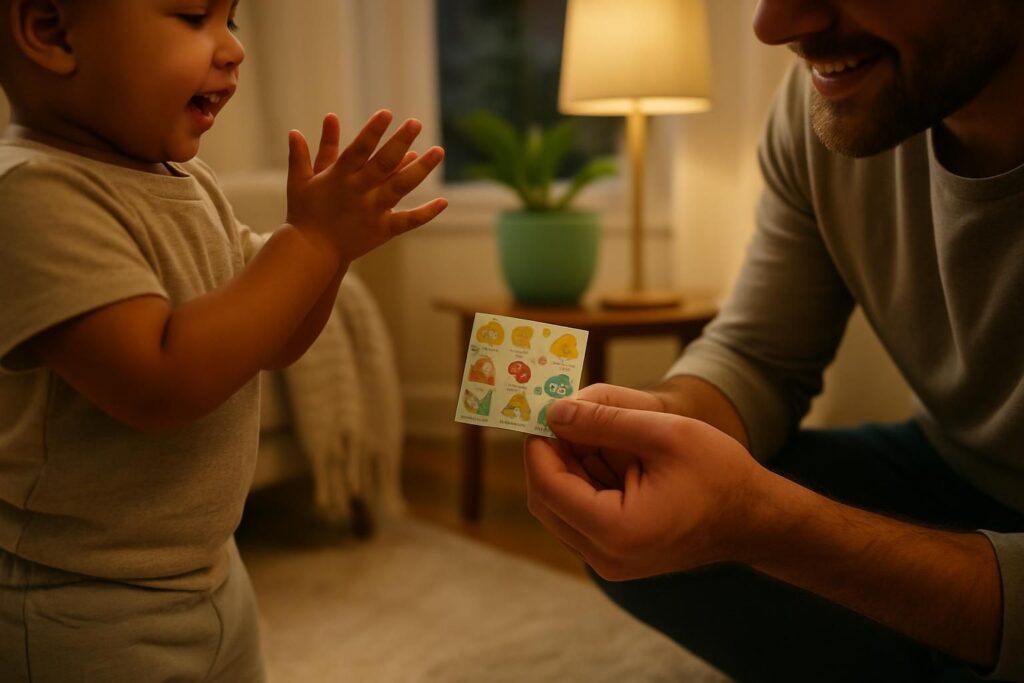
The printable tracking schedules, the sticker cards used in the 3, 5, 7 and 9 square sizes in that order, and the pee and poop certificates are all part of the course, printed at home as you need them. None of this is framed as a fix for regression specifically. It is simply the full plan for a parent who wants every day mapped out rather than piecing one together from scratch.
Most children are dry in the daytime in about a week using this approach. Some manage it in closer to three days, others take two or three weeks, and a child who is not ready yet is better off waiting than being pushed through it.
Frequently asked questions
How long does potty training regression usually last?
Most regressions last anywhere from a few days to about two weeks once the trigger that caused them eases or is dealt with. A regression tied to constipation can last much longer because it needs to be treated directly rather than waited out. If accidents continue for several weeks with no clear trigger, it is worth checking in with your pediatrician.
How do I fix a potty training regression?
Start by figuring out the trigger: a new sibling, illness, a move, or constipation are the most common. Stay home more for a few days, react to accidents without drama, put your child back in regular cotton underwear, and ask whether they need to go rather than putting them on a schedule. Rebuilding small, frequent rewards for a short stretch usually helps too.
Should I put my child back in diapers if they regress?
Going straight back to diapers full time is usually not the most helpful first move, since it removes the chance for your child to feel wet and notice it. It is more useful to go back to basics in cotton underwear for a few days and treat accidents calmly. Diapers at night remain normal throughout, since night dryness is separate and comes later for most children.
Can constipation cause potty training regression?
Yes, and it is one of the most commonly missed causes. A child who is constipated or withholding stool can develop accidents that look like a behavior problem but are actually physical. Signs include straining, very hard or very large stools, skid marks, and going several days without a bowel movement, and this is worth a call to your pediatrician rather than solving on your own.
Is it normal for a new baby to cause potty training regression?
Yes, a new sibling is one of the most common triggers for regression. It usually shows up as accidents, asking for diapers again, or generally wanting to be treated like a baby too. A bit of extra one-on-one time and a small job tied to the new baby often helps alongside the usual calm, back-to-basics approach.
My child is dry in the day but wet at night again. Is that regression?
Night-time wetness is treated as separate from daytime potty training and tends to come and go on its own timeline, even when daytime control is solid. It is common and not usually a sign that daytime training has failed. If bedwetting continues well past age six, that is a conversation for your pediatrician rather than something to manage alone.
Ready for the next step?
The 7-Day Potty Training Video Course walks you through this program in forty short videos, grouped per day, with a digital AI coach you can ask a question at eleven at night on day four. The full handbook comes with it as a PDF to read and print. Nothing is shipped, so you can start today.
Sources
This article was written with AI assistance and checked by Dustin van de Sande.