Potty Training Twins: One at a Time or Both Together?


Potty train twins together only when both children show real readiness signs, not because they share a birthday. Twins who are both ready often do well side by side, since one copies the other. If only one twin shows the signals, train that child alone and let the other watch and catch up later. Neither choice is a failure.
Parents of twins ask this question constantly, usually with some guilt attached, as if the right answer is obvious and they are missing it. There is not one right answer. The decision depends entirely on what each child is actually doing right now, not on the calendar.
How do you tell if both twins are ready, or only one?
Readiness shows up the same way in twins as in any other toddler, but it has to be checked separately for each one. Watch for staying dry for two hours or more, telling you during or right after they have gone, showing interest in the bathroom, being able to pull pants up and down, and poops that happen at roughly predictable times of day. Pediatric guidance on toilet training lists these same signs as the usual markers of readiness, according to HealthyChildren.org from the American Academy of Pediatrics.
As an Amazon Associate we earn from qualifying purchases. Some links in this article are affiliate links: if you buy through them we earn a small commission, at no extra cost to you, and it does not affect what we recommend.
A child who is frightened of the potty or the toilet is not ready yet, even if their twin is racing toward it. The honest move is to build familiarity first, let that child watch, touch, sit fully clothed if they want to, and start the real training later. A picture book can help here too, something like Potty, read together with no pressure attached.
If your child seems nervous or avoidant around the potty itself, this is worth watching together first.
Write it out on two separate sheets, one per child, not one shared checklist for the pair. A twin who ticks six boxes and a twin who ticks two are not at the same stage, however close they are in age. You can find the full list of readiness signs in more detail in our guide to readiness signs.
If you want a clearer read on where each child actually stands, check it for one child at a time.
Why a difference in pace between two kids the same age is completely normal
Sharing a birthday does not mean sharing a bladder, a vocabulary, or an attention span. Identical twins commonly differ in exactly this kind of self regulation skill, and fraternal twins differ even more, since they are no more alike biologically than any two siblings.
A gap of a few weeks or a couple of months between twins is ordinary, not a warning sign. One twin walking or talking a little earlier than the other rarely raises alarm; potty training is the same kind of skill, and parents tend to judge it far more harshly only because it happens later and feels more visible.
What actually happens when you train one twin and not the other
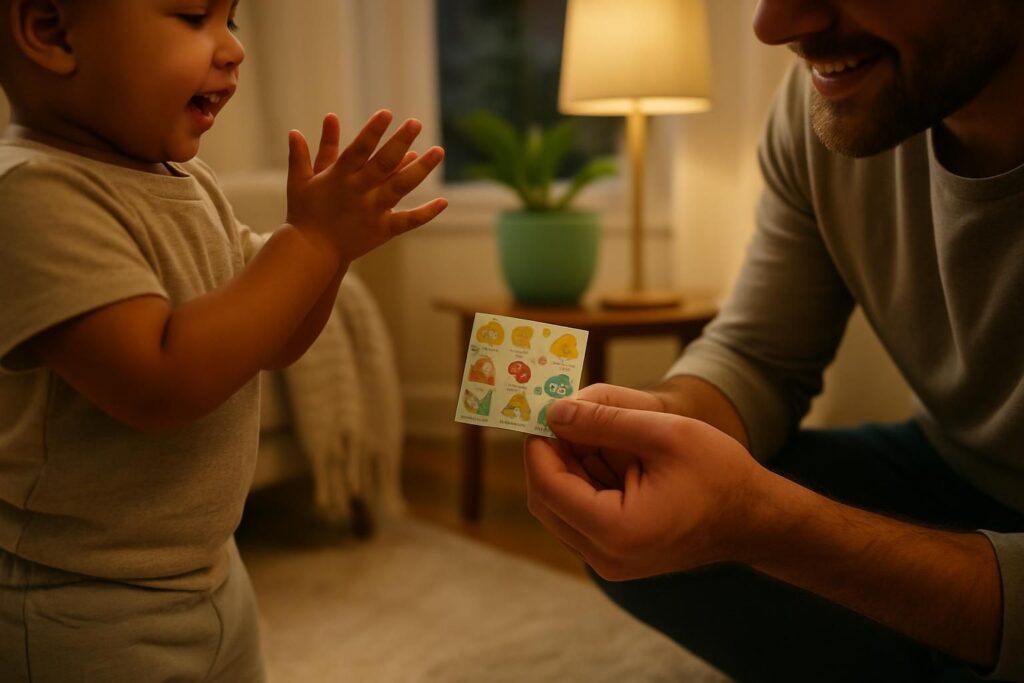
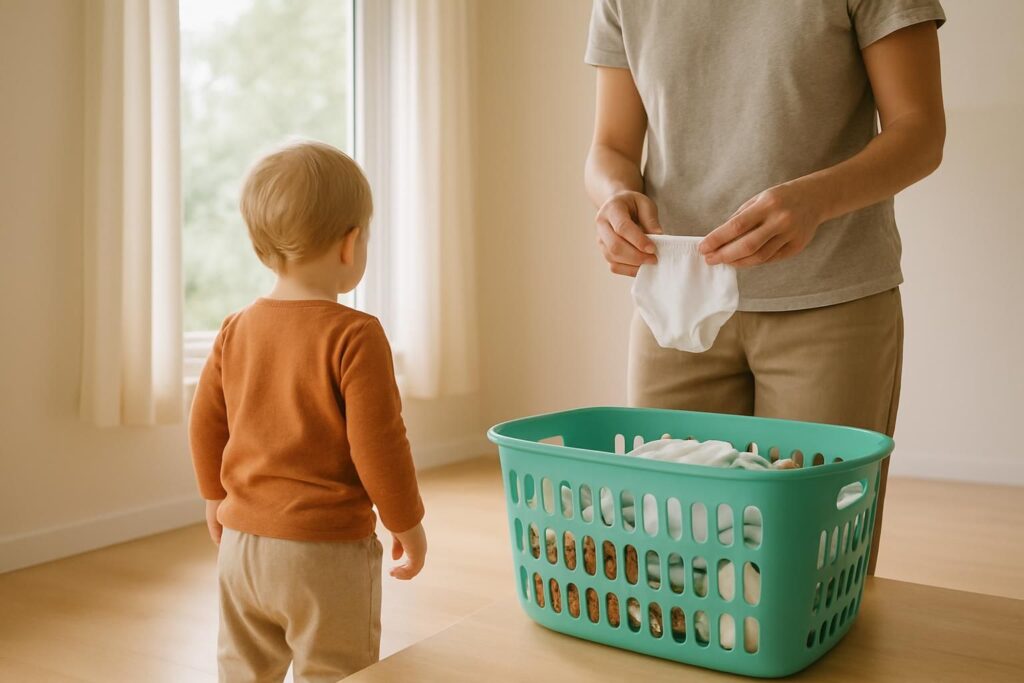
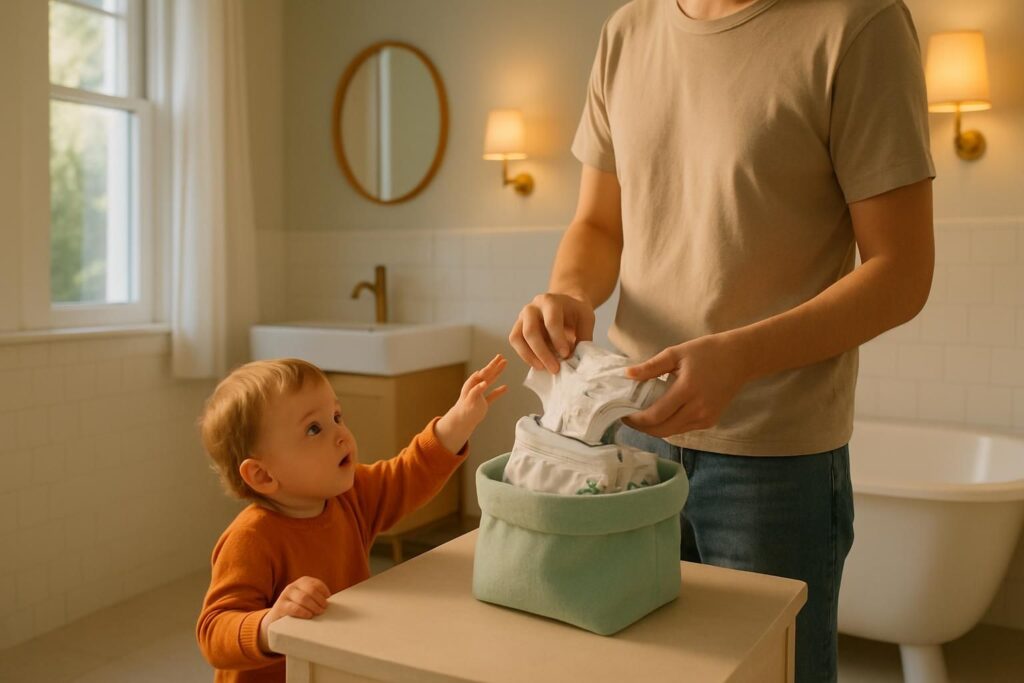
The scenario most parents dread is jealousy: one child gets stickers, compliments and attention while the other is still in diapers. It happens, and the fix is small. Give the untrained twin a job that has nothing to do with announcing potty moments, such as helping pick which sticker goes on next, carrying the laundry basket, or being in charge of the watering can for the plants. A job beats a consolation prize, because it keeps them part of the process instead of outside it, without turning them into a second clock watching for the next scheduled try.
There is a real upside to training one twin first. The watching twin absorbs a surprising amount just by being in the room, seeing the potty used, hearing the praise, noticing the whole routine, and often moves faster when their own turn comes because none of it is new.
In front of both children, describe what you saw, not who is ahead. Keep the second child’s diaper a non-event: change it the same way you always have, without comment, without comparing it to their sibling’s underwear, and without treating it as something to apologize for or rush through.
Why comparing the two does more damage than a slow start
Children hear comparison even when it sounds like praise of someone else. “Your sister already does it” and “look how well he does it” both land the same way on the child who is still working it out: as a scorecard they are losing.
Praise the behavior you actually saw in that child, in that moment, rather than ranking it against a sibling. “You told me right when you needed to go” works. “You’re catching up to your brother” does not, even said kindly.
Accidents are part of learning for both children, never a league table. A wet pair of pants from the twin who started later is not a step backward, it is the same ordinary part of the process the other twin also went through. For more on why a setback is not a sign of failure, see our piece on accidents and regression.
Teaching both twins to tell you themselves
The Potty Training Box Method‘s whole point is reaching the moment each child says, on their own, that they need to go. Instead of parking either twin on the potty every thirty minutes, you ask each one directly: “will you tell me when you need to pee?” That question, repeated gently, is what teaches the child to notice their own body instead of waiting to be told what to do.
Running two children on a fixed clock means you end up managing a timetable instead of actually watching two children. It also quietly undoes the thing you are trying to teach, which is the child’s own initiative, not your schedule.
There are exceptions that stay in place for both twins, during training and long after: before and after sleep, and right before you leave the house. Outside of those moments, the asking matters more than the sitting.
Track what each child actually does on a separate sheet per twin, never a shared one. A tracking schedule records time of drinking, time on the toilet, whether nothing happened, pee marked green for success or red for an accident, poop marked the same way, and a notes column. This is what teaches you each child’s own pattern, not a routine you impose on them.
When you fill it in, have each child drink their cup in one go rather than sipping it over time. That is the only way to see how much went in and how long it takes afterward before they need to go, and that link between amount and timing is exactly what the sheet is meant to show you.
Expect day four or five to be the hardest day with most children, not day two. By then the child is often bored of being asked “will you tell me when you need to pee?” and pushes back a little. The fix is to ask less often, not more, and hand the child more of the responsibility for noticing it themselves.
What two kids at once actually looks like: the first three days at home
The first three days are spent entirely at home, for both twins if you are training together, because that is when each child learns the most. Short outings come after, once things are settling into a pattern.
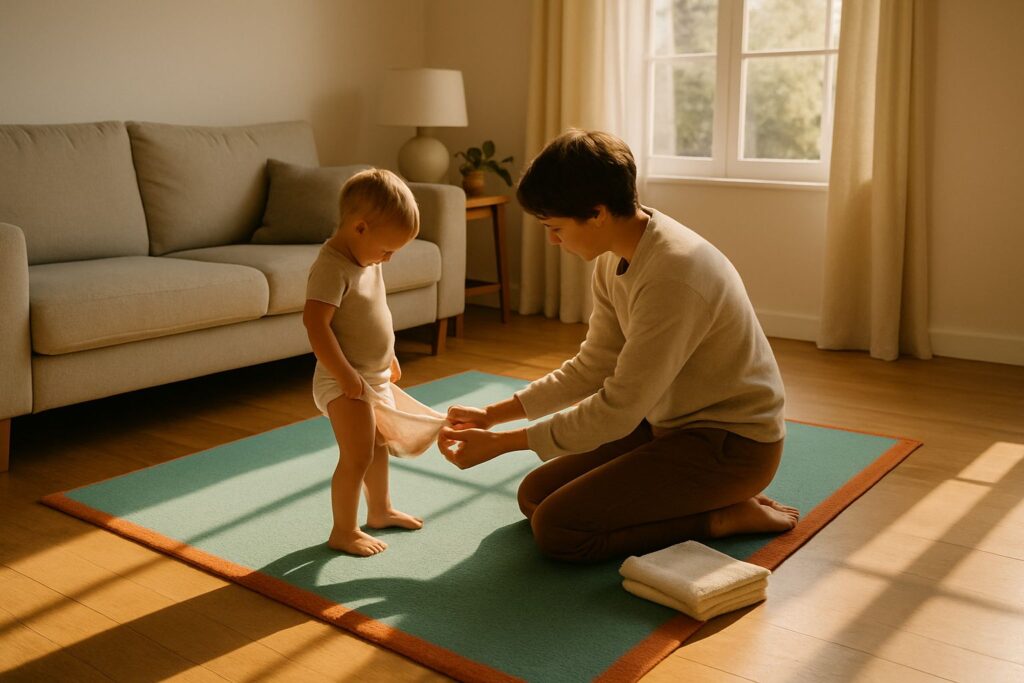
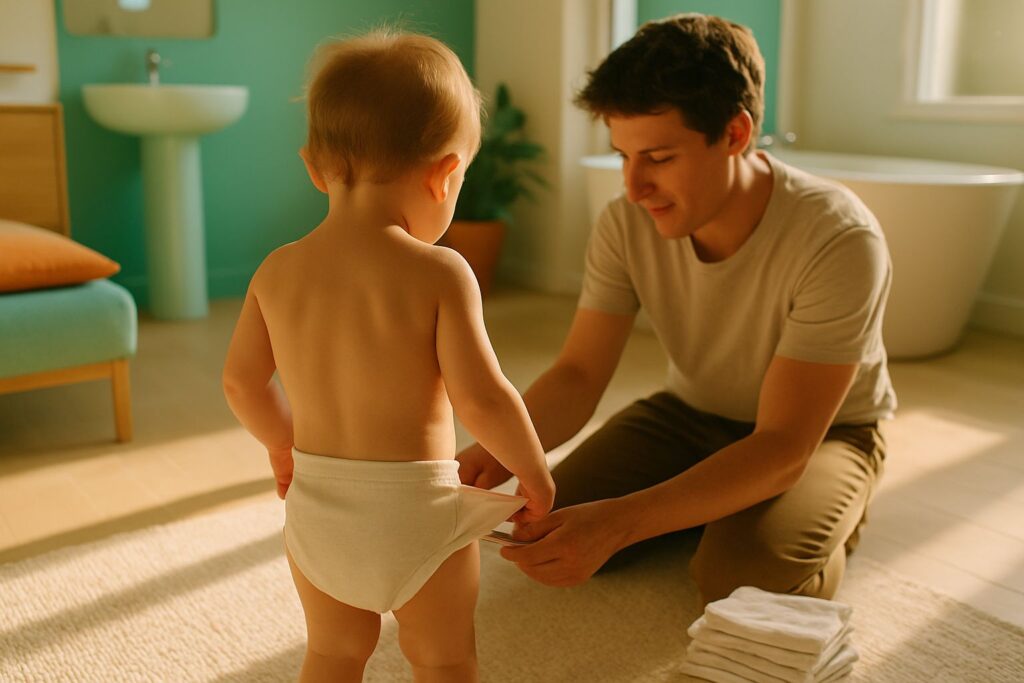
Both children have diapers off and wear regular cotton underwear, not training pants. Training pants dull the feeling of being wet, which is the exact sensation the child needs to notice in order to learn, so plain cotton underwear does more work here than anything padded.
If both twins announce at once, help whichever one seems more urgent or further along first, and give the other the small job described earlier rather than making them wait with nothing to do. It happens less often than parents expect, but it is worth deciding in advance who goes first so nobody is improvising mid crisis.
Clear the calendar for that weekend if you can, and bring in a second pair of hands if one is available, a partner, grandparent or friend who can take one child while you focus on the other during the busiest stretches.
Accidents will overlap sometimes. Cover the floors you care about, keep a pile of clean clothes and a few towels within reach in every room the kids spend time in, and treat each accident as information rather than a crisis, for both children equally.
What you need two of, and what one of is plenty
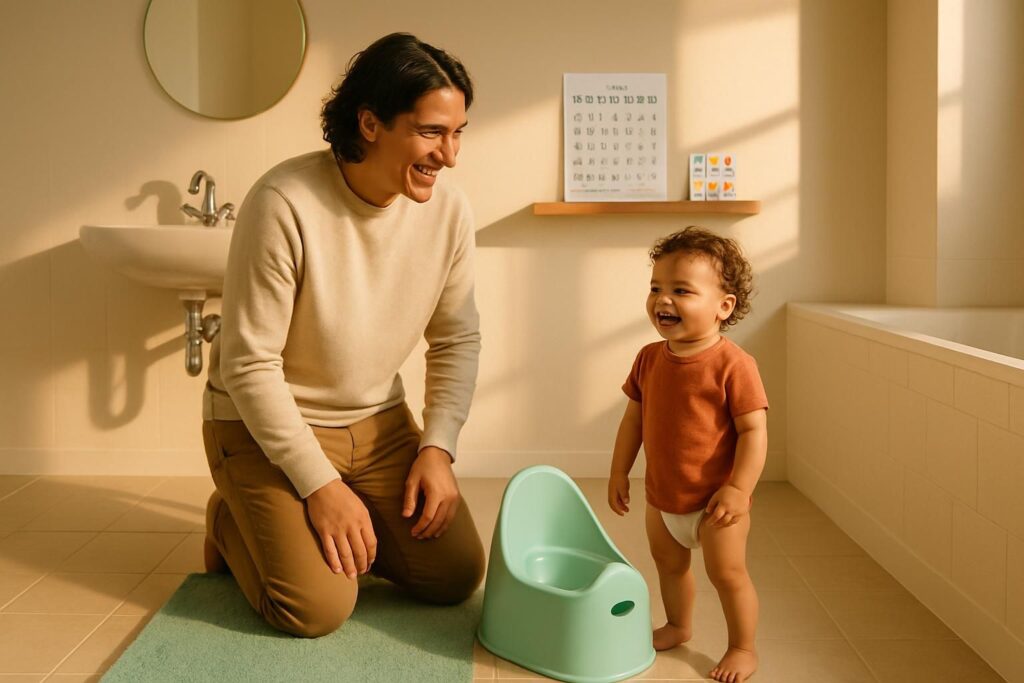
You will want two potties for the first three days, so nobody has to wait during a standoff. After that, as outings begin and one or both children move toward the toilet, one backup potty or a second bathroom is usually enough.
As an Amazon Associate we earn from qualifying purchases. The links below are affiliate links: if you buy through them we earn a small commission, at no extra cost to you, and it does not affect what we recommend.
| Item | One or two? | Why |
|---|---|---|
| BabyBjörn Potty Chair or Munchkin Sturdy Potty Training Seat | Two, for day one to three | Avoids a standoff when both need to go at once |
| Toilet seat reducer | One is usually enough | Only one child uses the toilet at a time |
| Dreambaby Step Stool | One, or two if bathrooms are separate | Needed wherever the toilet is used |
| Underwear | At least 15 pairs each | Each child needs their own full rotation |
| Tracking sheets | Separate set per child | Each child’s pattern is different |
| Sticker cards | Separate set per child | Progress is tracked and rewarded individually |
| Small rewards | Enough for both, kept separate | Avoids one child feeling shortchanged |
Besides the gear, have mattress and sofa protection ready for both beds and the couch, and pull-ups for sleep once daytime training is underway, since nighttime dryness is a separate, later milestone.
What to do when one twin stalls and the other sails through
It is completely fine to keep going with one twin while pausing with the other. If an attempt is not working for one child, the method’s own advice is to stop and leave it a while before trying again, rather than pushing through a bad stretch. That pause is part of the process, not a setback.
Most children are dry in the daytime in about a week. Some manage it in three days, others take two or three weeks, and a child who is simply not ready yet should wait rather than be pushed. None of this predicts how the other twin will do.
Nighttime dryness comes later and separately from daytime training, for twins exactly as for any other child, and it is not something either child should be rushed toward.
If constipation, stool withholding, or bedwetting past age six is part of the picture for either child, that belongs with your pediatrician, not with a training plan.
Twins with different needs, including autism, Down syndrome or no words yet
The same method is used successfully with autistic children, children with Down syndrome, and children who are not yet talking, usually over a longer stretch and by reading that child’s own signals rather than waiting to be told in words. This applies whether that child is a twin or not.
If one twin has additional needs and the other does not, keep each child’s pace off the other’s shoulders entirely. A longer timeline for one child says nothing about the other, and neither child should feel like they are being measured against a sibling’s progress.
None of this is a diagnosis or a medical promise. Where a developmental question comes up that goes beyond potty training itself, that conversation belongs with your pediatrician or child health provider.
Following a day-by-day plan with two kids
A structured plan adds something a free article cannot: specific instructions for day one, day two and day three, including what to do on the days that go badly, plus somewhere to ask when they do. That matters even more with two children, since you are reading two sets of signals at once and the days rarely line up neatly.
The 7-Day Potty Training Video Course covers the same seven-day method as around forty short videos of about three minutes each, grouped by day, plus a digital AI coach that answers questions at any hour, useful at ten at night when one twin is asleep and the other is not. The sticker cards, tracking schedules and pee and poop certificates are all included and printed at home, so you can run a full separate set for each twin.
The program itself does not change depending on whether you run both children through it at once or stagger them weeks apart. It is also worth knowing how much runway you actually have if a deadline is looming: see how much time you actually need before preschool starts if that is part of what is pushing the decision.
Frequently asked questions
Is it harder to potty train twins?
Not necessarily. It is more logistics, since two children may need the potty at once, but the actual learning is no harder for a twin than for a single child. What usually makes it feel harder is comparing the two against each other instead of judging each one on their own readiness.
How do I potty train my twins if only one seems ready?
Train the ready twin on their own, using the same day by day method, and let the other watch and keep wearing diapers without comment. Give the waiting twin a small job during sessions, like helping pick a sticker or carrying the laundry basket, so they feel included without turning them into a lookout for potty time. Many parents find the second twin picks it up faster later, having already watched the whole process once.
Do twins need two potties?
Two potties are worth having for the first three days at home, since both children may need one at the same moment and a standoff over one potty is avoidable. After the first few days, as outings start and one child moves toward the toilet, one backup potty or a second bathroom is usually enough.
Can one twin learn just by watching the other?
Yes, twins commonly pick up a good amount just from watching a sibling go through the process, which is one reason training together often moves quickly once both are ready. That said, watching is not the same as readiness, so wait for the second twin's own signals before starting their training in earnest.
How long does potty training twins take?
Most children are dry in the daytime in about a week, whether trained alongside a twin or alone, though some manage it in three days and others take two to three weeks. There is no reliable reason to expect twins to move at the same pace, so track each child's own timeline rather than expecting them to finish together.
What do I do when both twins need to go at the same time?
Help whichever child is further along or more urgent first, and give the other a short job to do while they wait, such as picking out a sticker or getting their own pants ready. Two potties in the first few days removes most of this problem entirely, since neither child has to wait for the other.
Does one twin having autism or Down syndrome change the approach?
The same method is used successfully with autistic children, children with Down syndrome, and children who are not yet talking, usually over a longer stretch and by reading each child's own signals rather than waiting to be told. Keep each twin's pace separate so one child's timeline never becomes pressure on the other.
What if progress stalls for one twin partway through?
If an attempt is not working, the method's own advice is to stop and leave it a while before trying again rather than pushing through, and that pause is part of the process rather than a setback. If constipation, stool withholding, or bedwetting past age six is part of the picture, that belongs with your pediatrician rather than with a training plan.
Ready for the next step?
The 7-Day Potty Training Video Course walks you through this program in forty short videos, grouped per day, with a digital AI coach you can ask a question at eleven at night on day four. The full handbook comes with it as a PDF to read and print. Nothing is shipped, so you can start today.
Sources
This article was written with AI assistance and checked by Dustin van de Sande.