From Potty to Toilet: How to Make the Switch Without Starting Over

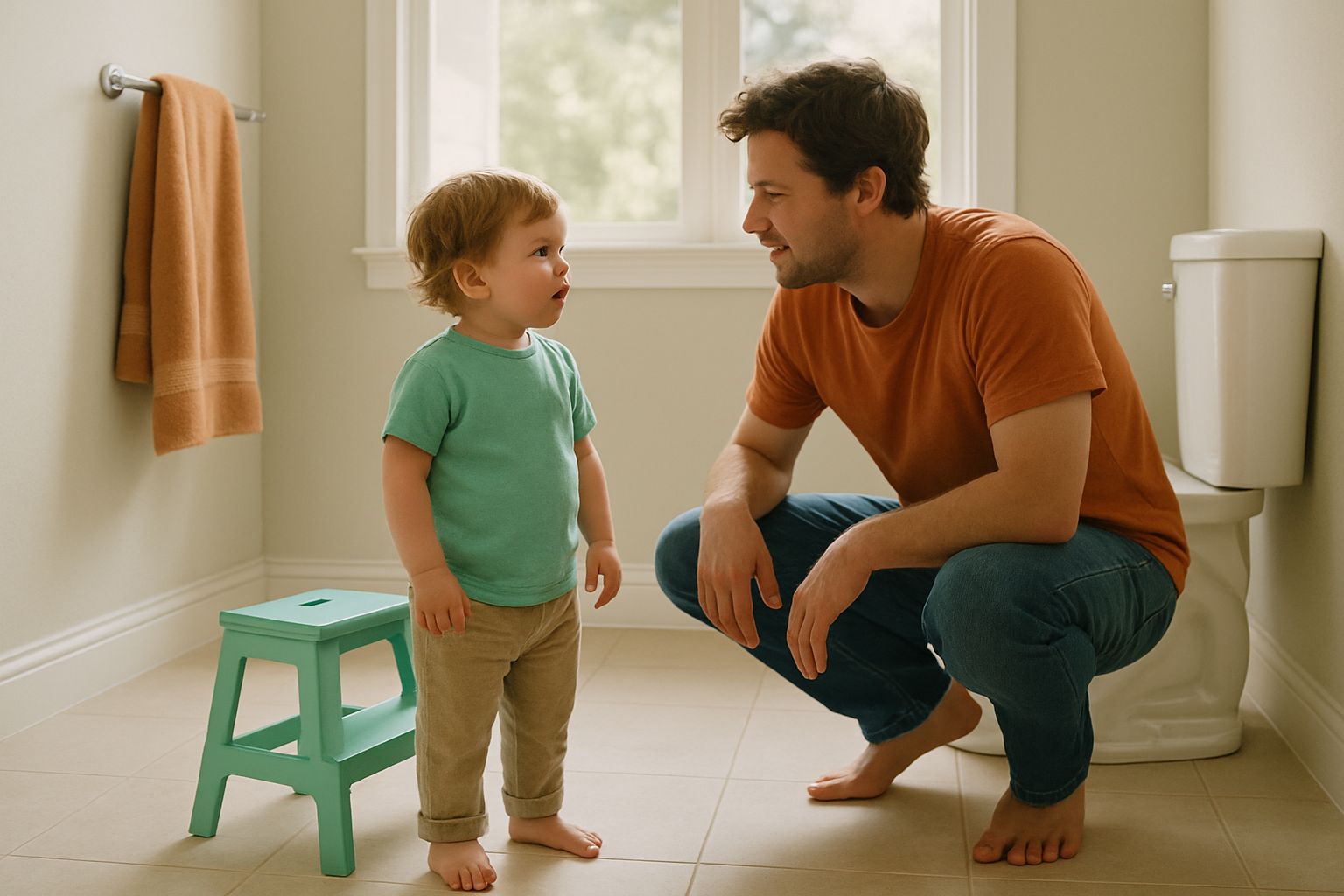
Let the potty carry the first three days at home while your child learns to signal, then move to the toilet with a seat reducer and step stool once they are reliably telling you they need to go. This is a change of place, not a new training. Most children are dry in the daytime in about a week.
The skill your child actually learned on the potty is not sitting in a particular spot. It is noticing the feeling and telling you about it. That skill travels with your child wherever the seat is, which is why the switch to the toilet is usually smaller than parents expect.
A typical pattern looks like this: the potty carries days one through three, when your child is home and learning fastest. From there, most families start offering the toilet, with the potty still nearby as a backup for a few more days. Some children are dry in the daytime in as little as three days, others take two or three weeks, and there is nothing wrong with a child who needs the longer end of that range.
What do you need to have ready before the switch?
Have a toilet seat reducer that sits firmly without sliding, a step stool sturdy enough to hold your child’s full weight, and a good stock of cotton underwear on hand before you make the move. Cotton lets your child feel wetness right away, which is part of what teaches them to notice and hold on. It is worth having these things ready in general, the way you would for any new stage, rather than treating the first toilet sit as the moment you discover something is missing.
Look for a seat reducer with a grippy underside and handles your child can hold onto, so it stays put the moment they climb on, like this one:
As an Amazon Associate we earn from qualifying purchases. Some links in this article are affiliate links: if you buy through them we earn a small commission, at no extra cost to you, and it does not affect what we recommend.
Feet flat on the stool matter for more than comfort. A child whose legs dangle has nothing to push against, and pushing is exactly what is needed when a bowel movement is on its way. A wobbly seat or unsupported feet can turn a five minute sit into a fight nobody wins.
Keep the potty around for a week or two rather than putting it away the day the toilet comes into play. A child who is not quite finished with it yet, especially for a bowel movement, should not have to ask for something that has already been packed up.
Why is your toddler fine on the potty but scared of the big toilet?
The toilet is taller, louder and has a hole your child cannot see the bottom of, which is enough to make a child who was perfectly relaxed on the potty suddenly balk at the toilet. The height, the automatic or unexpectedly loud flush, and feet with nothing under them are the most common reasons.
Let your child sit on the toilet fully dressed a few times first, with no pressure to do anything. Flush together after your child has already left the room or the bathroom, not while they are still sitting there, so the noise is not tied to the moment itself. Never force a child onto the toilet who is genuinely frightened of it.
A child who is scared of the toilet is not ready for that particular step yet, even if they were doing well on the potty. Build familiarity first, in small, unpressured doses, and try the switch again in a week or two. The potty keeps working in the meantime, so nothing is lost by waiting.
If your child balks at the toilet or seems unsure about the whole idea, it can help to watch this together first.
Does your child need a fixed toilet routine after the switch?
No. The goal of the Potty Training Box Method is your child telling you they need to go, and that stays true whether they are using the potty or the toilet. You keep asking the same simple question, ‘will you tell me when you need to pee?’, rather than putting your child on a schedule and sitting them down at set intervals.
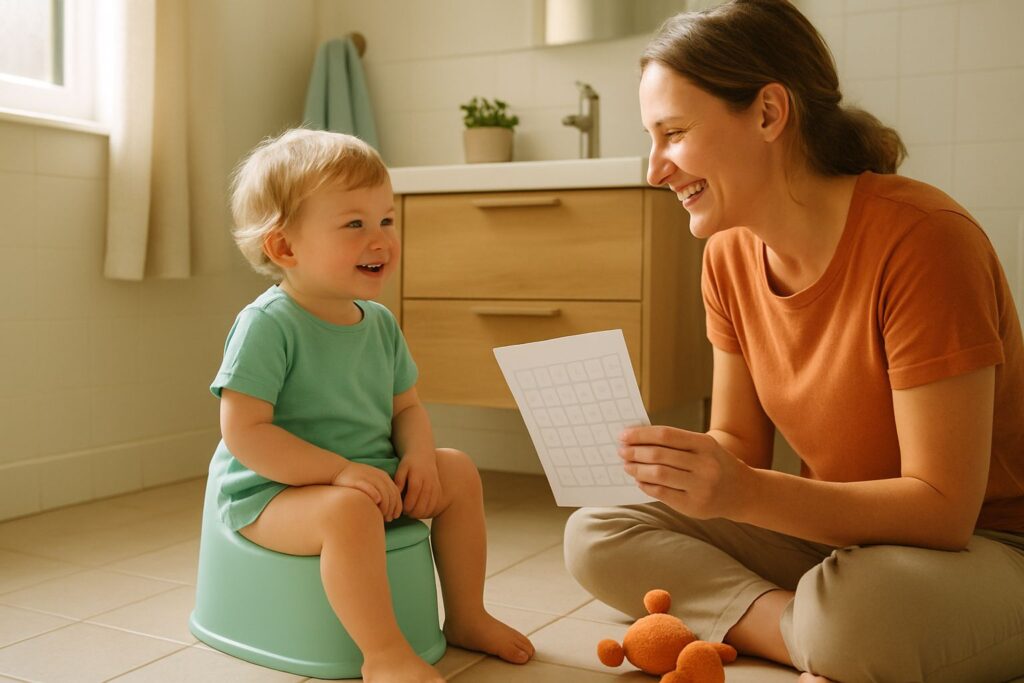
The tracking schedule is there to help you learn your own child’s pattern, not to hand your child a timetable. It records the time your child drank, the time they sat on the potty or toilet, whether nothing happened, and whether a pee or a poop was a green success or a red accident, plus a notes column for anything worth remembering. Reading that pattern back after a few days is what teaches you to recognize your child’s own signals, so offering the potty or toilet at certain moments is just temporary scaffolding on the way there, not the point of the exercise.
There are only two moments worth treating as standing habits, and they hold both during training and long after it: before and after sleep, and before you leave the house. Everything else follows your child’s own signal, not the clock.
One detail that makes the tracking schedule genuinely useful: have your child drink a full cup in one go rather than sipping it across the afternoon. A full cup at a known time is what lets you see how long it takes before your child needs to go, and that connection between amount and timing is exactly what the schedule is built to show.
| Day range | Where your child goes | What you do |
|---|---|---|
| Days 1 to 3 | Potty, at home | Ask ‘will you tell me when you need to pee?’, record on the tracking schedule |
| Days 4 to 5 | Potty and toilet, mixed | Offer the toilet, keep the potty as backup, start asking less often |
| Days 6 and after | Toilet, potty as backup only | Let your child lead, step in only when they ask or hesitate |
Why does poop lag behind pee on the toilet, and what helps?
Poop commonly comes later than pee, both on the potty in the first days and again when the toilet is introduced. It asks more of a child: a longer, less predictable sit, a stronger sensation, and for some children genuine unease about something leaving their body.
A few things help. A stool under the feet so your child can push properly, unhurried time instead of a rushed sit, and a familiar book nearby all take the pressure off. Standing over your child and waiting is usually the opposite of helpful; a bit of privacy, within sight but not right in front of them, often works better.
It is common for a child to keep asking for the potty specifically for a bowel movement for a while after they have switched to the toilet for peeing. That is a normal, temporary split, not a step backward.
If your child seems to be holding stool back, straining with pain, or going long stretches without a bowel movement, that is a question for your doctor or your child’s pediatrician, not something to work through with tips from an article.
What does day 4 or day 5 look like, and why is it the hard one?
Day two is not usually the hard one. Resistance most often shows up around day four or five, once your child is simply tired of being asked ‘will you tell me when you need to pee?’ over and over. It can look like refusing the toilet outright, ignoring the question, or having more accidents than the day before.
The fix is to ask less, not more. Handing your child more of the responsibility, and trusting them to bring it up on their own, is usually what breaks the standoff. It feels counterintuitive when things are going sideways, but stepping back is what lets your child step forward.
This kind of pushback is especially common when potty training a 3-year-old who’s starting late, since older toddlers often have stronger opinions about being asked the same question again and again.
Accidents at this stage are part of learning, not a sign that anything has gone wrong. There is nothing to fix by scolding and nothing gained by pushing harder in the moment.
If the whole attempt genuinely is not working after a real pause and a lighter touch, the method’s own advice is to stop and try again in a few weeks rather than grinding through it. A child who is not ready yet will usually get there faster the second time.
Out of the house: public toilets, daycare and grandma’s place
Short outings usually start after the first three days at home, once your child has the basics down, and build up from there. A trip to the store or a short visit is a better first test than a full day out.
Public toilets bring their own hurdles: automatic flushes that go off without warning, unfamiliar seats, and no step stool in sight. A portable, foldable seat reducer, a spare pair of underwear, and a full change of clothes in the bag cover most of what comes up.
Tell daycare exactly which words and which prompt you use at home, so the same question follows your child through the day instead of a different routine confusing things. A different toilet with the same rule, your child says it and you go, is what keeps the habit consistent wherever your child is.
If your child is older and this is the first real attempt, potty training a 3-year-old when you’re starting late covers what changes when the child is bigger and more opinionated about the whole thing.
Nights, pull-ups and what the switch does not fix
Moving from potty to toilet during the day says nothing about nights, and that is expected rather than a gap in the process. Night-time dryness depends on a child’s body waking up to a full bladder, which develops on its own timeline and often well after daytime training is solid.
Pull-ups for sleeping are a sensible choice during this whole period and do not undo any daytime progress your child has made. Plenty of children are reliably dry in the day and still in pull-ups at night for months afterward.
Ongoing bedwetting past age 6 is worth raising with your doctor rather than working through alone, since it can have a range of causes that a parent cannot sort out from home.
Where the seven-day method fits
The method behind this switch puts your child’s own initiative at the center of everything, rather than a schedule you impose. The potty carries the first days, the toilet follows, and accidents are treated as part of learning at every stage rather than as setbacks to correct.
The 7-Day Potty Training Video Course lays this out as forty short videos of about three minutes each, grouped by day, including the harder days like day four or five when resistance tends to show up. It comes with a digital AI coach you can ask questions any time of day or night, which is useful exactly when a hard moment happens and there is nobody else to ask.
The sticker cards, tracking schedule and pee and poop certificates are part of the course too, printed at home as your child works through it, with the stickers moving from three squares up to nine as your child improves.
Frequently asked questions
At what age should a child be fully toilet trained?
There is no single correct age, since readiness varies a lot from child to child. Daytime training usually takes about a week once a child is genuinely showing signs of readiness, and starting before those signs appear tends to stretch things out rather than speed them up. Waiting for readiness matters more than hitting a particular age.
What if your toddler will only poop on the potty and not the toilet?
This is common and usually temporary. Let your child keep using the potty for bowel movements while using the toilet for peeing, and revisit the toilet for poop again in a week or two once it feels routine.
How long should you keep the potty after moving to the toilet?
Keep it around for at least a week or two after your child starts using the toilet, longer if bowel movements are still happening there. There is no downside to keeping it available a bit longer than seems necessary.
What is the hardest day of potty training?
Day four or five tends to be the hardest, once your child gets tired of being asked whether they need to go. Asking less often and handing over more responsibility at that point usually helps more than pushing harder.
Do you need a toilet seat reducer, or is a regular seat fine?
A toilet seat reducer that sits firmly is worth having, since a regular adult seat is often too large and can feel unstable to a small child. Paired with a sturdy step stool, it gives your child solid footing to relax and to push when needed.
What do you do if your toddler refuses the toilet completely?
Back off the toilet for now and let your child sit on it fully dressed with no pressure to do anything, while the potty continues to handle the actual training. A child who is genuinely refusing usually is not ready for that particular step yet, and trying again in a week or two after building familiarity works better than forcing it.
Ready for the next step?
The 7-Day Potty Training Video Course walks you through this program in forty short videos, grouped per day, with a digital AI coach you can ask a question at eleven at night on day four. The full handbook comes with it as a PDF to read and print. Nothing is shipped, so you can start today.
This article was written with AI assistance and checked by Dustin van de Sande.