Potty Training Poop: Why Toddlers Hold It In and How to Help

Toddlers often hold in poop because pooping asks them to relax and let go on purpose, while peeing happens almost automatically. Many toddlers feel like they are losing a piece of themselves, so sitting still, hiding and clenching are common reactions. Peeing is usually mastered first, and poop can lag days or weeks behind. That is normal, not a setback.
Why is pooping on the potty so much harder than peeing?
Peeing is a reflex your child barely has to think about. Pooping is different: it asks a toddler to consciously relax a muscle while sitting still, which is a much harder skill for a two or three year old brain and body to coordinate.
Many toddlers also experience the poop itself as something strange, almost like losing a part of themselves, especially the first few times they watch it disappear with a flush. Standing very still, going rigid, or retreating behind the couch or into a corner during a poop is not defiance. It is usually a sign your child has started to notice the sensation, which is actually a step forward, even though it looks like resistance.
Because of this, it is completely ordinary for a toddler to master peeing on the potty within days while poop takes another week or two, sometimes longer, to follow. Treating the two as separate milestones, rather than one combined finish line, takes a lot of pressure off both of you. If you want to read more about why accidents of any kind happen during this stretch, our guide to potty training accidents covers the same no blame approach.
What stool withholding actually looks like in a toddler
Stool withholding is when a child tightens the muscles around the rectum to avoid passing a bowel movement, and it can show up at any point during potty training, in children who have never had a problem before. According to the Cleveland Clinic, it tends to be more common in boys and can start suddenly once a child associates pooping with discomfort.
In practice, it looks like crossing the legs, going up on tiptoes, stiffening the whole body, rocking back and forth, or disappearing to a corner or behind furniture. Some children will only ask for a diaper when they feel a poop coming, even though they are fully comfortable peeing on the potty or toilet.
A child who holds it for a day or two often ends up passing a very large, sometimes painful stool once they finally let go, which then reinforces the fear and starts the pattern again. Smearing or small marks in the underwear are frequently mistaken for carelessness, but they are often liquid stool leaking around a harder, held mass, not a sign your child is not trying.
If you are not sure whether what you are seeing counts as a readiness signal or a fear signal, a short online quiz can help you make sense of it before you decide what to do next.
You can also read more about what readiness actually looks like in our article on potty training readiness signs before deciding whether to start or wait a little longer.
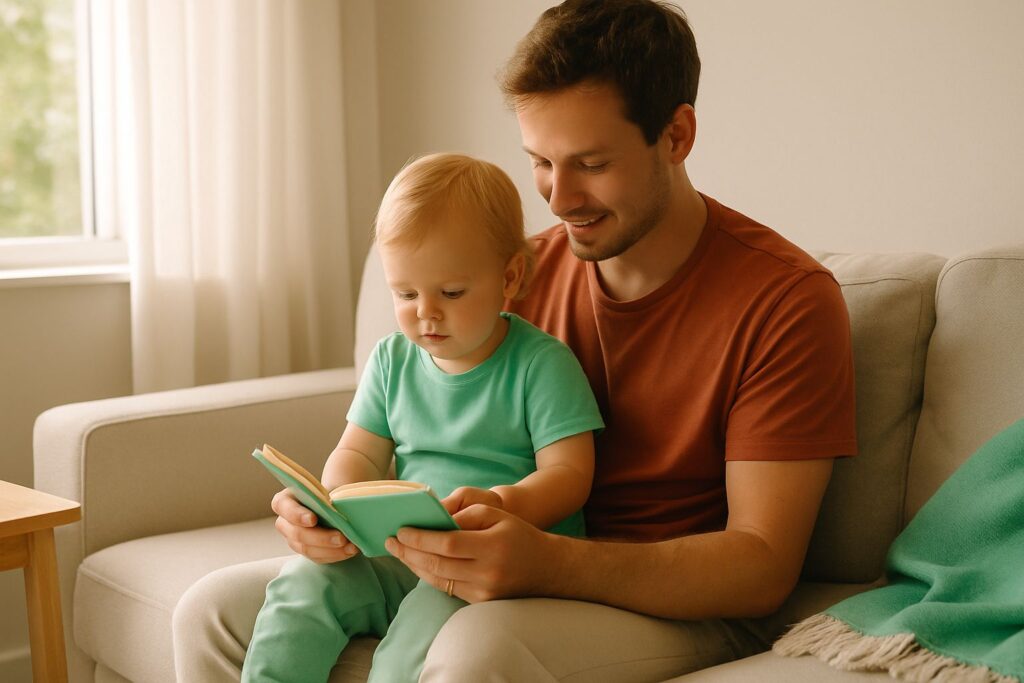
If the idea of poop leaving the body seems to genuinely frighten your child, rather than just annoy them, a picture book built around that exact fear can open the conversation gently, such as Nope! Not Pooping.
How holding it in turns into constipation, and how constipation makes the holding worse
The longer stool sits inside the body, the more water gets absorbed out of it, which makes it harder, bigger and more uncomfortable to pass. That single uncomfortable experience is often enough for a toddler to decide that pooping hurts, so the next one gets held in too.
This is a self-reinforcing cycle: holding causes a harder stool, a harder stool causes pain, and pain causes more holding next time. Breaking it is almost never about encouraging the child to push harder or try longer. It is about making the next poop easy and comfortable so the fear has nothing to attach to.
Because constipation is a medical matter and not a training technique, treating it, including any decision about fiber supplements, stool softeners or laxatives, belongs with your child’s pediatrician or child health clinic rather than something to manage from an article.
Why punishing, bribing hard or forcing backfires every time
A toddler always wins a standoff over pooping, because they control the one muscle involved and you do not. Raising the pressure, through scolding, big bribes, or insisting they sit until something happens, almost always raises the stakes in your child’s mind and makes them hold on longer, not less.
The more useful approach is staying neutral about accidents: clean up without a lecture, without a sigh, and without comparing this attempt to the last one. Never require your child to sit on the potty until they produce something, since that turns a seat that should feel safe into one more place pooping feels like a test.
Your child is not being difficult. They are managing a body sensation they do not yet trust, and shame almost always slows that trust down rather than speeding it up.
Let your child use a diaper for poop, but move it to the bathroom
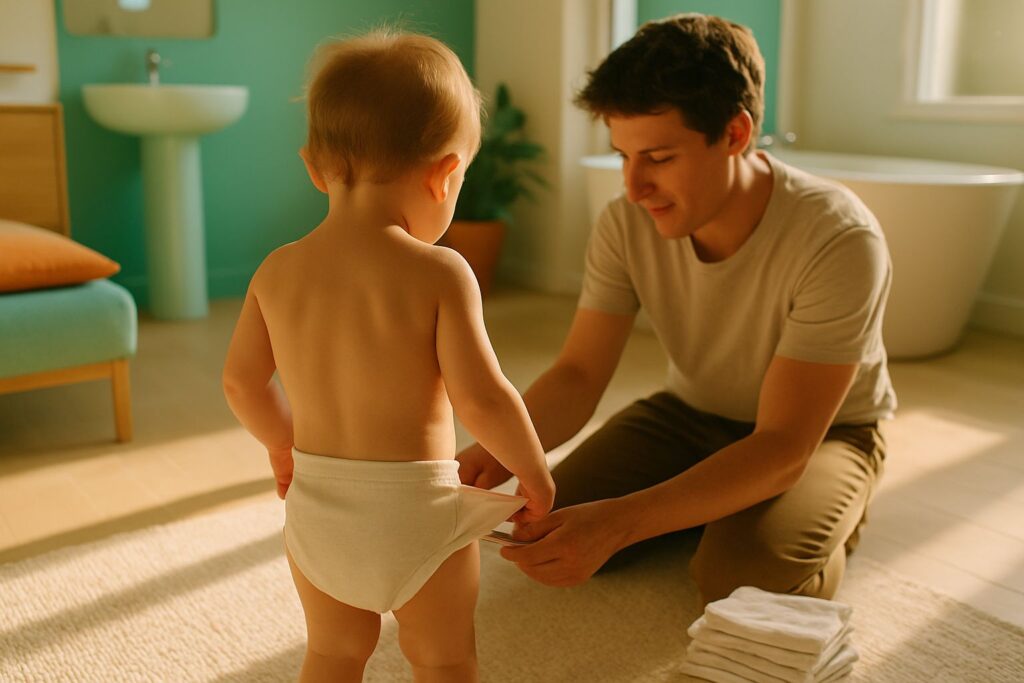
Allowing a diaper for poop while peeing stays on the potty is a bridge, not a step backward. It is a temporary workaround for a child who is genuinely afraid, not part of the regular method, which otherwise works with the diaper off and plain cotton underwear from day one. The goal is to slowly shrink the distance between where your child feels safe pooping and the potty itself, one small, low-pressure move at a time.
| Step | What it looks like | How long to stay here |
|---|---|---|
| Diaper anywhere | Child asks for a diaper and poops wherever they are | Until pee on the potty feels solid |
| Diaper in the bathroom | Diaper goes on, but only in the bathroom | A few days to a week |
| Diaper standing next to the potty | Child wears the diaper but stands beside the potty | A few days |
| Sitting on the potty, diaper on | Child sits on the potty with the diaper still fastened | Days to a couple of weeks |
| Diaper loosened | Same seat, diaper opened but still there | A few days |
| No diaper | Child poops directly into the potty | The new normal |
Move through each step at your child’s pace, which can mean days for one child and weeks for another, and keep offering the same praise for a diaper poop in the bathroom as you would for one in the potty. The location is what is changing, not the achievement.
Posture, feet and the step stool: the physical fix most parents miss
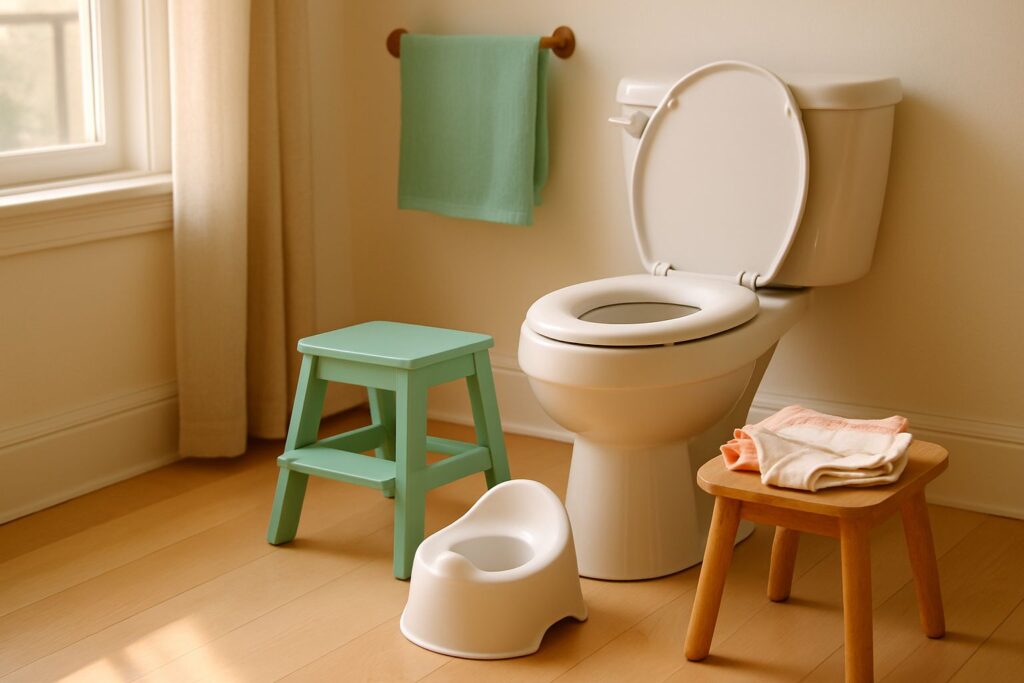
Feet flat and fully supported, with the knees sitting higher than the hips, genuinely relaxes the pelvic floor and makes letting go physically easier. A toilet seat where a toddler’s legs dangle in midair does the opposite: it asks small muscles to work to stay balanced, which is the last thing you want when the goal is relaxing.
This is one reason a potty on the floor is often easier for poop than a toilet seat early on, and why a sturdy step stool matters just as much once your child does move to the toilet. Having a potty, a toilet seat reducer and a solid step stool ready, whenever you decide the time is right, makes this far less of a scramble later.
As an Amazon Associate we earn from qualifying purchases. Some links in this article are affiliate links: if you buy through them we earn a small commission, at no extra cost to you, and it does not affect what we recommend. A potty such as the Ingenuity My Size Potty Pro, a toilet seat reducer like the Frida Baby Drop Down Potty Training Seat, and a stool such as the Dreambaby Step Stool are the kind of setup that supports this posture.
Privacy matters too. Some toddlers let go far more easily if you step back a little, turn away, or busy yourself at the sink rather than watching directly, especially once stool withholding has already made them self-conscious.
What to feed and drink so poop is easy to pass
Fiber from fruit, vegetables, whole grains and beans softens stool and makes it easier to pass without effort, which matters most for a child who is already nervous about pooping. Steady water throughout the day, not just at meals, helps keep that stool soft as well.
Pears, prunes and plain water are common, gentle choices parents reach for when a toddler is a little backed up. Any laxative, stool softener or fiber supplement is a decision for your pediatrician, since dosing for a toddler is not something to work out from an article.
When to offer the potty for poop without turning it into a clock
Most toddlers poop at a fairly predictable point in the day, often twenty to thirty minutes after a meal, but you find that window by recording it, not by imposing a fixed schedule on your child. A tracking schedule with columns for time of drinking, time on the toilet, whether nothing happened, pee marked green for success or red for an accident, poop marked the same way, and a notes column, turns a week of guessing into a pattern you can actually see.
Having your child drink a cup in one go, rather than sipping it across an hour, matters here too: it is the only way to connect how much went in with how long it takes to come back out, which is exactly what the schedule is meant to reveal.
The real goal underneath all of this is your child telling you themselves. Asking ‘will you tell me when you need to go?’ works far better than offering the potty over and over, since it turns the whole thing into your child’s job rather than yours to manage. The exceptions are a handful of fixed moments worth keeping even after training is well established: before and after sleep, and before you leave the house.
Many parents find that day four or five, not day two, turns out to be the hardest stretch. By then your child is often simply tired of being asked the same question, and that boredom can show up as refusal or as ignoring the potty altogether. The fix is usually to ask less, not more: back off the question for a stretch and let your child carry more of the responsibility for noticing and saying something themselves.
Rewards that keep working after the first success
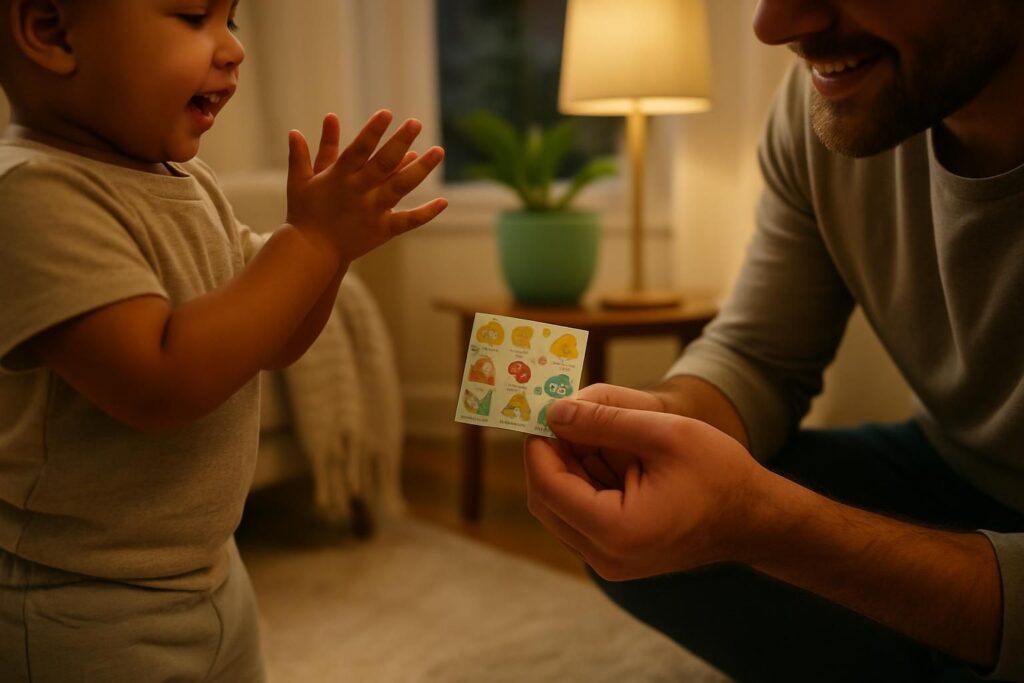
A single reward chart with a fixed number of boxes tends to run out of steam right when it is needed most. A better structure uses sticker cards in four sizes, with three, five, seven and nine squares used in that order, so the first reward comes quickly at just three stickers and the child sees right away that the plan works, and then rewards get steadily rarer as the habit gets stronger, so the habit outlasts the stickers instead of stopping the moment they do.
Poop deserves its own marker, since it is usually the harder milestone. Poop stickers and a dedicated poop certificate, separate from the pee certificate, give your child a specific moment to feel proud of, rather than folding it quietly into general potty success.
If your child just had their first potty poop, or you want to set the mood for what that celebration can look like, this is a good moment to watch something together.
Keep praising the sitting and the trying, not only the result. A child who sat for five minutes and produced nothing is still doing the work that eventually gets them there.
When poop problems need a doctor, not another potty strategy
Blood in the stool, visible pain, consistently hard stools, a swollen or firm belly, or no poop at all for several days are reasons to call your pediatrician rather than trying another potty strategy first. Loss of appetite or vomiting alongside any of this also warrants a call the same day.
Soiling that keeps happening after potty training is otherwise well established, rather than during the early weeks of learning, is also worth raising with your child’s doctor. This is not a sign you did something wrong. It is simply outside what any article, including this one, can safely advise on.
What a 7-day program does with poop that a tip list cannot
The Potty Training Box Method behind all of this is a seven day approach built on the child’s own initiative: the parent gathers information in the early days, then steps back as the child starts signaling and holding on by themselves. The 7-Day Potty Training Video Course walks through this same method as forty short videos of around three minutes each, grouped by day, alongside a digital AI coach you can ask questions of at any hour, day or night.
The tracking schedule, the sticker cards and the certificates are part of the course too, printed at home as you go, so the same tools described in this article are not something you have to recreate from scratch.
Results vary honestly from child to child. Most children are dry in the daytime in about a week, some manage it in as little as three days, and others take two or three weeks, with poop sometimes lagging a stretch behind pee regardless of which path you take. If an attempt is not working, the method’s own advice is to stop and leave it a while before trying again, rather than pushing through a bad week. Night time dryness is a separate matter that tends to come later and is not something any potty training approach, including the video course, promises as part of the daytime process.
Frequently asked questions
How do I get my toddler to poop during potty training?
Make pooping low pressure rather than a performance: keep accidents neutral, let your child use a diaper in the bathroom as a bridge if they are scared of the potty, and offer more fiber rich foods and water through the day so the first few stools are soft and comfortable. Avoid bribing hard, punishing, or making them sit until something happens, since all three tend to make a toddler hold on longer. If your child is withholding for more than a couple of days or passing hard, painful stools, check in with a pediatrician.
How long can a toddler go without pooping while potty training?
There is no safe number to wait out on your own: a toddler who has not pooped for several days, or who is in visible pain, has a swollen belly, or has blood in the stool, needs a pediatrician rather than another day of waiting at home. Occasional one or two day gaps during a stressful week of training are common and usually resolve once the stool softens and the fear eases. When in doubt, call your child's doctor rather than guessing.
Is it okay to let my child poop in a diaper during potty training?
Yes. Letting your child poop in a diaper while peeing stays on the potty is a recognized bridge step, not a step backward, and it works best when you gradually move the diaper from anywhere to the bathroom, then next to the potty, then onto the potty itself before removing it entirely. Keep praising the poop the same way you would if it landed in the potty, since the location is what is shifting, not the achievement.
Why does my toddler hide to poop?
Hiding behind furniture, in a corner, or going very still is usually a sign your child has started to notice the sensation of needing to poop, which is actually progress even though it looks like avoidance. It is rarely defiance. Staying calm, not chasing them out of the hiding spot, and gently narrating what is happening tends to help more than interrupting them.
What is the hardest age to potty train?
There is no single hardest age, since readiness depends more on the individual child's signals than on a birthday. The Mayo Clinic notes that most children show signs of readiness sometime between eighteen months and three years, and starting before a child shows those signs, rather than a specific age being difficult, is usually what makes training harder.
Should I put my child on the potty every 30 minutes for poop?
No, a fixed interval works against the method rather than with it, since the point is learning your own child's timing rather than imposing one. A tracking schedule that records drink times, toilet times and outcomes shows you the window that actually fits your child, usually a stretch after a meal, and from there the goal is your child learning to say it themselves, which the 7-Day Potty Training Video Course walks through day by day, rather than being offered the potty on a clock.
Ready for the next step?
The 7-Day Potty Training Video Course walks you through this program in forty short videos, grouped per day, with a digital AI coach you can ask a question at eleven at night on day four. The full handbook comes with it as a PDF to read and print. Nothing is shipped, so you can start today.
Sources
- Cleveland Clinic (Stool withholding can start at any point in potty training and is more common in boys)
- Mayo Clinic (Most children show signs of potty training readiness between eighteen months and three…)
This article was written with AI assistance and checked by Dustin van de Sande.