How Long Does Potty Training Take? A Realistic Timeline


Most children are dry in the daytime after about a week of focused training, though some take just three days and others need two to three weeks. Night dryness is separate and often arrives months or even years later. Readiness matters more than the calendar, and a child who isn’t ready should simply wait.
If you’re wondering whether three-day potty training really works, the short answer is that it works for some children and not others, and the difference usually comes down to readiness rather than anything the parent does wrong.
What does the week actually look like, day by day?
The first three days are spent at home, because that is when a child learns the most about the whole process, from feeling wet to recognizing the urge beforehand. Short outings usually start after day three, once the basics are familiar.
This is the structure the Potty Training Box Method follows: diapers off and cotton underwear on, a potty used first and then a switch to the toilet, spread across seven days, with the parent coaching the child toward signaling the need themselves rather than being told when to go. You can read what each day of the week looks like for the full breakdown.
A common assumption is that day two is the hardest, but that usually is not the case. Day four or five tends to be the toughest, because by then the child is tired of being asked the same question over and over and starts to push back. The fix is simple: ask less often and hand more of the responsibility to the child. You can read more about why day 4 is usually the hardest and how to get through it.
Why some children take three days and others take three weeks
Readiness is the single biggest factor. Signs of bladder and bowel control typically appear between 18 and 24 months, and toilet training in the United States usually begins somewhere between age 2 and 3, with most children trained by age 4, according to the American Academy of Pediatrics.
Consistency matters almost as much. Stopping and restarting, skipping days, or going back to diapers for an outing stretches the whole process out, because the child has to relearn signals each time. A first attempt also tends to move faster than a restart after an earlier attempt did not stick, since some of the fear or confusion from that first try can linger.
Daycare or preschool can speed things up or slow things down depending on how closely the staff follow the same approach at home. It helps to ask what their routine looks like before you start.
Children who are autistic, have Down syndrome, or are non-verbal are trained successfully with this same approach, usually over a longer stretch and led by reading the child’s own signals rather than waiting to be told in words. The American Academy of Pediatrics has guidance specifically on toilet training a child with a disability or developmental delay, which is worth a read if this applies to your child.
If you’re not sure where your child falls on this range, a short readiness quiz can help you see it more clearly than guessing.
| Stage | What usually happens | Typical timeframe |
|---|---|---|
| First 3 days at home | Diapers off, potty introduced, frequent asking, first signals | Days 1 to 3 |
| Days 4 to 7 | Short outings begin, resistance often peaks, then eases | Days 4 to 7 |
| Weeks 2 to 4 | Accidents become occasional rather than frequent | 2 to 4 weeks |
| Night dryness | Separate, physiological, follows daytime dryness | Months to a few years later |
How long until the accidents actually stop?
Accidents taper off rather than stop on a fixed date. A typical pattern is several accidents a day in week one, dropping to occasional ones by week two, and then only the rare slip by week three or four. Treat each one as part of learning, not a sign anything has gone wrong, and know what to do in the moment after an accident.
A tracking schedule makes the pattern visible instead of guessed at. The columns worth recording are the time your child drinks, the time they’re on the toilet, whether nothing happened, whether they peed (marked green for success, red for an accident), whether they pooped (same green and red marking), and a notes column for anything unusual.
For the drink time column to be useful, have your child drink a full cup in one go rather than sipping it across the afternoon. That is the only way to see how much went in and how long it then takes before they need to pee, which is exactly the connection the schedule is built to show.
Short regressions during an illness, a new sibling, a house move, or starting a new daycare room are common and usually short-lived. They are not a sign training has failed, just a sign something else is taking the child’s attention right now.
Why counting the days matters less than who is asking
The real milestone is not a day count, it is the moment your child tells you they need to go before it happens. Counting days gives you a rough sense of pace, but it is not the goal.
Instead of putting your child on the potty every hour because a clock or a schedule says so, ask directly: will you tell me when you need to pee? That question, repeated gently, is what teaches the child to notice and report the feeling themselves, rather than waiting to be placed on the potty.
There are a few moments where offering stays in place indefinitely rather than fading out: before and after sleep, and before leaving the house. Those exceptions hold both during the training week and long after it.
The tracking schedule exists to record when your particular child actually goes, not to set a timetable you then impose on them. Offering the potty in the early days is scaffolding that comes down quickly as your child starts to lead.
How long does night training take, and when does it start?
Night dryness is physiological rather than something you can train on a schedule, and it typically follows daytime dryness by months, sometimes a couple of years. You can read more about how night training works once daytime dryness is settled.
Pull-ups for sleeping are entirely normal during the training week and well beyond it; night dryness is a separate process that this program does not claim to speed up. A good signal that your child may be ready to try nights without them is several mornings in a row with a dry pull-up.
Ongoing bedwetting past age 6 is worth discussing with a doctor or child health clinic rather than troubleshooting at home. The American Academy of Pediatrics covers this in detail on its page about bedwetting.
What if the week does not work?
If an attempt stalls, the method’s own advice is to stop and leave it a few weeks before trying again rather than pushing through. That pause is a deliberate part of the plan, not a failure of it.
A child who is genuinely frightened of the potty or the toilet is not ready yet. The right move is to build familiarity first, with no pressure attached, and try the full week later.
If this sounds like where your child is right now, this short video is made to watch together.
Beyond fear or stalling, a few things belong with a doctor rather than being worked through at home: ongoing constipation, a child who seems to be withholding stool, repeated urinary infections, or broader developmental concerns.
What shortens the timeline in practice
Clearing three genuinely focused days on the calendar, rather than spreading the same effort thinly across three weeks, tends to shorten the whole process. The child benefits from consistency more than from extra time.
As an Amazon Associate we earn from qualifying purchases. Some links in this article are affiliate links: if you buy through them we earn a small commission, at no extra cost to you, and it does not affect what we recommend.
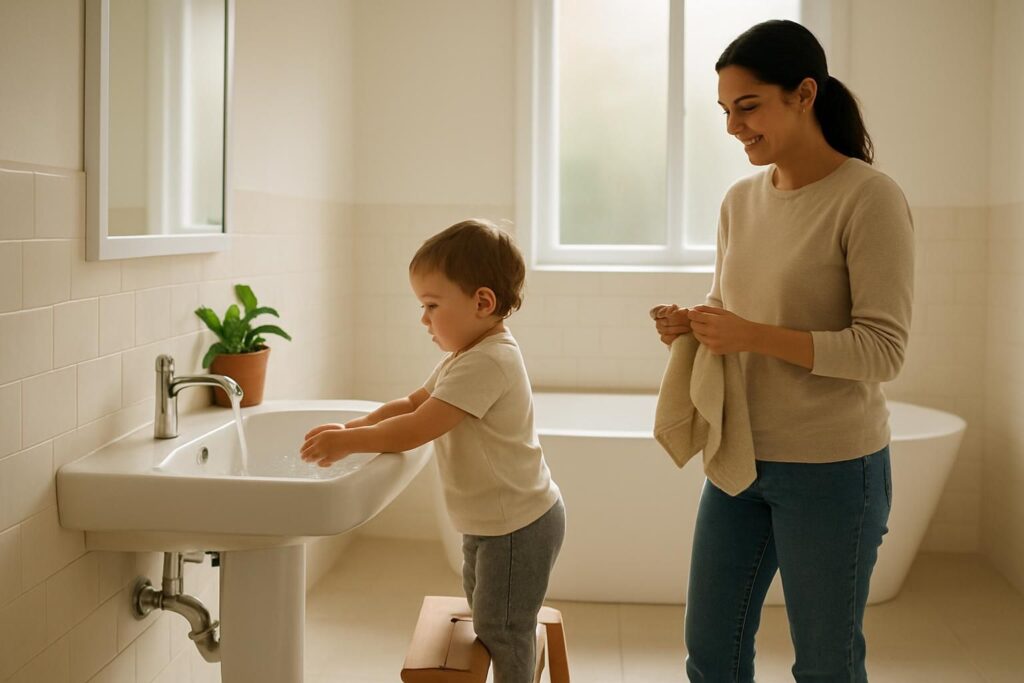
Worth having ready before you start: a potty, a toilet seat reducer, a step stool, at least 15 pairs of cotton underwear, something to protect the mattress and sofa, a handful of small rewards, and pull-ups for sleeping. A sturdy option for stepping up to the sink or toilet is the Dreambaby Step Stool, while for the potty itself a simple option like the Ingenuity My Size Potty Pro covers most of what’s needed.
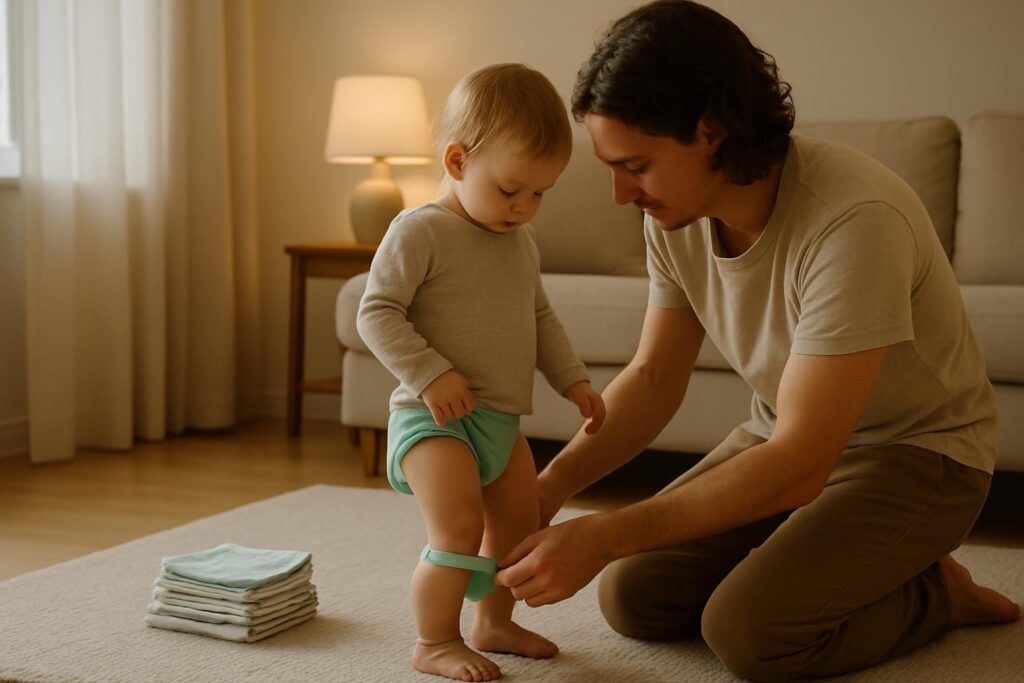
Cotton underwear rather than training pants matters more than it sounds: a child feels it immediately when cotton underwear gets wet, which is part of what teaches the connection between the feeling and the accident. Training pants are designed to feel drier, which works against that lesson.
Rewards that start small and grow help the habit outlast the stickers themselves. Sticker cards that go from 3 squares to 5, then 7, then 9 mean the first win comes fast, while later wins get rarer as the skill becomes ordinary rather than remarkable.
If you want the whole seven-day plan in one place, The 7-Day Potty Training Video Course covers the same program as about forty short videos grouped by day, each around three minutes, with a digital AI coach you can ask questions at any hour. The sticker cards, tracking schedule, and pee and poop certificates are included and printed at home.
For a sense of how the age side of the timeline usually plays out, it’s worth knowing at what age a child is usually fully potty trained before comparing your own child’s pace to anyone else’s.
Frequently asked questions
How long does toilet training take on average?
Most children reach daytime dryness in about a week of focused training. Some manage it in roughly three days, while others take two to three weeks, and the difference mostly comes down to whether the child was ready to start. Night dryness is a separate, later milestone and is not included in that week.
How many days does it take to potty train a 2.5-year-old?
There is no fixed number of days that applies to every child this age, since readiness varies more than age does. Many children around 2.5 who show clear readiness signs finish the core training within about a week, with occasional accidents continuing for a few weeks after.
How long until my child has no more accidents?
Accidents usually taper rather than stop on a specific day. A common pattern is several accidents daily in the first week, dropping to occasional ones by weeks two to four. Illness, travel, or a big change at home can bring a short-lived return of accidents even after things had settled.
Is it okay that my 3-year-old isn't potty trained yet?
Yes. Toilet training in the United States typically begins somewhere between age 2 and 3, and most children are trained by age 4, according to the American Academy of Pediatrics. A 3-year-old who isn't trained yet is well within that normal range, especially if they haven't shown clear readiness signs.
How long after daytime training until my child is dry at night?
Night dryness usually follows daytime dryness by months, and sometimes a year or two, because it depends on physical bladder development rather than learned habit. Pull-ups for sleeping are normal during this gap and are not a sign training has failed.
What is the hardest day of potty training?
Day four or five tends to be the hardest, not day two as is often assumed. By that point the child is often tired of being asked whether they need to go and starts to resist, and the fix is usually to ask less often and let the child take more initiative.
Ready for the next step?
The 7-Day Potty Training Video Course walks you through this program in forty short videos, grouped per day, with a digital AI coach you can ask a question at eleven at night on day four. The full handbook comes with it as a PDF to read and print. Nothing is shipped, so you can start today.
Sources
- American Academy of Pediatrics (HealthyChildren.org) (Signs of bladder and bowel control appear between 18 and 24 months, and toilet training…)
- American Academy of Pediatrics (HealthyChildren.org) (Guidance on toilet training a child with a disability or developmental delay.)
- American Academy of Pediatrics (HealthyChildren.org) (Information on bedwetting and when it typically resolves.)
This article was written with AI assistance and checked by Dustin van de Sande.