Why Your Toddler Sits on the Potty But Won’t Pee (And What Actually Helps)

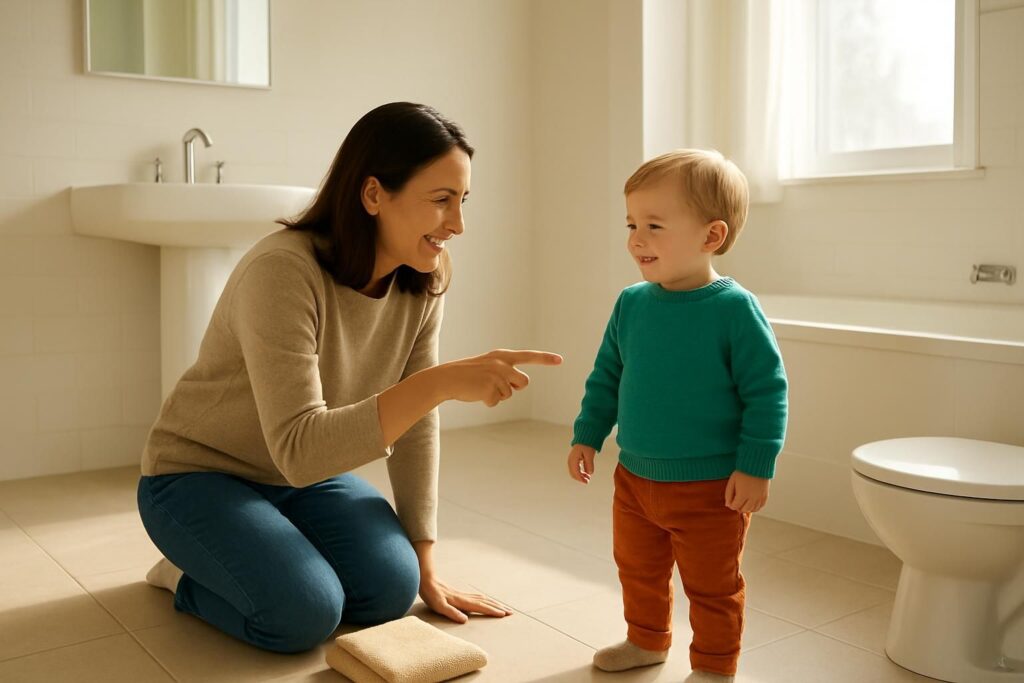
Your toddler sits and nothing happens because after a lifetime in diapers, they’ve never had to notice the full-bladder feeling or relax those muscles on purpose. Sitting down on request doesn’t release anything yet. This is extremely common in the first few days of training and isn’t refusal. The short gap between sitting and wetting actually tells you the timing is close, it’s the release skill that’s still catching up.
Think about what a diaper has done for your child up to now. It absorbed everything the moment it happened, so there was never a reason to notice the sensation building, and never a reason to practice holding or releasing on command. Peeing has always just happened. Asking a toddler to produce that same event on request, sitting on an unfamiliar seat, is a brand new skill, not a behavior they’re withholding out of stubbornness.
The fact that they wet their pants two or three minutes after getting up is actually a good sign, not a bad one. It means your sense of their timing was close. The body was ready to go, it just hadn’t connected the feeling to the potty yet. That connection usually forms within a few days as the child starts to notice the sensation while it’s still happening rather than after. The full day-by-day plan for the first week is built around exactly this gap closing over time.
Is your toddler holding it, or just not feeling it yet?
Three different things can look identical from the outside: a child sitting on the potty with nothing happening. Each one calls for a different response, so it’s worth telling them apart before you decide what to try next.
A child who simply hasn’t connected the feeling yet is usually relaxed on the potty, chatting or playing with something nearby, and then wets without much reaction at all, sometimes without even noticing right away. A child who is holding on purpose, often out of tension rather than defiance, looks different: squirming, crossing their legs, going stiff, or asking to get up almost as soon as they sit down. A third group isn’t withholding the urine at all, they’re uncomfortable with the setup itself: feet dangling with nothing to push against, a seat that feels too big or too cold, or fear of a loud flush nearby.
| What you see | What it usually means | What to try next |
|---|---|---|
| Child sits calmly, nothing happens | Hasn’t yet linked the feeling to the potty | Shorter sits, less talk, more patience |
| Child squirms, asks to get off fast | Holding on purpose, often from tension | Take the pressure off, warm water trick |
| Wets within minutes of standing up | Timing was close, release skill still developing | Note the gap on the tracking schedule |
If your child goes many hours without passing any urine at all, seems to be in pain, cries while urinating, or runs a fever, that’s a question for a pediatrician rather than something to work out from an article. The same goes for ongoing concerns about withholding stool or repeated discomfort: a doctor or well-child clinic can check what a blog post can’t.
What helps a toddler actually let go on the potty
As an Amazon Associate we earn from qualifying purchases. Some links in this article are affiliate links: if you buy through them we earn a small commission, at no extra cost to you, and it does not affect what we recommend.
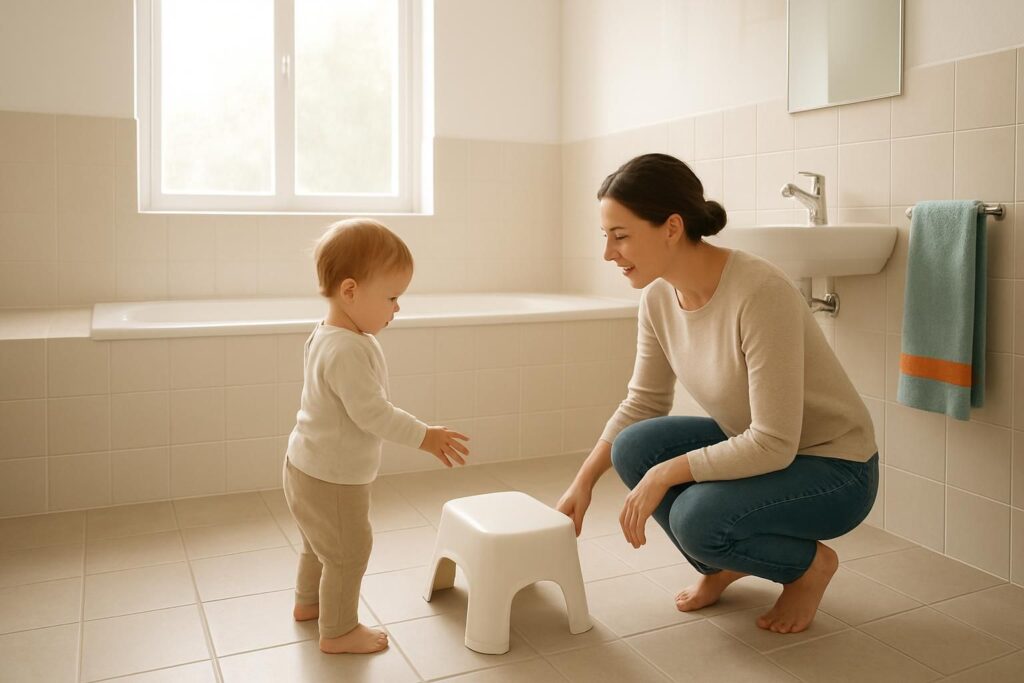
The single biggest physical factor is feet. A child whose feet dangle in midair can’t brace or relax their pelvic floor properly, so a step stool that lets their feet rest flat makes an immediate difference. Keep sits short too, five minutes is plenty. A child who sits for ten minutes starts to learn the potty is just a place where nothing happens, which is the opposite of what you want them to learn.
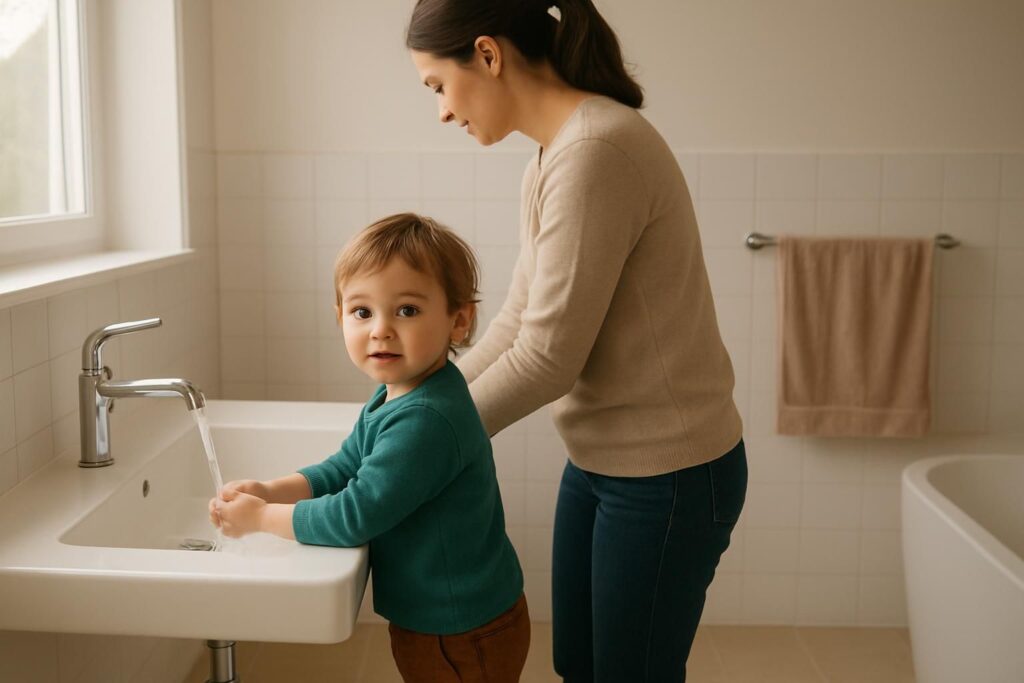
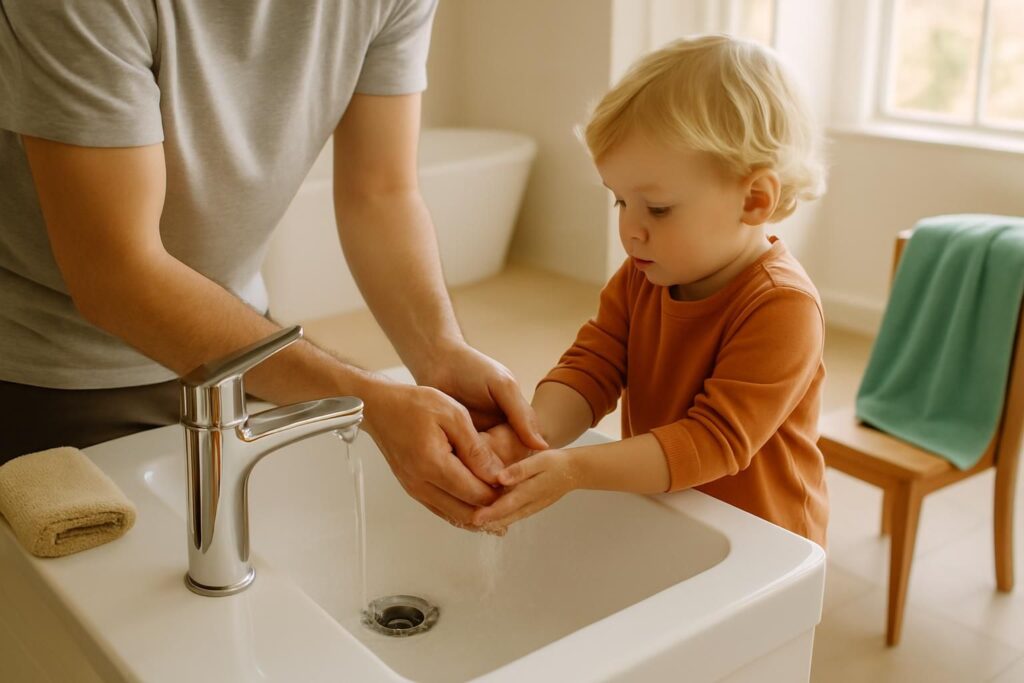
Take the pressure off the moment itself. Stop watching and waiting, hand them a board book, sit on the floor next to them and talk about something unrelated to peeing. Running warm water over their hands, or a warm washcloth laid gently on the lower belly, can help some children relax enough to let go. At home during the first few days, bare bottom time (no diaper, no underwear) helps a child actually feel what’s happening in real time instead of through layers of fabric.
Once you move to underwear, plain cotton underwear works better than training pants, because your child can genuinely feel wetness against their skin, which is exactly the sensation they’re learning to notice and act on ahead of time. And a few things never help: don’t hold a child down on the seat, don’t offer a bribe mid-sit to hurry things along, and don’t tell them to try harder. None of those speed anything up, and they can make a child more tense, not less. For a longer rundown of what tends to slow things down, see mistakes that stall a toddler.
How one full cup of water tells you when your child will need to go
Give your child a full cup of water to drink in one go rather than letting them sip it across the morning. That’s what lets you actually see how much went in and how long it takes to come back out, which is the whole point of tracking. A half-finished cup sipped over two hours tells you nothing useful about your own child’s timing.
Write down the time they drank, the time they sat on the toilet, whether nothing happened, and whether pee or poop occurred, marking a success in green and an accident in red, with a notes column for anything else worth remembering. After a handful of entries, a pattern for this particular child starts to show itself, and that pattern is information you’re gathering, not a schedule you’re imposing on them.
| Column | What it records |
|---|---|
| Time of drinking | When the cup went in |
| Time on toilet | When they sat |
| Nothing (yes/no) | Whether anything happened |
| Pee (green/red) | Success or accident |
| Poop (green/red) | Success or accident |
| Notes | Anything worth remembering |
The 7-Day Potty Training Video Course walks through this same tracking approach day by day, with forty short videos grouped by day and a digital AI coach on hand for questions whenever they come up.
Why putting your toddler on the potty every 20 minutes backfires
Sitting a child down on a strict timer teaches them to wait to be told, which is the opposite of what you’re actually working toward. The goal isn’t a child who sits obediently every twenty minutes, it’s a child who tells you themselves when they need to go.
If you’ve been wondering about putting your toddler on the potty every 15 or 30 minutes, the better question to ask your child is simply, “you tell me when you need to pee.” That one sentence, repeated gently rather than mechanically, is what moves the responsibility from you to them. The exceptions that stay fixed forever are before and after sleep, and before you leave the house, because those moments are worth checking whatever stage you’re at.
This is the core of the Potty Training Box Method: a seven day plan that starts with the potty at home, moves to the toilet as the child gets steadier, and works throughout toward the moment the child says it themselves rather than waiting to be asked. It is not a timetable of fixed sits, it is a sequence that hands the initiative back to the child as fast as the child can take it.
Around day four or five, many parents notice the child suddenly pushing back, refusing to sit, or getting cranky about the whole subject. That’s usually not a setback, it’s the child getting tired of being asked “you tell me when you need to pee” quite so often. Asking less often, and trusting the child to bring it up themselves, is usually the fix rather than asking more. For more on this, see resistance that shows up on day 4, and for the fuller argument against the clock approach, why timed sits slow you down goes into more detail.
What to do when the pee lands in the pants instead
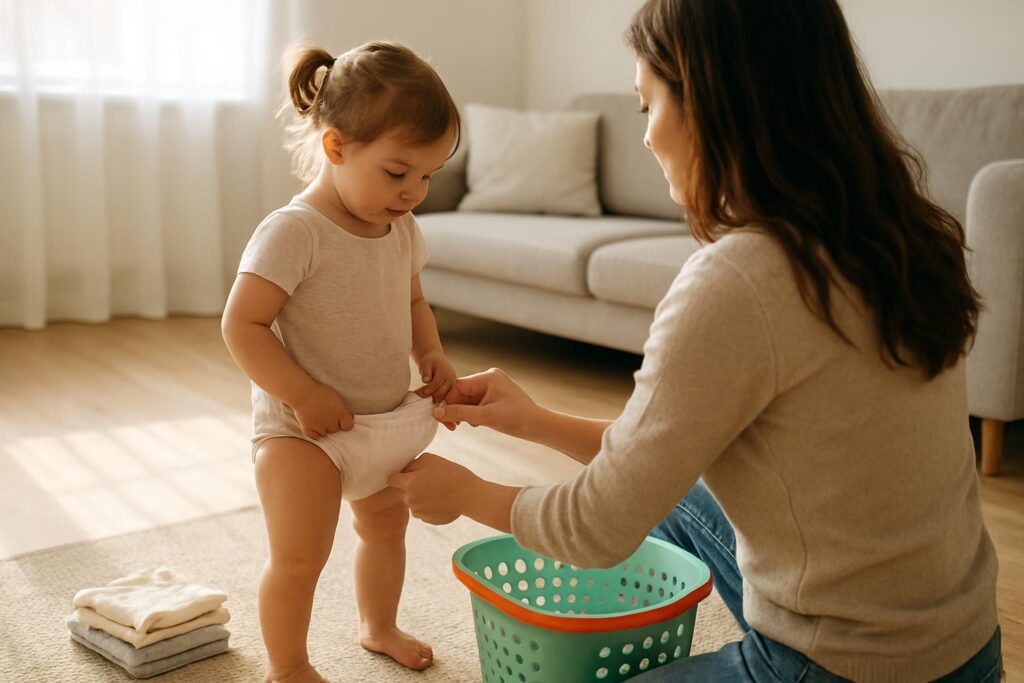
Stay neutral. Name what happened in plain words, “oh, you had an accident,” walk together to the potty, and let your child help with changing their own clothes rather than being changed at. No sighing, no “we talked about this,” no raised eyebrows: none of that teaches a toddler anything except that this topic makes you tense too.
An accident that gets scolded tends to teach the opposite lesson from the one you want. A child who feels judged for wetting their pants often starts holding on purpose to avoid the reaction, which is a much harder habit to undo than the occasional accident itself. Treating it as ordinary information, the same way the red mark on a tracking schedule is just data, keeps the whole process calmer for both of you.
Watching something together right after an accident can help reset the mood for both of you.
Is your toddler scared of the potty rather than unable to go?
Fear looks different from simply not feeling the sensation yet. Watch for a child who arches away from the potty, cries at the sight of it, panics at the sound of a flush, or tries to avoid the bathroom altogether. A child showing real fear isn’t being difficult, they’re not ready for this particular step yet.
The honest answer when that’s what you’re seeing is to slow down rather than push through. Build familiarity without any pressure to perform: let your child sit on the potty fully clothed while you read together, put a favorite stuffed animal on it first, or just leave it somewhere they walk past often enough that it stops being a novelty. Starting again in a few weeks, once the fear has faded, usually goes far more smoothly than continuing through it. Potty is a simple picture book some families read together during this familiarizing stage, and Noa’s Potty Training Journey is a story written for a child who feels nervous about the whole idea.
Before deciding whether this is fear or simply a child who isn’t developmentally ready yet, it helps to look at the broader picture. Readiness generally includes things like staying dry for a couple of hours at a stretch, showing interest in the bathroom, being able to follow simple instructions, and being able to pull pants up and down with some help, according to the American Academy of Pediatrics.
Take the readiness quiz to see where your child stands right now.
For a child who isn’t yet talking, or who communicates differently, the same principle still applies, you’re just watching for signals instead of waiting for words. Reading signals instead of waiting for words covers that version of the process in more depth.
How rewards keep a reluctant toddler trying
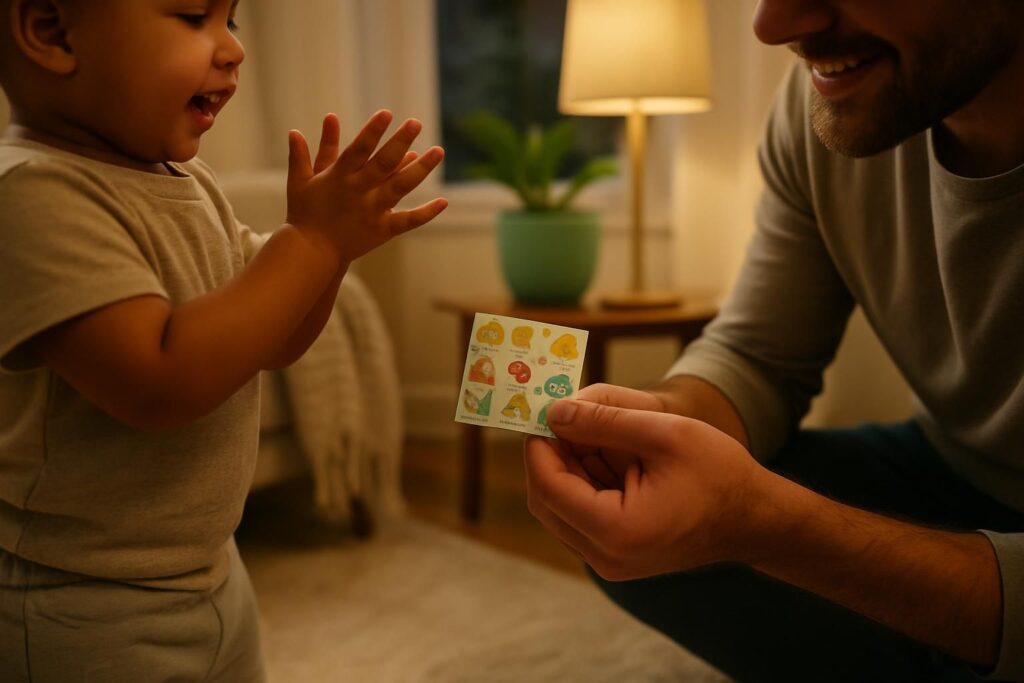
Early on, reward the attempt and the telling, not just the result. A toddler who says “I need to pee” and then doesn’t quite make it in time still did the hard part, noticing and speaking up, and that’s worth celebrating just as much as a dry potty.
The sticker cards included in the video course aren’t a single fixed card. They come in four sizes, used in order: three squares first, then five, then seven, then nine. The first reward comes quickly, at just three squares filled in, so a child sees almost immediately that the system works. After that, the cards get longer and the reward gets rarer, so the habit of using the potty keeps growing even as the stickers themselves become less frequent. That’s the whole mechanism, and it’s why the habit tends to outlast the stickers rather than stopping the moment you run out of them.
At the end, a pee certificate and a poop certificate give the whole week a clear finish line a child can be proud of. These, along with the tracking schedule, are printables you print at home as part of the course rather than something you need to draw up yourself.
When it still isn’t happening after a week
Most children are dry in the daytime in about a week using this approach. Some manage it in as little as three days, and others genuinely need two or three weeks, which doesn’t mean anything went wrong, just that this particular child needed more time.
If a full week has clearly gone nowhere, not fewer accidents, not more awareness, nothing, the method’s own advice is to stop and leave it alone for a few weeks before trying again, rather than grinding through. Pushing a child who isn’t ready tends to build the exact tension and holding that makes the whole process harder the next time around. Pausing isn’t failure, it’s part of how the plan is meant to work.
Ongoing concerns such as a child who seems to be withholding stool for days, repeated urinary infections, pain, or bedwetting that continues well past the toddler years are questions for a pediatrician or well-child clinic, not something to work through with trial and error at home. There’s no shame in pausing for either reason. The course keeps until your child is ready, and starting again later with a calmer child is almost always faster than pushing through resistance now.
Frequently asked questions
How long is it okay for a 2 year old not to pee?
There isn’t a single safe number of hours to point to, and it varies by child, but a toddler who goes most of a day with no urine at all, seems uncomfortable, or cries when they finally do go should be seen by a pediatrician rather than waited out. During active potty training, shorter gaps of a few hours are usually nothing to worry about.
How do I help my toddler pee on the potty when nothing happens?
Keep sits short, around five minutes, with their feet flat on a step stool rather than dangling. Take the pressure off by handing them a book or chatting about something else instead of watching and waiting, and try warm water on their hands or a warm washcloth on their belly.
Why does my toddler hold their pee during potty training?
Some toddlers hold on purpose out of tension or nerves about the unfamiliar seat, not defiance. Others simply haven’t yet connected the full-bladder feeling to the action of letting go, which looks similar from the outside but isn’t the same thing.
Should I put my toddler on the potty every 15 or 30 minutes?
Fixed timed sits teach a child to wait to be told rather than to notice and act on their own signal, so it isn’t the most effective approach. A tracking schedule that records when your own child actually goes gives you far more useful information than a generic interval.
What is a red flag for potty training?
Pain while urinating, fever, crying during bowel movements, or going most of a day with no urine at all are reasons to call a pediatrician rather than continue training. Ongoing constipation or withholding stool over several days also belongs with a doctor.
My toddler is scared to pee on the potty, what should I do?
Build familiarity without pressure first: let them sit on the potty clothed, put a teddy bear on it, or read a book together nearby. A child who is genuinely frightened isn’t ready yet, and it’s fine to pause and try again in a few weeks.
Ready for the next step?
The 7-Day Potty Training Video Course walks you through this program in forty short videos, grouped per day, with a digital AI coach you can ask a question at eleven at night on day four. The full handbook comes with it as a PDF to read and print. Nothing is shipped, so you can start today.
Sources
This article was written with AI assistance and checked by Dustin van de Sande.