
The nine mistakes that stall most toddlers are: starting before they’re ready, running the day by a fixed clock, using pull-ups during the day, punishing accidents, asking every ten minutes if they need to go, quitting on the hardest day, switching methods mid-week, getting the rewards wrong, and comparing your child to others.
Most parents have done at least three of these without realizing it, and none of them mean you’ve broken anything. Below is why each one stalls a toddler and exactly what to do instead, in plain terms you can use today.
Quick reference: the nine mistakes at a glance
| Mistake | Why it stalls your toddler | Do this instead |
|---|---|---|
| Starting too early | Child can’t yet recognize or hold the urge | Check readiness signs first |
| Timed sits every 20 minutes | Teaches waiting to be told, not self-signaling | Ask them to tell you, record their own timing |
| Pull-ups during the day | Absorbs wetness so nothing is felt | Plain cotton underwear, diaper off |
| Scolding accidents | Child hides or holds it in from fear | Neutral change, no lecture |
| Asking every ten minutes | Breeds boredom and resistance around day 4 | Ask less, hand over responsibility |
| Quitting on the hard day | Mistakes a normal dip for failure | Hold steady on a bad day, pause for a real no |
| Switching methods mid-week | Rules keep changing under the child | Pick one plan and finish the week |
| Wrong rewards | Too big or too rare to motivate | Small, immediate, consistent rewards |
| Comparing to other kids | Adds pressure that has nothing to do with readiness | Go by your own child’s signals and pace |
| Pushing on when it isn’t working | Forces a skill the child can’t yet manage | Stop, wait a few weeks, try again |
Mistake 1: Starting before your child shows the signs
Starting before a toddler is physically and behaviorally ready is the single biggest reason a week of training turns into a month of frustration. Readiness isn’t about age alone, it’s about a cluster of signs showing up together.
Look for these before you pick a start date:
- Stays dry for about two hours at a stretch
- Tells you, in words or gestures, that a diaper is wet or dirty
- Can pull pants up and down with little help
- Follows a simple two-step instruction
- Shows curiosity about the bathroom or about you using it
Most children show these signs somewhere between 18 months and 3 years. There is no single correct age, only a readiness window that differs by child.
Not sure where your child stands? Take the readiness quiz to see which signs they’re already showing.
If your child is genuinely afraid of the potty or the toilet, that is not a child who is ready. Build familiarity first: let them watch, sit on it clothed, flush it without drama, and start the real training later. Children with autism, Down syndrome, or who are non-verbal are trained successfully too, often over a longer stretch and by reading their individual signals rather than waiting for words. If that describes your child, potty training an autistic or non-verbal toddler goes into that in more detail.
Mistake 2: Running the day by the clock instead of reading your child
Sitting a toddler down every 20 or 30 minutes because a schedule says so teaches them to wait passively for the next prompt, not to notice and signal their own urge. That is the opposite of the skill you’re trying to build, and it is one of the reasons why timed sits slow you down rather than speed things up.
The fix is a single question, repeated at the right moments: ‘you tell me when you need to pee.’ Instead of offering the potty on a clock, you ask your child to report their own need and let them take the lead. The only fixed moments worth keeping are before and after sleep and before you leave the house, during training and afterward too.
This is exactly what the Potty Training Box Method is built around: a structured seven day program that spends the first three days at home, then moves into short outings, and shifts the child from potty to toilet over the week, with the child’s own initiative as the driver throughout rather than a parent-led schedule.
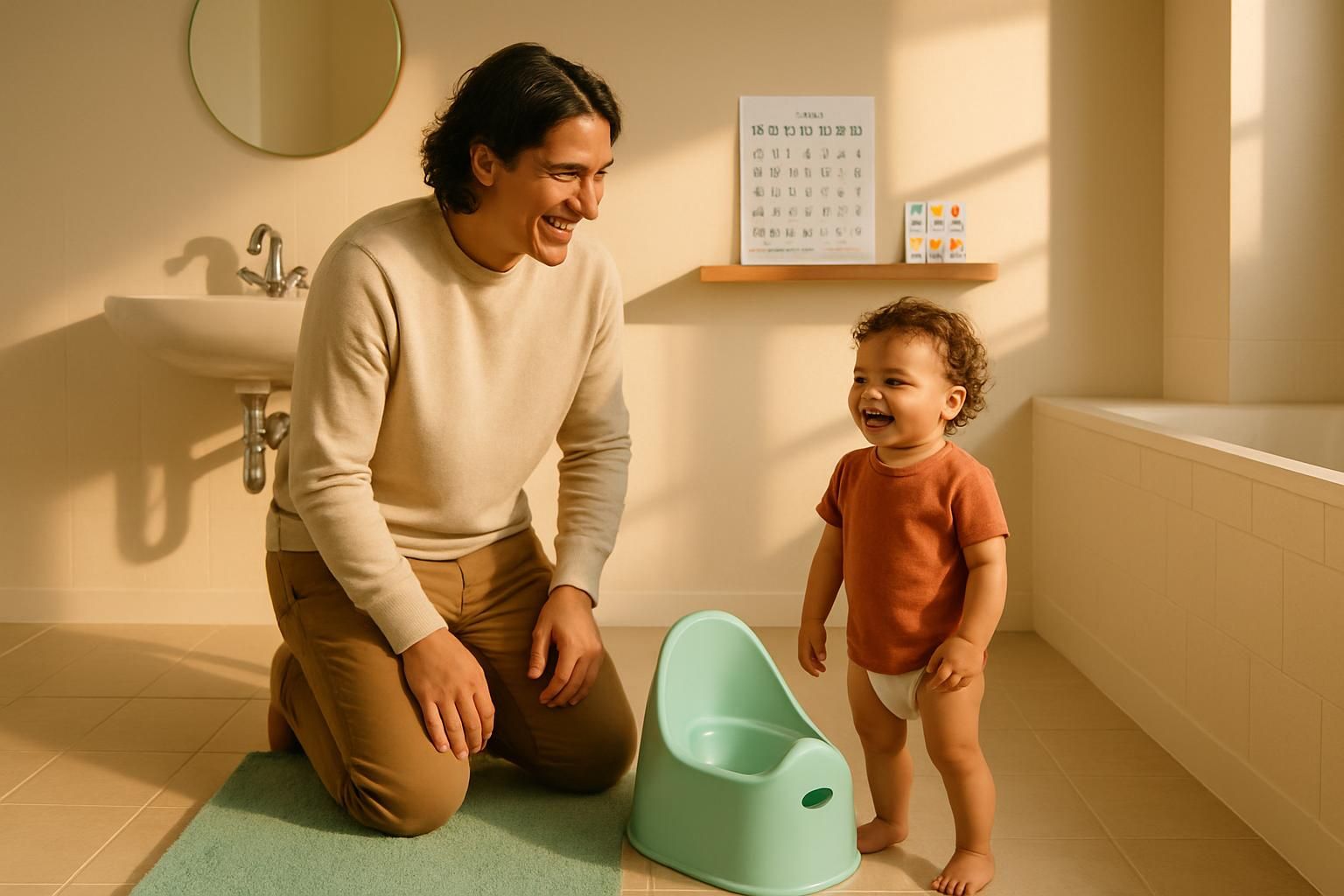
The tracking schedule that goes with it isn’t a timetable to impose on your child. It’s a record of when this particular child actually goes, so you learn their personal rhythm instead of guessing.
Mistake 3: Using pull-ups or training pants during the day
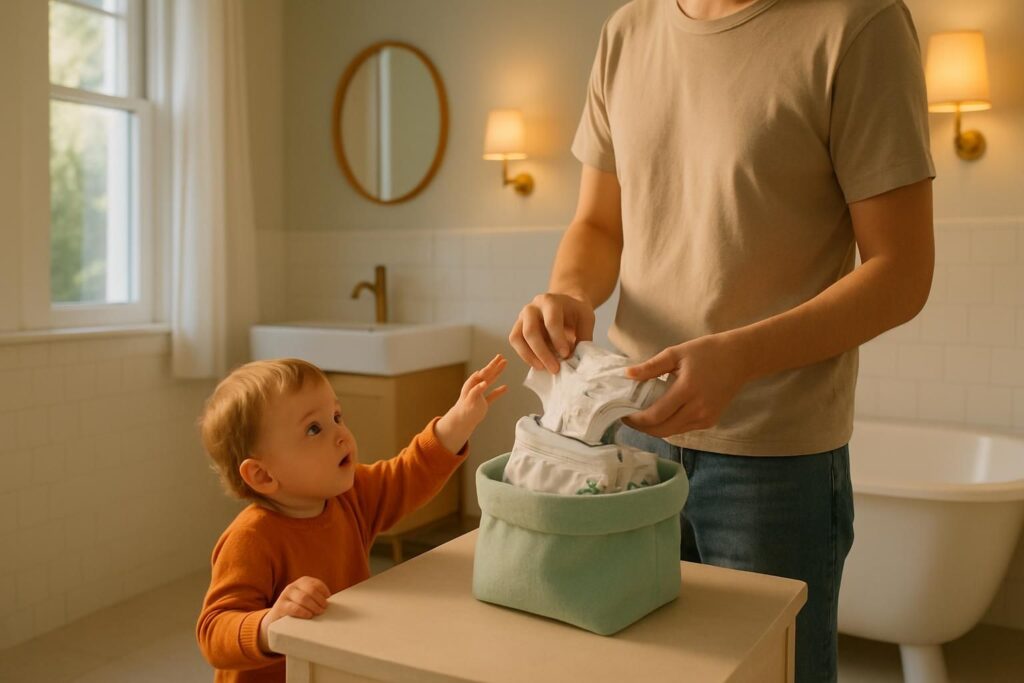
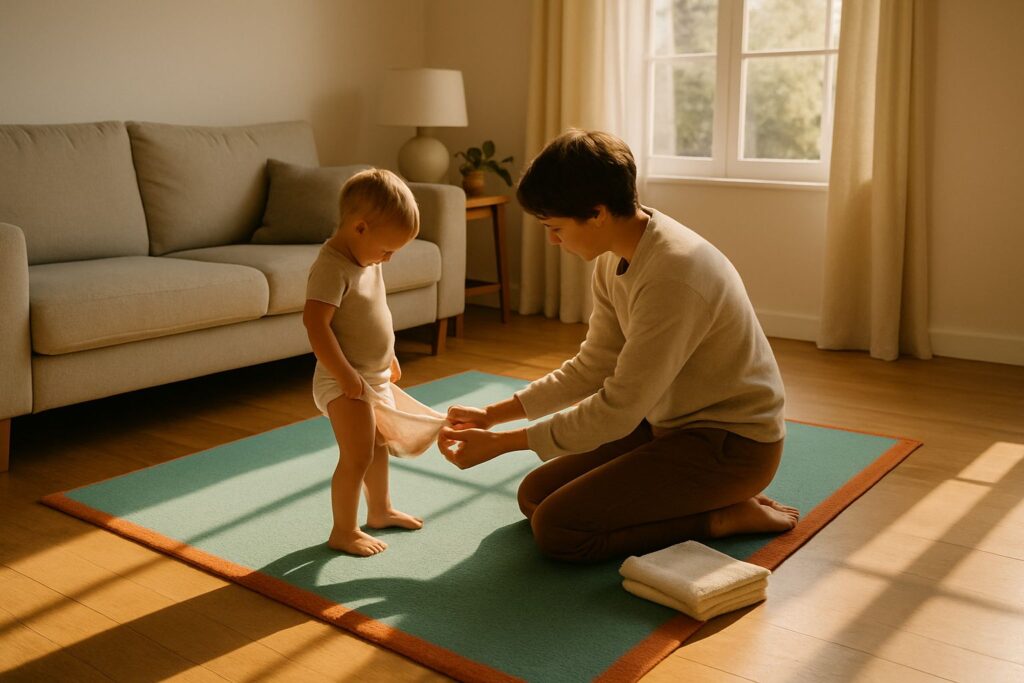
Pull-ups and training pants absorb moisture well, which is exactly the problem during the day: your child doesn’t feel what happened, so there is nothing to learn from. That absorbency is the whole issue, a training pant that does its job too well quietly removes the sensation a toddler needs in order to connect the feeling with the action. Plain cotton underwear with the diaper off completely works better, because a wet pair of underwear is uncomfortable enough that the child notices right away.
Pull-ups for sleeping are a separate matter and perfectly fine to keep using. Nighttime dryness develops on its own timeline, later than daytime control, and a seven day daytime plan does not promise it.
Before you start, it helps to have the basics ready: a potty, a toilet seat reducer, a step stool, at least 15 pairs of cotton underwear, and something to protect the mattress and sofa. Having these on hand from day one means you’re not scrambling mid-training.
Mistake 4: Reacting to accidents like they are failures
Accidents are data, not misbehavior. Most children have several a day in the first few days of training, and that is expected, not a sign that something has gone wrong.
Keep your response short and neutral: a simple ‘wet pants, let’s change them’ beats a lecture every time. Scolding teaches a child to hide the next accident or to hold it in, which works against the exact signal you’re trying to teach them to send.
Letting your child help with the cleanup, in a calm and matter-of-fact way, builds a sense of ownership without turning it into a punishment.
Watching something together right after an accident can help reset the mood for both of you.
Mistake 5: Asking ‘do you need to go?’ every ten minutes
Day 4 or 5, not day 2, is usually the hardest day, because by then a child has grown bored of being asked the same question over and over and starts pushing back.
That resistance is a sign to ask less often, not more. Handing the question back to your child, letting them bring it up instead of you prompting constantly, usually speeds things up rather than slowing them down. For more on what that day typically looks like and how to handle it, see why day 4 is usually the hardest day.
Mistake 6: Quitting on the hardest day, or pushing on when it is clearly not working
A rough day 4 or 5 is normal and worth working through rather than abandoning. A child who is genuinely not ready, who shows fear, constant resistance, or withholding, is a different situation and calls for a different response.
If an attempt genuinely isn’t working after a real effort, the method’s own advice is to stop and leave it a few weeks before trying again. That pause is part of the plan, not a sign the parent did something wrong.
Most children are dry in the daytime in about a week. Some manage it in three days, others take two or three weeks, and that range is normal rather than a red flag.
Mistake 7: Switching methods halfway through the week
Three days of one plan beats one day each of three different plans. Every time the rules change, the child has to relearn what’s being asked of them, which resets progress instead of building on it.
If you want day-by-day direction instead of piecing advice together from different sources, the 7-Day Potty Training Video Course walks through what to do on each day, including the days that go badly, with a digital coach available for questions at any hour. The sticker cards, tracking schedule, and certificates are part of the course and are printed at home as you go.
Mistake 8: Getting the rewards wrong (too big, too random, or stopped too soon)
Small, immediate, and consistent rewards work better than big or occasional ones. A toddler needs the connection between the action and the reward to be obvious, which a surprise trip to the toy store two days later cannot provide.
A sticker card system that grows from 3 squares, to 5, to 7, then 9, gives a reward quickly at first so the child can see that it works, then makes it rarer as they improve, so the habit outlasts the stickers instead of stopping the moment they do.
Only reward what actually happens in the potty or toilet, not just sitting down. Rewarding the sit alone teaches the child that sitting is the goal, rather than going.
Mistake 9: Comparing your toddler to other people’s, including the ones at daycare
Pee and poop often come on different timelines, and many parents report that poop training takes longer than pee training, sometimes by weeks. That’s a common pattern, not a sign anything is wrong with your child or your approach.
Nighttime dryness is a separate skill that develops later and isn’t part of a seven day daytime plan. A daycare’s timeline or a relative’s comment about another child is not a deadline your toddler has to meet.
Some things are worth a call to your pediatrician rather than working through at home: ongoing constipation, a child who seems to be withholding stool, pain while peeing, or bedwetting that continues past age 6. Those are medical questions, and they deserve a medical answer rather than a training tweak.
What to do instead, in order
Once you know what to avoid, the sequence that actually works is short enough to hold in your head.
- Check readiness signs, then pick three days you can spend mostly at home.
- Diaper off, cotton underwear on, potty within easy reach for those first three days.
- Use the tracking schedule: have your child drink a full cup in one go rather than in sips, then note the time and what happened afterward. Drinking it all at once is what lets you see the link between how much went in and how long it takes to need the bathroom.
- Hand over the question: ‘you tell me when you need to pee,’ instead of prompting constantly.
- Keep fixed offers only around sleep and before leaving the house.
- Move to short outings from day 4 onward, then shift from potty to toilet using a seat reducer and step stool as your child gets steadier.
For the full sequence laid out day by day, see the full step-by-step plan for the first week, and when your child is ready to move off the potty entirely, making the switch from potty to toilet covers that step on its own.
Frequently asked questions
What is the proper age for toilet training?
There is no single correct age. Most children show readiness signs, like staying dry for about two hours, telling you a diaper is wet, and following simple instructions, somewhere between 18 months and 3 years. Starting when those signs appear matters more than hitting a specific birthday.
Is it harder to potty train pee or poop?
Many parents report that poop training takes longer than pee training, sometimes by several weeks. It is common for a child to be reliably dry during the day while still having occasional accidents or avoiding a bowel movement on the potty for a while longer.
Should I put my toddler on the potty every 20 minutes?
No. Offering the potty on a fixed timer teaches a child to wait to be told rather than to notice and signal their own urge. It works better to ask your child to tell you when they need to go, and to use a tracking schedule to learn their personal timing, with fixed offers kept to moments like before sleep and before leaving the house.
How long should I keep trying before taking a break?
A difficult day, especially around day 4 or 5, is normal and worth working through. If an attempt genuinely isn't working after a real effort over several days, the honest move is to stop, wait a few weeks, and try again rather than pushing on. That pause is a normal part of the process, not a failure.
Does toilet training affect sleep?
Daytime toilet training and nighttime dryness are separate skills that develop on different timelines. Many children stay in pull-ups overnight well after they're reliably dry during the day, and that is expected rather than a sign training has stalled.
Are pull-ups a mistake during potty training?
During the day, yes, because they absorb moisture so well that a child doesn't feel what happened and has nothing to learn from an accident. Plain cotton underwear works better for daytime training. Pull-ups for overnight sleep are a separate matter and are fine to keep using.
Ready for the next step?
The 7-Day Potty Training Video Course walks you through this program in forty short videos, grouped per day, with a digital AI coach you can ask a question at eleven at night on day four. The full handbook comes with it as a PDF to read and print. Nothing is shipped, so you can start today.
This article was written with AI assistance and checked by Dustin van de Sande.