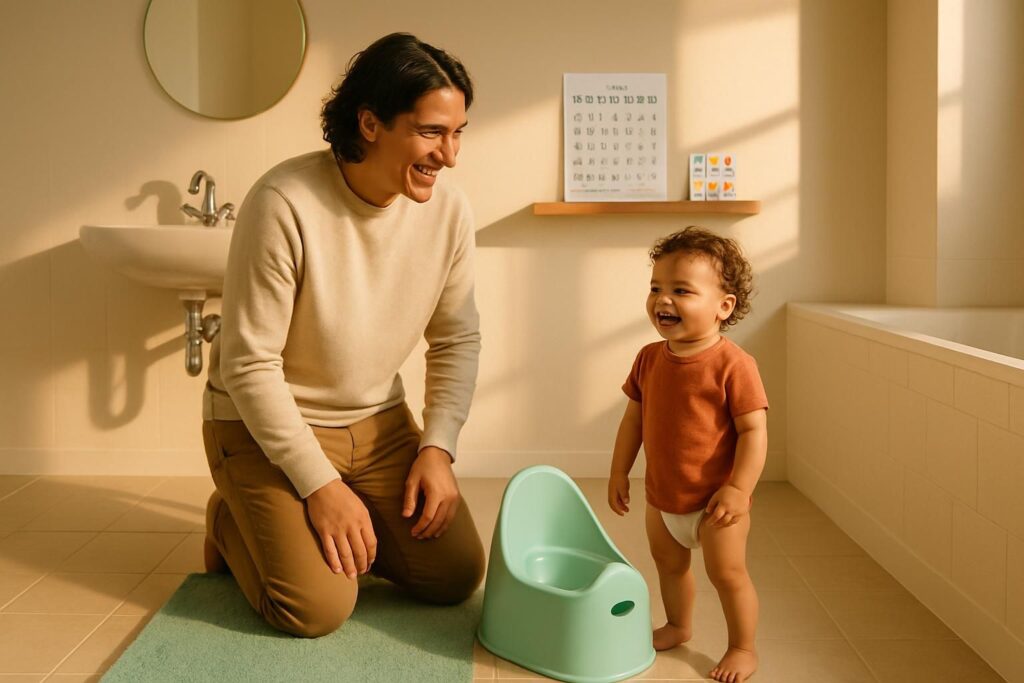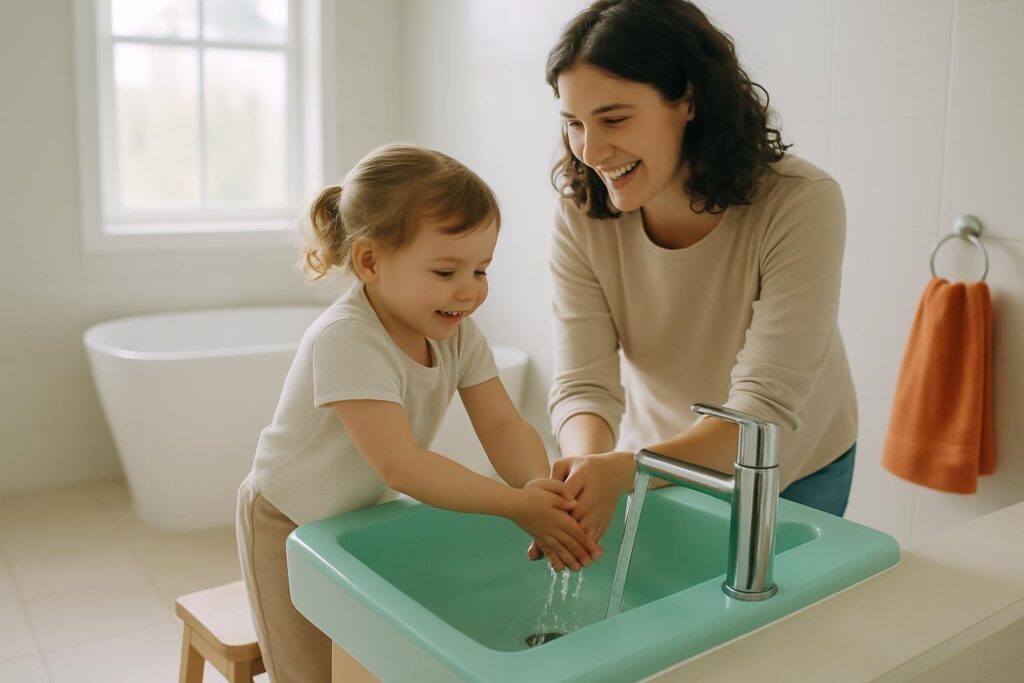

There is no single best potty training method for every child. The right approach matches your child’s readiness, how many days you can clear for training, and how much structure you want. Options range from child-led waiting to three-day intensives to structured seven-day programs, but every method that actually works ends with the child telling you they need to go.
Search around and you’ll find five approaches that keep coming up: child-led (sometimes called child-oriented), the three-day intensive, the Oh Crap! method, timed sits by the clock, and structured seven-day programs. They differ in pace and how much the parent directs things, but the ones that hold up over time share one feature: the child eventually signals the need on their own, rather than being managed by an adult’s schedule forever.
Results vary and that’s normal. Most children are dry in the daytime in about a week once they start; some manage it in three days, others need two or three weeks, and a child who isn’t ready yet is usually better off waiting than being pushed through a method that isn’t landing. For a fuller picture of what readiness actually looks like at your child’s age, readiness signs and the best age to start is worth reading before you commit to any single approach.
The five main potty training methods, side by side
Here is a quick comparison you can scan on your phone. Details on each method follow below.
| Method | How it works | Who it suits |
|---|---|---|
| Child-led | Waits for the child to show interest and initiate, no pressure | Patient parents, flexible timelines |
| 3-day intensive | Diaper off, home for three straight days, fast and front-loaded | Parents who can clear a full weekend plus a day |
| Oh Crap! | Naked bottom half first, then block-based stages over weeks | Parents who want a detailed, book-length framework |
| Timed sits / 10-10-10 | Parent decides when to sit the child, by the clock | Parents wanting quick compliance now, less focus on the child’s own signals |
| Structured 7-day program | Three days home, tracks the child’s own patterns, then short outings | Parents who want a clear daily plan with room for their child’s own pace |
Child-led potty training, associated with pediatrician T. Berry Brazelton, waits until the child shows clear interest and lets them set the pace, sometimes over several months. It asks very little of the parent but can stretch on longer than families with a daycare deadline can manage.
The three-day intensive, popularized by Lora Jensen’s 3-day potty training method, has the parent stay home with the child for three consecutive days, diaper off the whole time, offering the potty frequently at first. It moves fast but is intense for both parent and child, and whether three days is really enough is a fair question to ask before you plan around it.
Oh Crap! Potty Training, the method from Jamie Glowacki’s book of the same name, breaks the process into numbered blocks starting with naked bottom-half time at home, then adding underwear, then outings. It’s widely discussed on parenting forums because it spells out troubleshooting for almost every stall a child can hit.
Timed sits, including the so-called 10-10-10 rule, and the operant approach to toilet training described by researchers Nathan Azrin and Richard Foxx in the 1970s, put the parent in charge of when the child sits, on a fixed interval. It can produce quick short-term results but risks the child never learning to notice their own body’s signals, since the parent’s clock is doing the noticing instead.
Structured seven-day programs spend the first three days at home, where the child learns the most, then move to short outings. They track what the individual child actually does rather than imposing a timetable, and they shift the potty toward the toilet as the child gets more confident. This is the approach behind the Potty Training Box Method described later in this article.
Why potty training by the clock is the one that backfires
Sitting a child on the potty every fifteen, twenty or thirty minutes trains the parent’s timer, not the child’s awareness. The child learns to comply with a routine, but the goal of potty training is for the child to notice the sensation and act on it themselves, which a fixed interval doesn’t require them to do.
The better question to ask your child, once the first day or two of frequent offering has passed, is simply, will you tell me when you need to pee? Repeating that question, and gradually saying it less often, hands the responsibility back to the child instead of keeping it with the parent’s watch.
A few fixed moments are worth keeping regardless of method, both during training and long after it: before and after sleep, and before leaving the house. These aren’t a schedule, they’re just sensible checkpoints.
A tracking schedule is genuinely useful here, but the direction matters. It exists to record when this particular child actually goes, so a parent learns that child’s own timing and signals, rather than to hand the child a timetable to obey. Early on, offering the potty often is scaffolding that gathers this information; within a matter of days it comes down as the child starts to lead. If you want the full case against fixed intervals, an honest look at the 10-10-10 rule covers it in more depth.
How to choose a method for your child in 10 minutes
Check readiness first. According to the American Academy of Pediatrics, via HealthyChildren.org, signs of readiness include staying dry for a couple of hours at a time, telling you when a diaper is wet or dirty, pulling pants up and down, following a simple two-step instruction, and showing curiosity about the bathroom. A child who ticks most of these boxes is a much better candidate for any method than one who doesn’t yet.
Next, be realistic about your calendar. How many consecutive days can you actually clear at home, without work, travel or houseguests? A three-day intensive needs three full days; a structured seven-day plan needs the first three at home too, with shorter outings after that.
Think about what motivates your child. Some children respond strongly to praise and a small sticker; others barely notice a reward system and need a calmer, slower approach instead. Neither is wrong, but it changes which method fits.
As an Amazon Associate we earn from qualifying purchases. Some links in this article are affiliate links: if you buy through them we earn a small commission, at no extra cost to you, and it does not affect what we recommend.
If your child is genuinely frightened of the potty or the toilet, that’s a sign to build familiarity first and start later, not to push through with any method. A simple, gentle picture book can help with that familiarity before you start anything formal; Once Upon a Potty is a common choice for introducing the idea without pressure. Coordinating with daycare or preschool also matters: ask what they’ll reinforce during the day, since consistency between home and care makes any method work better.
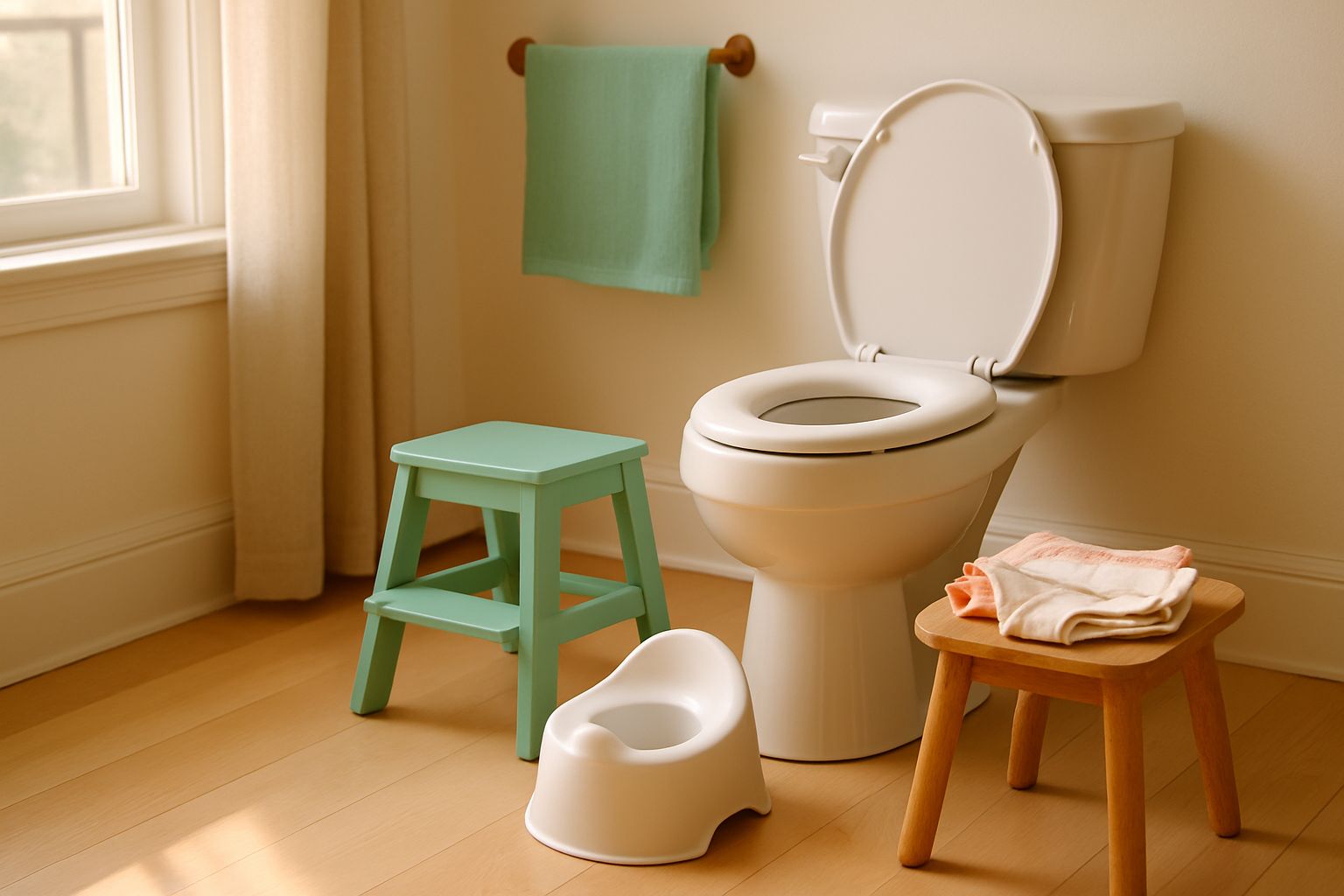
Whatever method you choose, a short list of things is worth having ready before day one: a potty for the first few days, a toilet seat reducer, a step stool your child can use independently, at least fifteen pairs of cotton underwear, something to protect the mattress and sofa, a handful of small rewards, and pull-ups for sleeping. Look for a step stool with a wide, stable base and non-slip feet, since your child will be using it unsupervised at the sink and toilet.
For the step stool, look for one that stays put when your child climbs on it alone, like this one:
Why the 7-day method is built around your child taking the lead
The seven-day method spends the first three days at home, where a child learns fastest without the distraction of outings, then introduces short trips out once the basics are holding. It moves from potty to toilet over the week, stays positive and reward-based throughout, and treats accidents as part of learning rather than as setbacks to correct with frustration.
Its tracking schedule uses specific columns: time of drinking, time on the toilet, whether nothing happened (yes or no), pee marked green for a success or red for an accident, poop marked the same way, and a notes column. Recording it this way is what lets a parent see this particular child’s actual pattern rather than guessing at one.
One detail matters more than it sounds: when you fill in the drinking time, it works best if the child drinks the cup in one go rather than sipping it over an hour. Only then can you see how much went in and how long it takes before they need to pee, and that link between quantity and timing is exactly what the schedule is meant to reveal.
Rewards use sticker cards in four sizes, three, five, seven and then nine squares, used in that order. The reward comes quickly at three squares so the child sees straight away that it works, then grows rarer as the card sizes increase, so the habit outlasts the stickers instead of stopping the moment they do.
There are no training pants in this method. Training moves straight from diaper to regular cotton underwear, because a child feels wetness in cotton in a way that training pants are designed to mask, and that feeling is part of what teaches them to notice and act.
Many parents find day four or five the hardest, not day two. By then the child is often tired of being asked, will you tell me when you need to pee, and some resistance shows up. The fix isn’t more pressure, it’s less: ask less often and hand the child more of the responsibility for noticing on their own.
In the United States, this method is available as the 7-Day Potty Training Video Course, roughly forty short videos of about three minutes each, grouped by day, with a digital AI coach available to answer questions at any hour. The course includes printable sticker cards, a tracking schedule and a certificate that you print at home. For parents who would rather organize the method themselves, separate reward systems with small, increasing rewards are available for that approach as well.
Be honest with yourself about limits too. Night-time dryness is a separate skill that tends to come later and isn’t something any daytime method promises. And if an attempt stalls badly, the method’s own advice is to stop and leave it a few weeks before trying again, rather than pushing through.
What about children who are autistic, non-verbal, or have Down syndrome?
The same structured, day-by-day approach is used successfully with autistic children, non-verbal children, and children with Down syndrome, usually stretched over a longer period than a single week. The core shift is the same too: reading the child’s own signals for readiness and progress rather than waiting for them to tell you verbally.
Keep expectations about timing loose. A longer runway, sometimes weeks rather than days, is normal and doesn’t mean the method has failed; it means this child’s pace is different, and that’s fine.
Any concerns that are medical or developmental in nature, including constipation, ongoing bathroom refusal, or delays that worry you, belong with a doctor or your child’s health clinic rather than with a potty training program of any kind.
Signs you picked the wrong moment, not the wrong method
A real stall looks like withholding, tears at the sight of the potty, flat refusal to sit at all, or no progress whatsoever after several consecutive days of a genuine attempt. That’s different from an ordinary rough day, which almost every family has at least one of.
Stopping and waiting a few weeks is part of the method, not a failure of it. Nothing meaningful is lost by pausing at this age, since readiness can shift quickly in a toddler over just a few weeks.
According to the Mayo Clinic, persistent constipation, painful urination, stool withholding, or bedwetting that continues past around age six are reasons to talk to a doctor rather than push through with training. None of that reflects badly on the parent or the child; bodies and timelines are simply different from one another.
Frequently asked questions
What is the 10-10-10 rule for potty training?
The 10-10-10 rule refers to sitting a child on the potty for ten minutes, ten times a day, at ten-minute intervals of sorts, depending on which version you find. It relies on a fixed schedule set by the parent rather than the child's own signals, which is exactly what tends to slow down a child learning to notice their own body's cues.
What is the 3-day potty training trick, and does it really work in three days?
The 3-day potty training method, associated with Lora Jensen, has the parent stay home with the child for three full days without a diaper, offering the potty frequently and building from there. Many children make real progress in that window, but three days is often the start of daytime training rather than the finish, and some children need longer before it fully sticks.
What is the fastest way to potty train a toddler?
There's no reliable shortcut faster than clearing several consecutive days at home once a child shows genuine readiness signs, since most of the learning happens in that early stretch. Most children who are ready are dry in the daytime in about a week, though some take closer to two or three weeks, and pushing a child who isn't ready rarely speeds things up.
At what age is potty training most effective?
There's no single ideal age; readiness signs matter more than a birthday. Many children show the signs the American Academy of Pediatrics describes, such as staying dry for stretches and showing interest in the bathroom, somewhere between eighteen months and three years, though the exact timing varies a lot between children.
Is the Oh Crap potty training method better than a 7-day program?
Neither is objectively better; they suit different families. Oh Crap! is a detailed, book-length framework with numbered stages that some parents like working through at their own pace, while a structured seven-day program gives a tighter day-by-day plan, including for the days that go badly, plus a place to ask questions along the way.
Which potty training program should I buy?
Choose based on how much structure you want and how many days you can realistically clear at home, not on which one claims to be fastest. A parent who wants a clear daily plan with built-in support tends to do well with a structured seven-day program, while a parent who prefers to design their own system can look into separately available reward systems built around small, increasing rewards.
Ready for the next step?
The 7-Day Potty Training Video Course walks you through this program in forty short videos, grouped per day, with a digital AI coach you can ask a question at eleven at night on day four. The full handbook comes with it as a PDF to read and print. Nothing is shipped, so you can start today.
Sources
This article was written with AI assistance and checked by Dustin van de Sande.