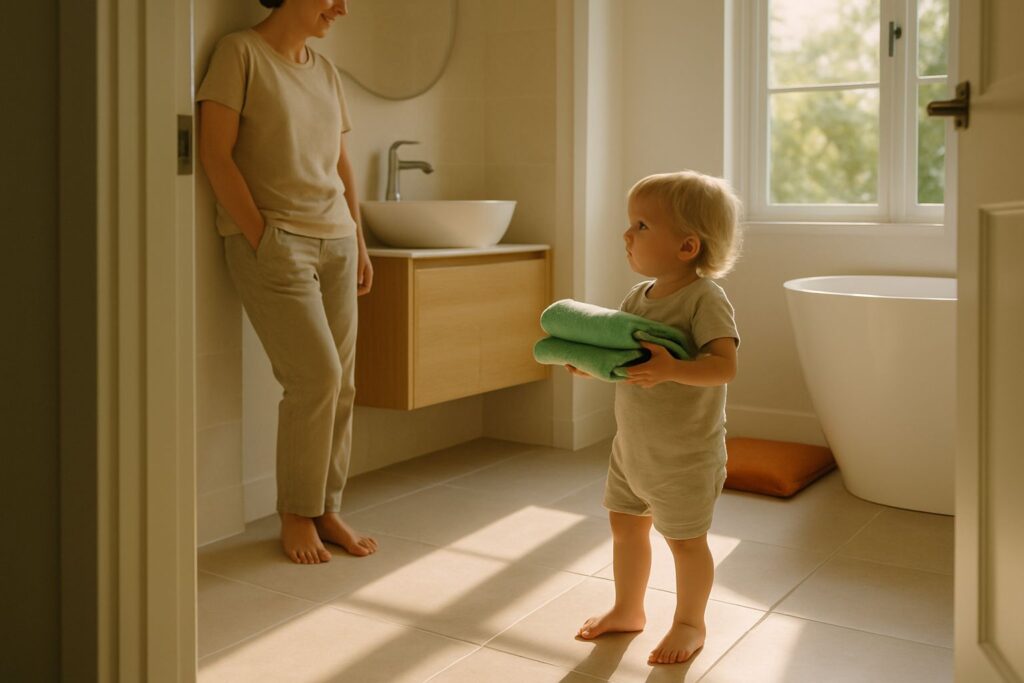
Potty Training Rewards That Actually Work (and Why a Sticker Chart Should Get Harder)

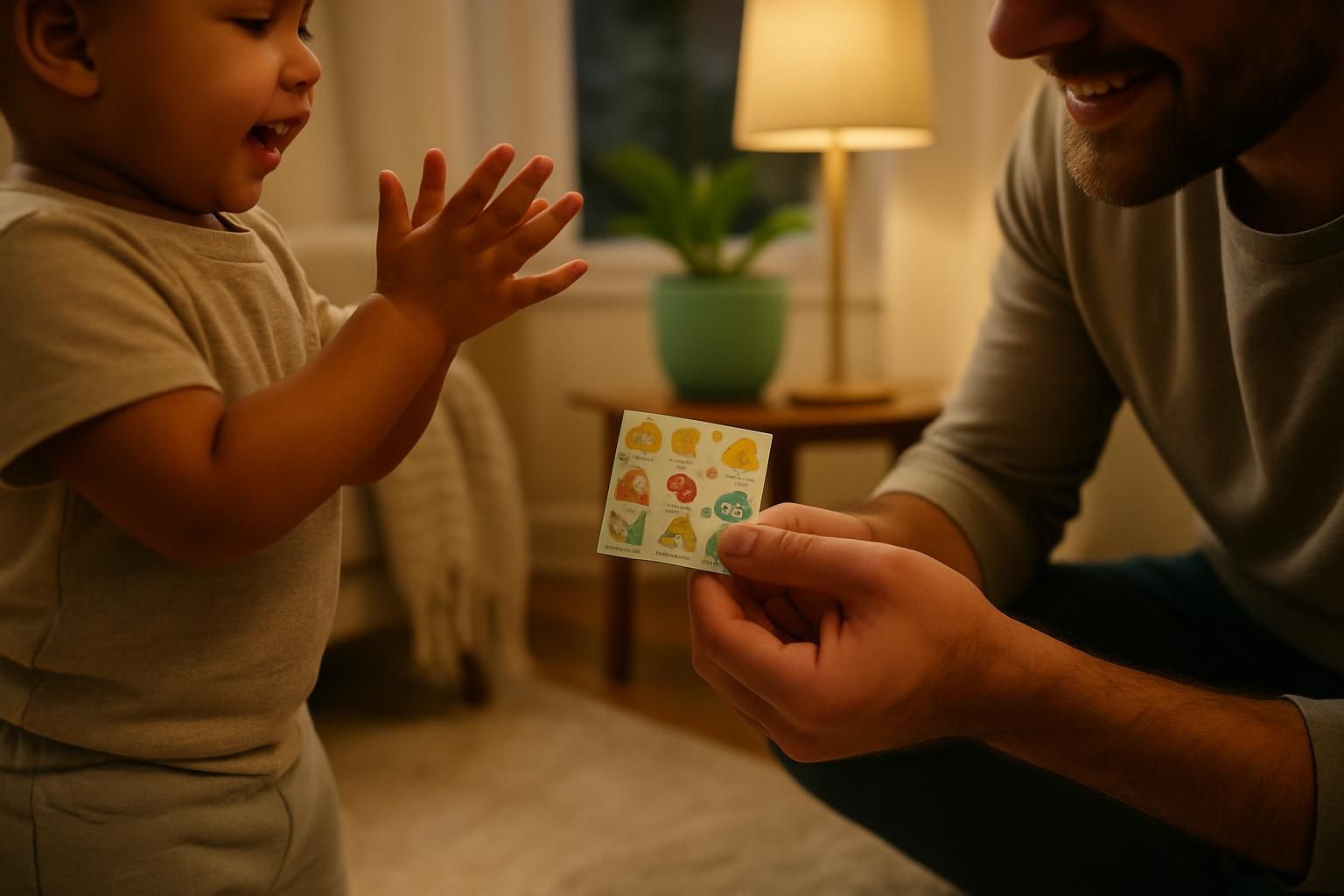
Yes, small immediate rewards paired with specific praise help most toddlers get started with potty training. But a reward system only works long term if it changes as the child improves: coming fast at first, then growing rarer, so the habit outlasts the stickers instead of stopping the moment they do.
A reward is a starter motor, not the engine. The real goal is the moment your child tells you they need to go, before you ask. Food rewards tend to fade fast and can slide into bargaining, where a toddler holds out for a bigger treat instead of using the toilet. And a flat chart, one sticker for every single pee forever, usually runs out of steam around day four or five, right when the hardest part of training actually happens.
Why most sticker charts stop working after a few days
A sticker chart that never changes loses its pull fast. The novelty of a sticker is strongest on day one, when using the potty is new and exciting. By day three or four, going to the toilet has become routine, and a sticker that looked exciting three days ago now gets a shrug.
Many articles claim day two is the hardest day of potty training. In practice, day four or five is usually tougher, because that is when a toddler gets tired of being asked did you need to go? over and over and starts pushing back. You can read more about what happens on day 4 and why resistance tends to show up then rather than at the start.
When that resistance appears, the fix is not a bigger reward. It is asking less often and handing the child more responsibility for noticing and saying it themselves.
How the 3, 5, 7, 9 sticker card works
Instead of one sticker chart with a fixed number of boxes, a system that grows with the child solves the stalling problem directly. The sticker cards used in The 7-Day Potty Training Video Course come in four sizes, used in this order: 3 squares, then 5, then 7, then 9.
The first card fills up fast, in just three successes, so a toddler sees right away that the system works and that trying pays off. As the child improves, the cards get longer, so the reward becomes rarer exactly as the behavior becomes more reliable. That is the whole mechanic: it is never one card with a fixed number of boxes, it is four cards that stretch out the win.
| Card size | When it is used | What the child experiences |
|---|---|---|
| 3 squares | Right at the start | A reward within reach almost immediately |
| 5 squares | Once the first card is full | Still frequent, but a little more effort between rewards |
| 7 squares | As success becomes the norm | Longer stretches, the habit starts to carry itself |
| 9 squares | Near the end of the week | Rewards are rare, the behavior no longer depends on them |
Each card is printed at home and filled in with a sticker or a simple mark for every success, growing from three squares to nine as the week goes on. The week finishes with a pee certificate and a poop certificate to mark what the child managed. Those are a finish line, not a bribe, and they come after the reward system has already started to fade.
What makes a good reward for a toddler (and what backfires)
The best rewards are small, immediate, and not food: a sticker, picking the next story, five extra minutes in the bath, a trip to the park after dinner. Small enough that you can repeat it fifteen or twenty times without it losing meaning or costing you anything you cannot sustain.
Not every toddler lights up at a sticker or a toy, and that is not a sign the method has failed. If my child doesn’t respond to presents sounds familiar, attention often works better than objects: a phone call to grandma to share the news, a silly victory dance, a few minutes of your full focus. The reward does not have to be a thing.
Candy per pee gets expensive fast, not in dollars but in behavior: it teaches a child to expect a trade for something their body should eventually just do on its own. And never withhold a reward after an accident. Accidents are part of learning this skill, not a failure to be punished by taking something away.
Praise is the reward most parents run out of first
Specific praise beats a generic good job. Naming exactly what happened, such as you felt it and told me, that’s exactly right, teaches the child what worked. A vague cheer does not.
Running out of things to say by day two is completely normal, which is part of why having a few phrases ready in advance helps more than it sounds like it should. The point is to praise the signaling itself, not just the outcome: you told me is the behavior you are actually trying to grow, more than the pee in the potty.
The first real success, the first time a child says it before an accident happens, is worth celebrating out loud and specifically.
Watching that moment together, right after it happens, helps a toddler connect the feeling of pride to what they just did.
Rewards versus tracking: two different pieces of paper
A sticker card motivates the child. A tracking schedule informs the parent, and mixing the two up is one of the most common mistakes in potty training. The tracking schedule has nothing to do with rewards at all: it is a record of what this particular child’s body actually does.
A tracking schedule has columns for the time of drinking, the time on the toilet, a nothing happened yes or no, a pee column marked green for success and red for an accident, a poop column marked the same way, and a notes column. For the schedule to actually tell you something, have your child drink a full cup in one go rather than in sips spread over the afternoon. Only then can you see how much went in and how long it took before they needed to go, which is the pattern the schedule exists to reveal. For a full walkthrough, see what to track on a potty training chart.
None of this is a timetable to impose on your child. It is a record of their own timing, so you can stop guessing and start reading their signals. The only moments worth offering the potty on a fixed basis are before and after sleep, and before you leave the house, both during training and for a good while after.
How to fade the rewards without losing the progress
Fading is built into the sticker cards themselves, not something you decide to do on a particular day. As the cards get longer, three squares to five to seven to nine, the reward naturally spaces out while the habit is given room to take over.
The certificates mark the finish line, shifting the focus from reward to recognition. Alongside that, shift the question you ask from do you need to go? to you tell me when you need to go, and ask it less often as the week goes on. If your child seems bored or starts pushing back, that is usually the cue to ask less, not reward more, and to hand over a bit more responsibility for noticing their own body.
Be honest with yourself about timing too. Most children are dry in the daytime in about a week using this kind of approach. Some manage it in as little as three days, others take two or three weeks, and that range is completely normal.
When rewards are not the problem (and nothing else is either)
Sometimes the issue is not the reward system at all, it is timing. Signs that a child is ready include staying dry for longer stretches, showing interest in the bathroom, being able to pull pants up and down, and being able to follow simple instructions. According to the American Academy of Pediatrics, bladder and bowel control typically develops between 18 and 24 months, and most children are fully toilet trained by around age 4, though the age training begins varies a great deal from child to child (healthychildren.org).
Not sure where your child stands? The readiness quiz can help.
A child who is frightened of the potty or the toilet is not ready yet, no matter how good the reward. In that case the right move is to build familiarity first, with no pressure, and try again later. If a full attempt does not work, pausing for a few weeks before trying again is part of a sound plan, not a step back.
If you are dealing with ongoing constipation, a child who seems to be withholding stool, or bedwetting that continues well past age 6, those are questions for your pediatrician or child health clinic, not something to solve with a reward chart (niddk.nih.gov).
Where the reward system fits in the 7-day plan
The Potty Training Box Method is a day-by-day, seven-day program: the first three days are spent at home, where a child learns fastest, followed by short outings, with training moving gradually from potty to toilet as confidence builds. The reward system, the sticker cards, and the tracking schedule all sit inside that plan rather than standing alone.
That plan is also available as The 7-Day Potty Training Video Course, roughly forty short videos of about three minutes each, grouped by day, with a digital AI coach you can ask questions at any hour. The sticker cards, tracking schedule, and certificates are included in the course and printed at home as you go. Before you start, it helps to know what to have ready before you start. Once your child is a few days in, what day one actually looks like is a good next read. A simple story like Noa’s Potty Training Journey can also be a gentle way to introduce the idea before day one begins. If you are not sure your child has actually gotten there yet, what counts as potty trained is worth a read before you decide the rewards can stop altogether.
Frequently asked questions
How do I use a reward system for potty training?
Start with a reward that comes quickly, such as a small sticker after just a few successes, so your toddler sees right away that trying pays off. As success becomes more routine, space the rewards out further apart instead of keeping them the same the whole time. Pair every reward with specific praise about what your child did, especially when they told you before an accident happened.
Do sticker charts work for potty training, or do they just create a bribe habit?
Sticker charts work well as a starting motivator for most toddlers, but a flat chart that never changes can start to feel like a bribe once success becomes routine. A chart that grows, giving rewards less often as the child improves, avoids that trap because the habit has room to take over before the stickers stop. The goal is always for your child to tell you they need to go, with or without a sticker waiting.
What should I do if my child doesn't care about stickers or presents?
Some children respond much more to attention than to objects: a phone call to a grandparent, a silly celebration dance, or a few extra minutes of your full focus can work better than any sticker. This is common and does not mean potty training will not work for your child. It simply means the reward should be social rather than material.
Should I take a sticker away after an accident?
No. Accidents are a normal part of learning to use the toilet, not a failure that should cost a child a reward they already earned. Taking something away after an accident teaches shame rather than skill, and shame tends to slow progress rather than speed it up.
How long should I keep giving rewards for using the potty?
Rewards are usually faded gradually over the course of a week or two rather than stopped all at once, which is why sticker cards that grow longer over time work better than a flat chart. By the end, recognition such as a certificate or simple praise typically replaces the sticker itself. Most children no longer need a reward for using the toilet once the habit feels normal to them, often within a few weeks of starting.
What age is potty training most successful?
According to the American Academy of Pediatrics, bladder and bowel control signs typically appear between 18 and 24 months, and most children in the United States begin toilet training between 2 and 3 years old. There is no single best age, since readiness depends more on the individual child's signs than on a birthday. Most children who show clear readiness signs are dry in the daytime in about a week once training starts.
Ready for the next step?
The 7-Day Potty Training Video Course walks you through this program in forty short videos, grouped per day, with a digital AI coach you can ask a question at eleven at night on day four. The full handbook comes with it as a PDF to read and print. Nothing is shipped, so you can start today.
Sources
- American Academy of Pediatrics (healthychildren.org) (Bladder and bowel control signs typically appear between 18 and 24 months, and most chi…)
- National Institute of Diabetes and Digestive and Kidney Diseases (NIH) (Ongoing bladder control problems and bedwetting in children are medical topics that bel…)
This article was written with AI assistance and checked by Dustin van de Sande.