How Does Toilet Training Actually Work? A Day-by-Day Guide


Toilet training teaches a child to notice the full-bladder feeling, hold on briefly, say so, and get to the toilet in time. Most children are dry in the daytime in about a week of focused training, some in three days, others in two to three weeks. Night-time dryness is a separate, later skill. A child who is not ready yet should wait rather than start.
It is not one skill, it is several stacked together: feeling the urge, holding it for a minute or two, walking to the bathroom, pulling pants down, and eventually saying so before any of that happens. Children usually pick these up in a cluster over a focused week rather than one at a time over months, which is why a short, concentrated push tends to work better than weeks of half-hearted reminders.
Is your child ready to start, and how do you tell?
A child is ready when their body and their behavior both show it, not just their birthday. Readiness signs matter more than age, though most children show the first signs of bladder and bowel control somewhere between 18 and 24 months, and toilet training in the United States typically begins between 2 and 3 years of age, according to the American Academy of Pediatrics (healthychildren.org).
Look for these together, not just one of them: staying dry for a stretch of about two hours during the day, having fairly predictable bowel movements, being able to pull pants up and down mostly alone, and showing interest in the bathroom or in what everyone else does in there. Some children hide in a corner to poop, or come tell you the diaper is wet after the fact. Both are early signals, not failures to hide better.
If your child is frightened of the potty or the toilet, that is not readiness yet. Push through it and training usually stalls or turns into a fight. The better move is to build familiarity first, flush together, let them sit fully clothed, read about it, and start the real training once the fear is gone.
Not sure where your child stands? The readiness quiz walks through the signs in a couple of minutes and gives you a straight answer.
What counts as toilet trained?
A child counts as toilet trained during the day once they take the initiative, telling you or heading to the bathroom themselves, rather than you reminding or offering all day long. That is the real finish line, not a single dry day.
Occasional accidents for months afterward are normal and do not undo the progress. A child who has been reliably dry for weeks can still have an accident during a big transition, a cold, or simple distraction, and that is expected rather than a setback worth worrying about.
Wiping independently, staying dry overnight, and managing a public bathroom are separate skills that usually come later, sometimes much later. Treat them as their own milestones rather than folding them into whether daytime training worked.
How do you start toilet training? What to have ready before day one
Start by clearing three days at home with nothing else on the calendar. A move, a new sibling, a vacation, or a big change at daycare in the same week makes training harder than it needs to be, so pick a quiet stretch if you can.
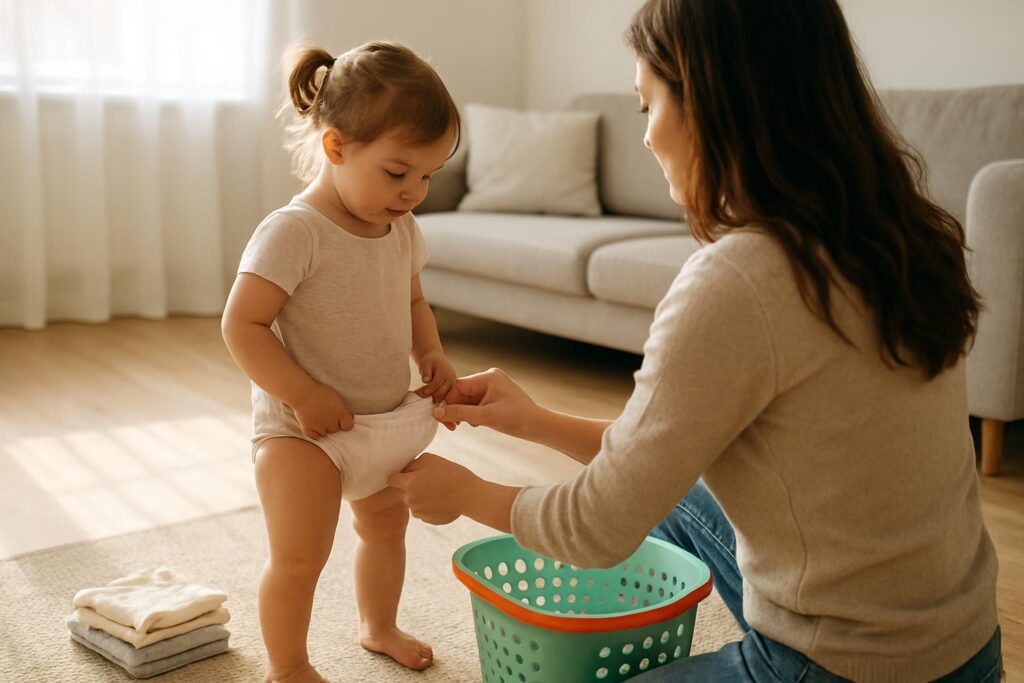
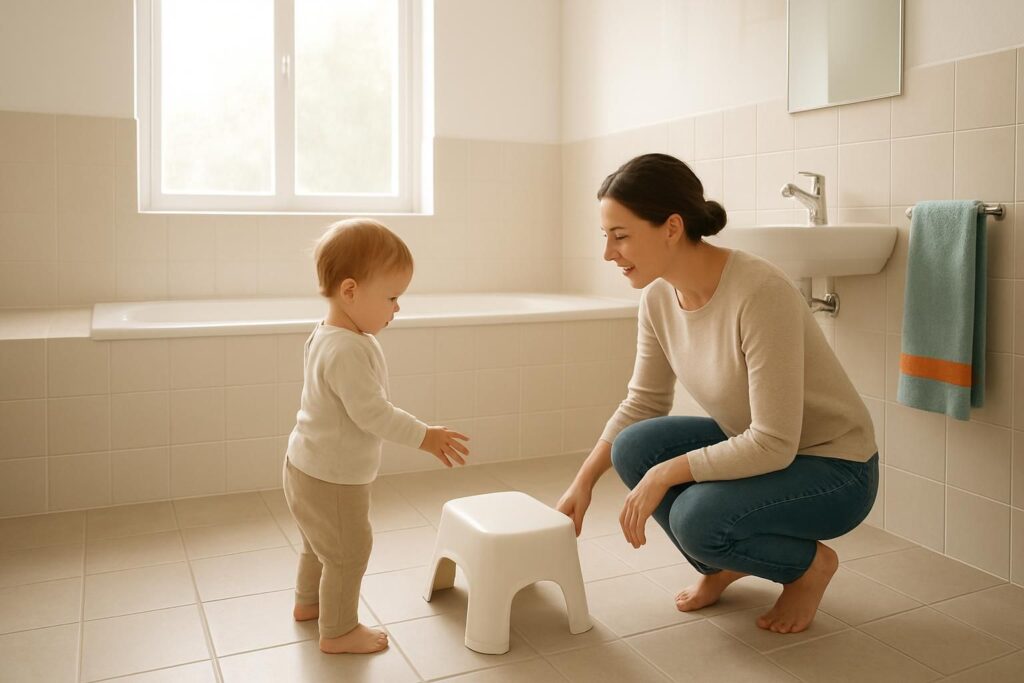
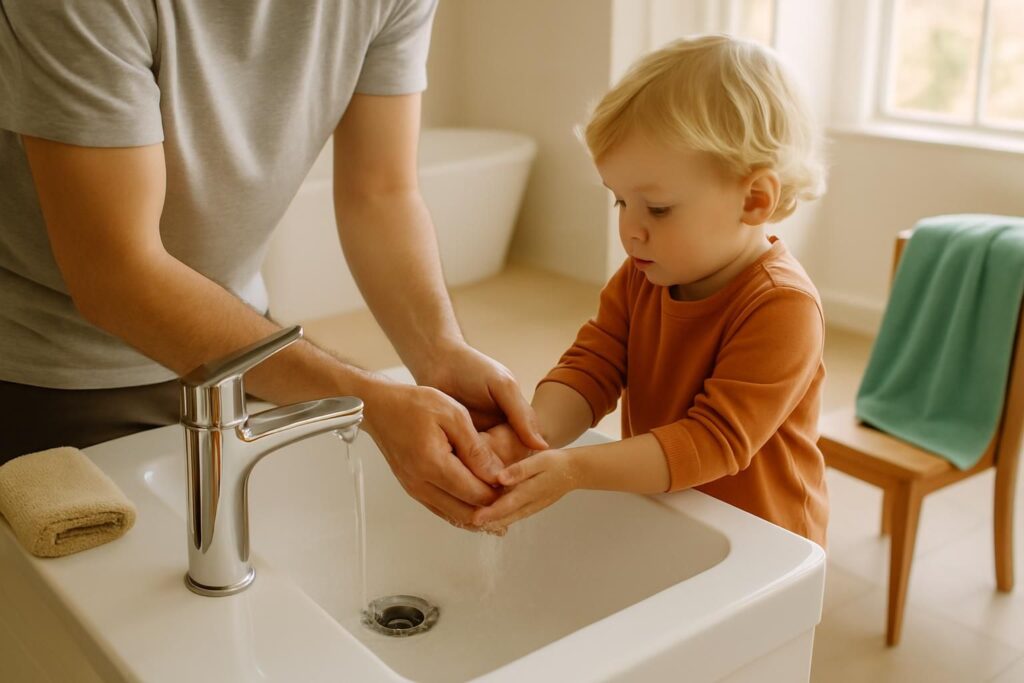
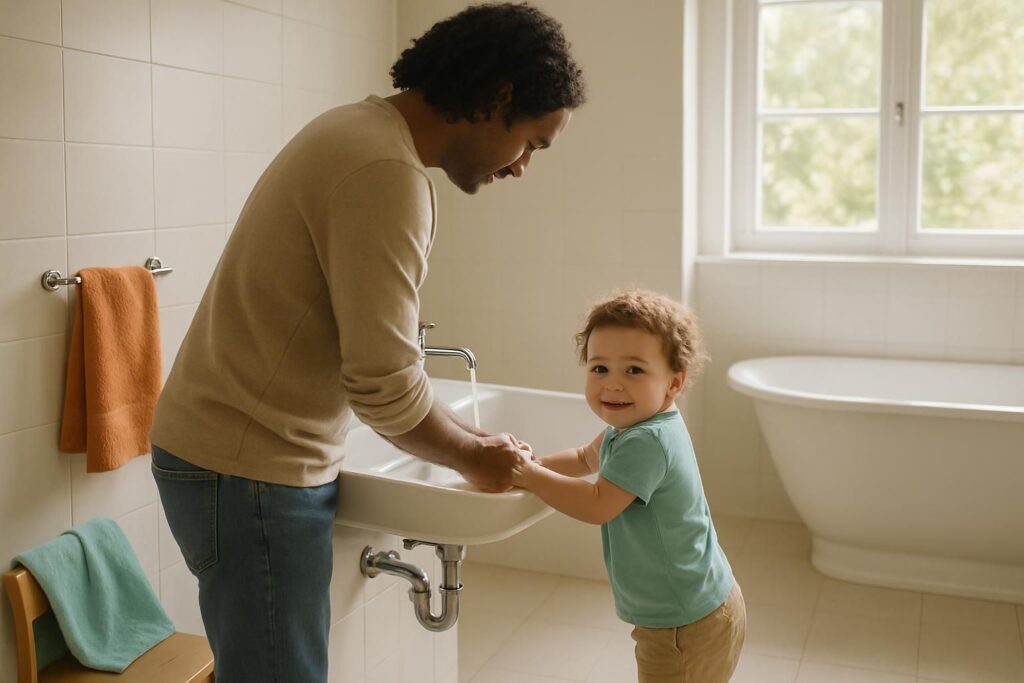
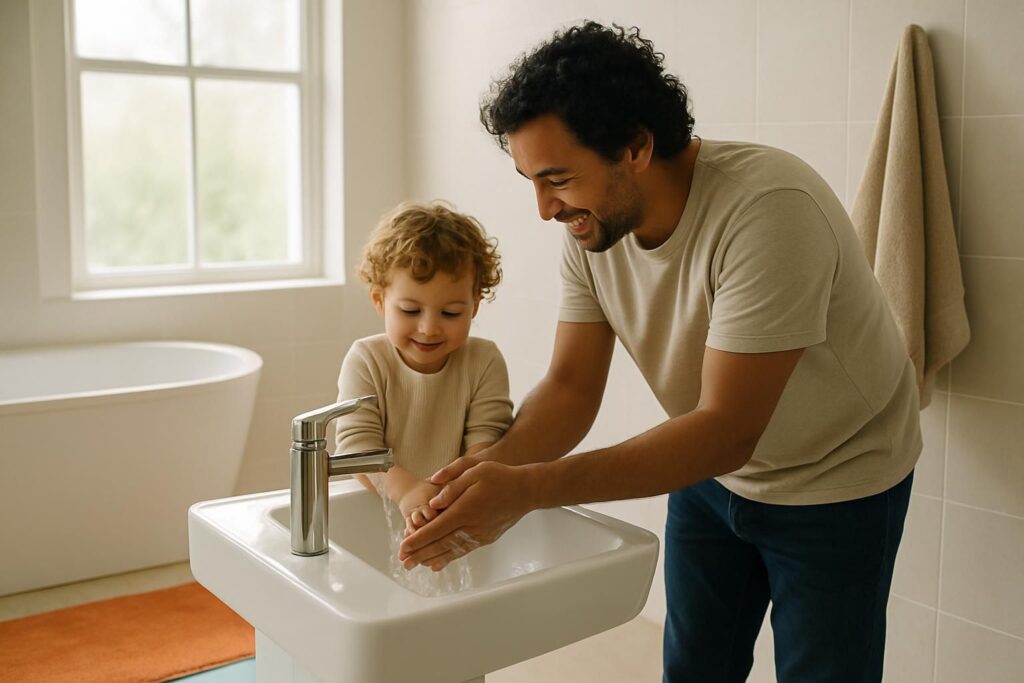
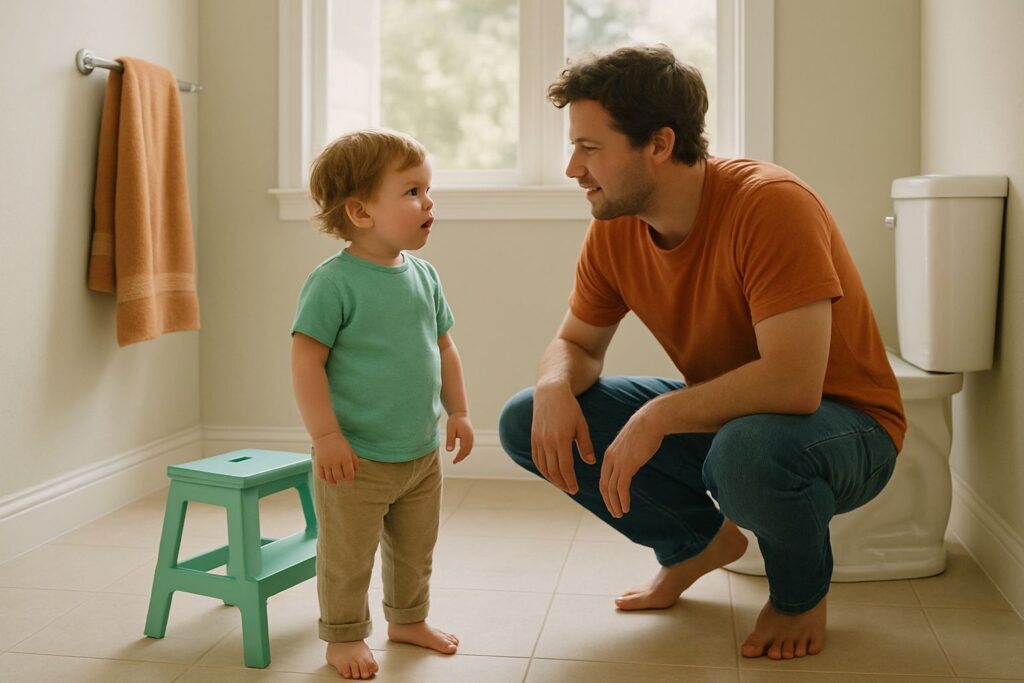
Beyond that, it helps to have a few things ready in general: a potty for the first few days, a toilet seat reducer once you move to the big toilet, a step stool so your child can climb up and wash hands independently, at least 15 pairs of cotton underwear, something to protect the mattress and the sofa, a handful of small rewards, and pull-ups for sleeping. Diaper comes off and stays off during the day, straight into cotton underwear rather than training pants, because a child feels wetness in cotton underwear in a way training pants are designed to hide, and that feeling is part of how they learn. For the full list in one place, the full checklist of what to have ready covers everything without turning this into a shopping trip.
As an Amazon Associate we earn from qualifying purchases. Some links in this article are affiliate links: if you buy through them we earn a small commission, at no extra cost to you, and it does not affect what we recommend.
If you need to pick one, the Ingenuity My Size Potty Pro is a solid option for the first few days, the Frida Baby Drop Down Potty Training Seat works well once you move to the toilet, and a sturdy option like the Dreambaby Step Stool covers the step stool.
Toilet training day by day: what the week actually looks like
The first three days happen entirely at home, because that is when a child learns the most, before the complication of a car seat or a grocery store is added back in. Rather than putting your child on the potty on a fixed schedule, the question you ask through most of the day is simple: will you tell me when you need to pee? The fixed exceptions are before and after sleep and before you leave the house, both during training and afterward, because those are moments worth checking regardless of how training is going otherwise.
For a full walkthrough of the first morning, what day one actually looks like, morning to bedtime covers it hour by hour.
| Day | What you do | What to expect |
|---|---|---|
| Days 1 to 3 | Stay home, diaper off, cotton underwear on, ask rather than schedule | Several accidents, a few successes, lots of praise |
| Day 4 to 5 | Ask less often, hand over more responsibility | Resistance often peaks here, this is normal |
| Days 6 to 7 | Short outings, same question, same cup routine | Fewer accidents, more self-initiated trips |
Day 4 or 5 is usually the hardest day, not day 2. By then a child is often tired of being asked and pushes back, sometimes by holding it or by having accidents on purpose. The fix is to ask less often and give them more of the responsibility for noticing themselves, rather than doubling down on reminders. We go into this in more depth in why day 4 is usually the hardest.
Once the first few days are behind you, short outings become part of the plan: a quick trip to the mailbox, then the park, building up gradually. The potty itself is a short-term tool, and most families move to the toilet with a seat reducer within the first couple of weeks; making the switch from potty to toilet covers how that transition usually goes.
This structure, a focused three days at home followed by short outings, built around the child signaling rather than a schedule, is what the Potty Training Box Method describes: a seven-day structured program that moves from diaper off at home on day one to the child signaling the need themselves by the end of the week.
How often should you take your child to the toilet? Why a clock is the wrong tool
You do not put a child on the toilet every 30 minutes because a schedule says so. Instead, you record when this particular child actually goes, and use that to understand their pattern rather than imposing one on them.
A tracking schedule makes this visible. It has a column for each of these points, and what it shows you over a few days is this specific child’s own pattern, not a general rule to apply on a clock:
| Column | What it records |
|---|---|
| Time of drinking | When the cup was finished |
| Time on the toilet | When they sat or were offered |
| Nothing happened | Yes or no |
| Pee | Green for a success, red for an accident |
| Poop | Green for a success, red for an accident |
| Notes | Anything that stood out |
For the pattern to show up clearly, have your child drink the cup in one go rather than in sips spread across the morning. That way you actually know how much went in and how long it took afterward before they needed to pee, which is the link the schedule is built to reveal.
Offering the potty early in training is scaffolding, not the method itself. As the week goes on, you offer less and less, and the goal throughout is the child’s own signal, not a parent-run timetable that continues indefinitely.
Why reward charts work better when the reward gets rarer
A reward system works best when the prize comes quickly at first and then gets harder to earn, not when it stays fixed. Sticker cards built around four sizes, 3, 5, 7 and 9 squares used in that order, follow exactly this pattern: the first card fills fast so a child sees right away that the system works, and each following card takes longer, so the habit outlasts the stickers instead of stopping the moment they do.
A pee certificate and a poop certificate at the end mark the achievement itself, separate from the day-to-day stickers. Praise still matters more than any sticker, and an accident should never cost a child a sticker they already earned, since accidents are part of learning rather than a setback to penalize.
Is toilet training easier for boys or girls?
Readiness, temperament, and how consistent the parent is matter far more than whether the child is a boy or a girl. Plenty of boys train faster than the average girl and plenty of girls take longer, so treat your own child’s signals as the guide rather than general sex-based expectations.
Girls often start and finish a little earlier on average, but the range within each sex overlaps heavily, so that difference should not drive your timing decisions. For boys, it is standard to teach sitting first for both pee and poop, with standing to pee introduced later once daytime training is solid.
There is no good reason to delay starting with a boy or to rush a girl because of their sex alone. Watch the actual readiness signs instead.
What is the fastest way to toilet train, and is fast actually better?
The fastest realistic route is clear days at home, the diaper off completely during the day, consistency from everyone in the house, and no switching back to diapers once you have started. Even then, three days is the lucky end of the range, not the typical result, so plan for about a week and treat anything faster as a bonus.
What slows things down is usually predictable: starting during a house move or a new sibling’s arrival, flip-flopping between diapers and underwear depending on the day, or reacting to accidents with frustration. Consistency does more for the timeline than intensity does. If you want the full picture on the three-day claim specifically, whether 3-day potty training really works breaks down where it comes from and when it is realistic.
If an attempt genuinely is not working after a few days, stopping and waiting a few weeks before trying again is part of the plan, not a failure. Pushing through a stalled attempt usually makes the next attempt harder, not easier.
Accidents, resistance and stalling: when to push on and when to pause
Accidents are part of learning, not evidence that training has failed. Clean them up matter-of-factly, without a big reaction in either direction, and move on to the next opportunity.
Resistance peaking around day 4 or 5 is common and usually responds to asking less, not more. If your child is refusing outright, loosen the pressure for a day or two rather than escalating it, and avoid turning the bathroom into a battleground. Our piece on the mistakes that stall a toddler covers the most common ways a good start turns into a stuck week.
Regression after a new baby, a move, starting daycare, or an illness is common and usually short-lived once the disruption settles. Give it a couple of weeks before deciding it is more than that.
Constipation, withholding stool, pain when peeing, or bedwetting that continues past age 6 are medical questions, not training ones, and belong with a pediatrician or a child health clinic rather than an article. The American Academy of Pediatrics has more on bedwetting specifically at healthychildren.org.
Do you need a program, a book, or neither?
A free article tells you what to do. A structured program tells you what to do on the day it is going badly, and gives you somewhere to ask when it does. Both have a place, and which one you need depends on how much hand-holding you want through a rough patch.
Books can help prepare a child beforehand, especially one who likes stories and routine. Oh Crap! Potty Training is a well-known parent-facing guide if you want to read the reasoning yourself before you start.
If you want the structure without figuring it out alone, The 7-Day Potty Training Video Course carries the same seven-day method as about forty short videos of roughly three minutes each, grouped by day, plus a digital AI coach for questions at any hour, and sticker cards, a tracking schedule, and certificates you print at home as part of the course. For a story to read with your child alongside it, Noa’s Potty Training Journey is available as an ebook built for exactly that moment.
If you would rather try it your own way, reward systems like sticker charts are also available separately.
Frequently asked questions
What is the typical timeline for potty training?
Most children are dry in the daytime after about a week of focused training. Some manage it in as little as three days, while others take two to three weeks, and both are normal. Night-time dryness is a separate skill that typically comes later, sometimes months or years after daytime training is solid.
What counts as toilet trained?
A child counts as toilet trained during the day once they take the initiative, telling you or heading to the bathroom themselves, rather than being reminded all day. Occasional accidents for months afterward are normal and do not undo the progress. Wiping, night dryness, and public bathrooms are separate skills that usually develop later.
Is potty training easier for boys or girls?
Readiness, temperament, and parental consistency matter more than sex. Girls often start and finish a little earlier on average, but the overlap between individual boys and girls is large. Boys typically learn to sit first for both pee and poop, with standing to pee introduced later.
What is the fastest way to potty train a toddler?
The fastest realistic route is clearing several days at home, taking the diaper off completely during the day, staying consistent, and not switching back to diapers once you start. Three-day success stories describe the lucky end of the range rather than the typical result, so plan for about a week.
How often should I put my child on the toilet during training?
Rather than offering on a fixed clock, record when your child actually goes using a tracking schedule, noting drink times, toilet times, and whether each attempt was a success or an accident. Early offering is scaffolding that comes down quickly as the child starts signaling on their own, which is the actual goal.
What do I do if toilet training is clearly not working?
If an attempt genuinely is not working after a few days of trying, stopping and leaving it a few weeks before starting again is part of the plan, not a failure. Pushing through a stalled attempt usually makes the next one harder. Go back to the readiness signs, build familiarity if your child seems scared, and try again when things feel calmer at home.
Ready for the next step?
The 7-Day Potty Training Video Course walks you through this program in forty short videos, grouped per day, with a digital AI coach you can ask a question at eleven at night on day four. The full handbook comes with it as a PDF to read and print. Nothing is shipped, so you can start today.
Sources
- American Academy of Pediatrics (healthychildren.org) (Most children show the first signs of bladder and bowel control between 18 and 24 month…)
- American Academy of Pediatrics (healthychildren.org) (Bedwetting that continues past age 6 is a question for a pediatrician rather than a tra…)
This article was written with AI assistance and checked by Dustin van de Sande.