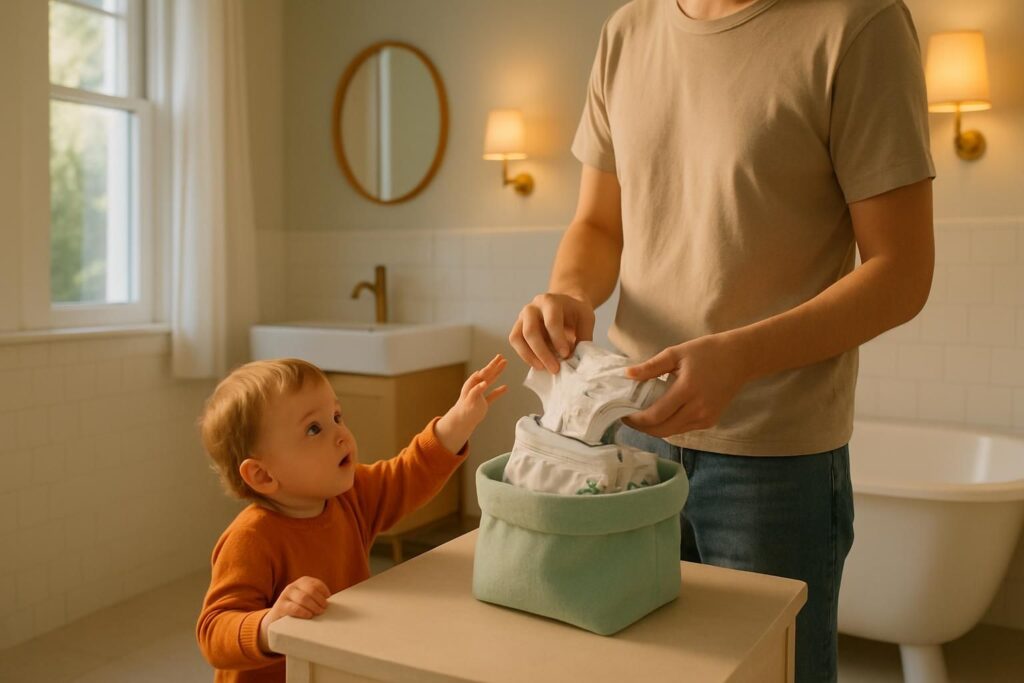
Is My Child Ready for Potty Training? The Real Signs to Check

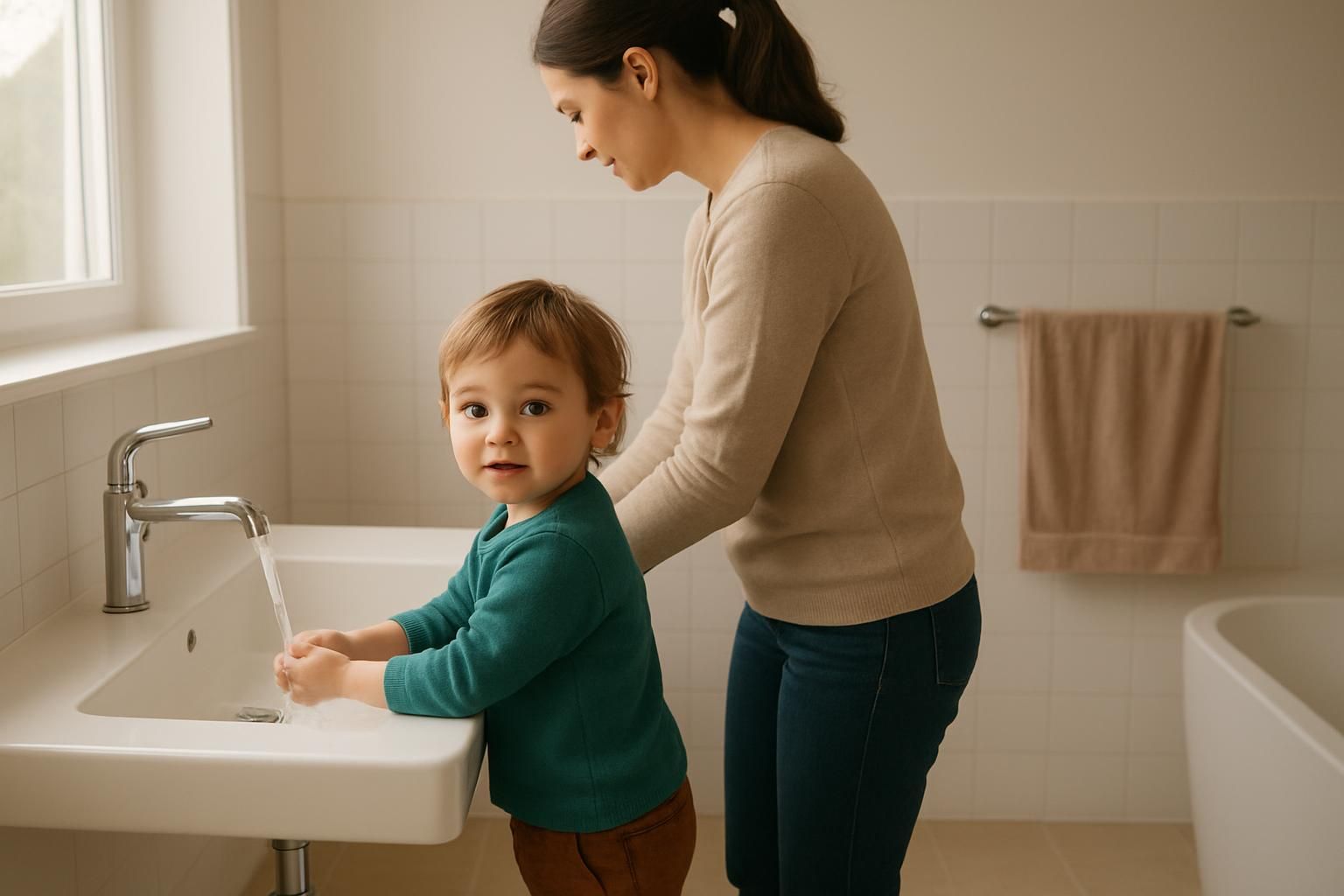
Your child is ready when body, behavior and language signs show up together: staying dry an hour or two, telling you after a wet diaper, following simple instructions, and showing interest in the bathroom. There is no set age that decides it.
Most toddlers start showing the first signs of bladder and bowel control somewhere between 18 months and 3 years, and in the United States toilet training on average begins between ages 2 and 3, according to the American Academy of Pediatrics. That is a wide window, and it is a window, not a deadline. You do not need a long checklist ticked off completely. You need a handful of the right signs showing up at the same time, and no single sign on its own is a green light.
The readiness signs, grouped by body, behavior and words
Readiness shows up in three places at once: the body, the behavior, and the words your child has for what is happening. Looking at all three together tells you more than any single sign on its own.
Body signs
- Stays dry for roughly 1.5 to 2 hours at a stretch during the day
- Sometimes wakes up dry from a nap
- Can walk to the bathroom on their own two feet
- Can pull pants up and down with a bit of help
- Has fairly predictable, regular bowel movements
Behavior signs
- Goes quiet, hides, or finds a corner to poop
- Tells you after the fact that the diaper is wet or dirty
- Pulls or tugs at a wet diaper, clearly uncomfortable with it
- Wants to copy you, an older sibling, or a friend at daycare
- Lights up at small wins and praise
Words and understanding
- Can follow a simple two-step instruction, like ‘pick up the cup and put it on the table’
- Has a word or gesture for pee and poop, even a made-up one
- Can say no and clearly mean it
- Shows interest when you talk about the bathroom or sit them on the potty fully dressed
Notice that telling you after a wet diaper comes before telling you before it happens. That order matters. Noticing after the fact is the first sign of body awareness, and signaling ahead of time is the skill the training itself builds over the following days. You are not looking for a child who already announces things in advance. You are looking for the raw materials that make that possible.
If you want a shortcut through this list, the readiness quiz walks you through the same signs as quick questions and gives you a read on where your child stands today.
Ready now or wait a few weeks? A side-by-side look
A side-by-side comparison makes this easier to apply than a long list does. If most of your child’s behavior falls on the left, this is a reasonable time to start. If it falls mostly on the right, waiting is not a setback, it is just timing.
| Signs your child is ready now | Signs it is worth waiting a few weeks |
|---|---|
| Dry 1.5 to 2 hours during the day | Wet or soiled every 20 to 30 minutes |
| Tells you after an accident | Seems unaware anything happened |
| Curious about the potty or toilet | Cries, stiffens or runs from the bathroom |
| Follows simple two-step instructions | Not yet following basic instructions |
| Home routine is settled | New baby, move, or new daycare just started |
As an Amazon Associate we earn from qualifying purchases. Some links in this article are affiliate links: if you buy through them we earn a small commission, at no extra cost to you, and it does not affect what we recommend.
Fear of the potty or the toilet belongs squarely in the wait column. A child who cries, stiffens, or refuses to go near it is telling you something real, not being difficult. The honest response is to back off any pressure, let them sit on it fully dressed, read a book about it together, and try again in a few weeks once the fear has eased. A picture book like Potty can help build that familiarity without any pressure attached.
Big life changes work the same way. A new baby, a move, or starting daycare are reasons to postpone, not reasons to push harder through the resistance. Nothing is lost by waiting. Children who start once they are actually ready tend to move through the process faster than children who were nudged into it early.
What the quiz asks you, and what the result actually tells you
The readiness quiz asks short questions that cover the same ground as the checklist above: body signs, behavior signs, and words and understanding. It takes a couple of minutes and does not require you to track anything in advance.
The result is a read on where your child sits right now, not a score to pass or fail. A ‘not quite yet’ result is useful information, not a disappointing one. If that is what you get, it is worth trying the quiz again in two to four weeks rather than starting on a hunch.
Why ‘is my child ready’ matters more than ‘how old is my child’
Age ranges are averages built from a lot of different children, not instructions for any one of them. Two toddlers born a week apart can be months apart in readiness, and that gap is normal rather than a warning sign.
Daytime dryness and nighttime dryness are separate skills on separate timelines. A child can be solidly dry during the day and still need pull-ups overnight for a long stretch afterward, because nighttime control depends on a different kind of bladder development that tends to come later and on its own schedule, often well past the point where daytime training is finished.
Whether your child is a boy or a girl, a second child who watches an older sibling, or starting under pressure from a daycare deadline, the same rule holds: readiness beats the calendar every time. Comparing your toddler to a cousin, a neighbor’s kid, or a sibling at the same age is the fastest route to starting too early, because every child’s timeline runs on its own clock regardless of what someone else’s did.
Your child shows the signs. What happens next?
Once the signs line up, the Potty Training Box Method is a seven-day, structured way to put that readiness to use. It spends the first three days at home, where the child learns the most, then moves into short outings, and it shifts the child from potty to toilet as they get steadier. You can read how the seven day course works day by day for the full breakdown.
The diaper comes off and regular cotton underwear goes on from day one, because a child feels wetness in cotton underwear in a way they never do in a diaper, and that feeling is part of what teaches the connection. The central question you ask through the week is simple: ‘will you tell me when you need to pee?’ rather than putting your child on the potty on a fixed schedule. This is child-led potty training: the child’s own initiative is the goal, and everything else supports getting there.
A tracking schedule is used alongside this, not as a timetable you impose, but as a record of what your child actually does. It notes the time your child drinks, the time on the toilet, whether nothing happened, and whether a pee or poop was a success or an accident, plus a notes column. For the timing to mean anything, it helps to let your child drink a full cup in one go rather than sipping it across the afternoon, because that is what lets you see how long it takes between a full drink and a trip to the bathroom.
Rewards come through sticker cards that grow from 3 squares, to 5, to 7, and finally 9. The reward comes fast at the start, when the habit is brand new, and then gets rarer as your child improves, so the habit outlasts the stickers instead of stopping the moment they do. For a more flexible follow-along version of this structure, The 7-Day Potty Training Video Course walks through the same seven days as forty short videos of about three minutes each, grouped by day, with a digital coach you can ask questions of at any hour and the sticker cards, tracking schedule and certificates included to print at home.
What to have ready before day one
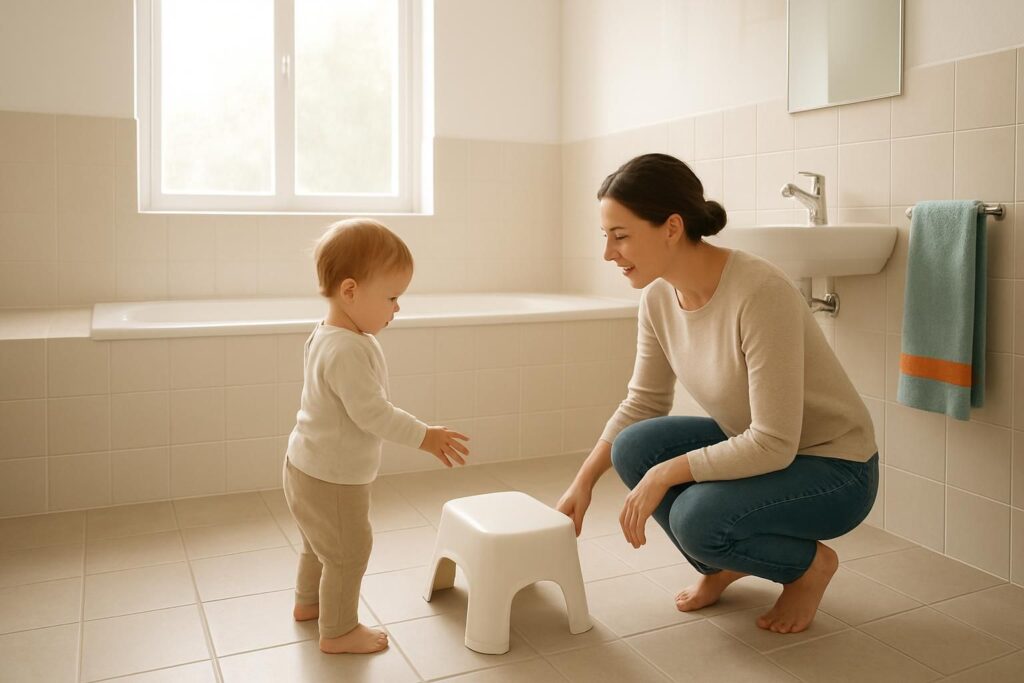
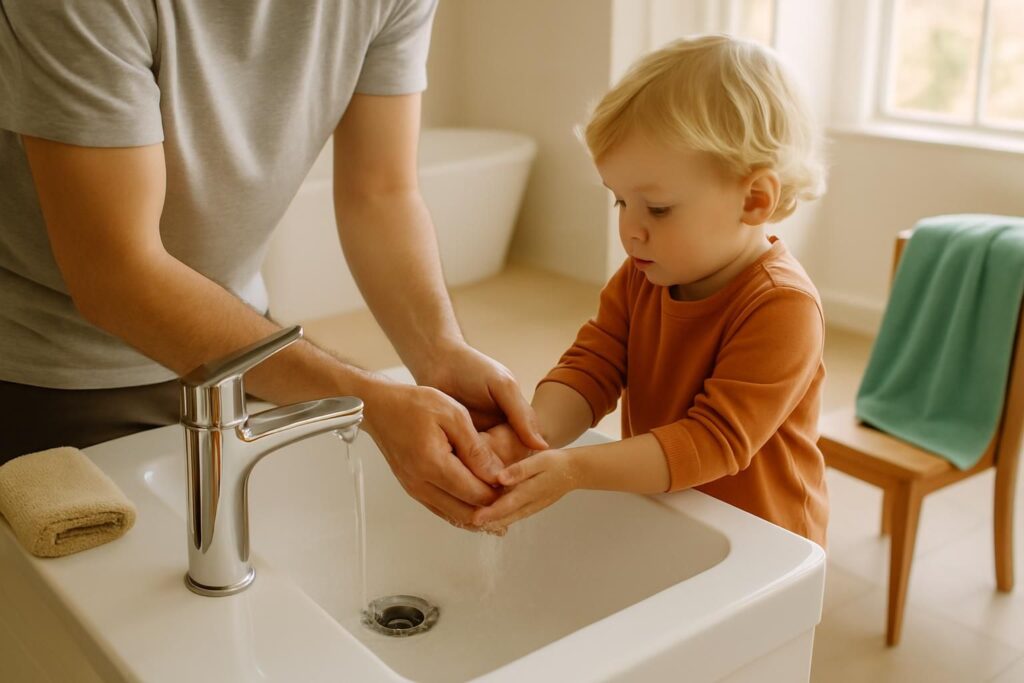
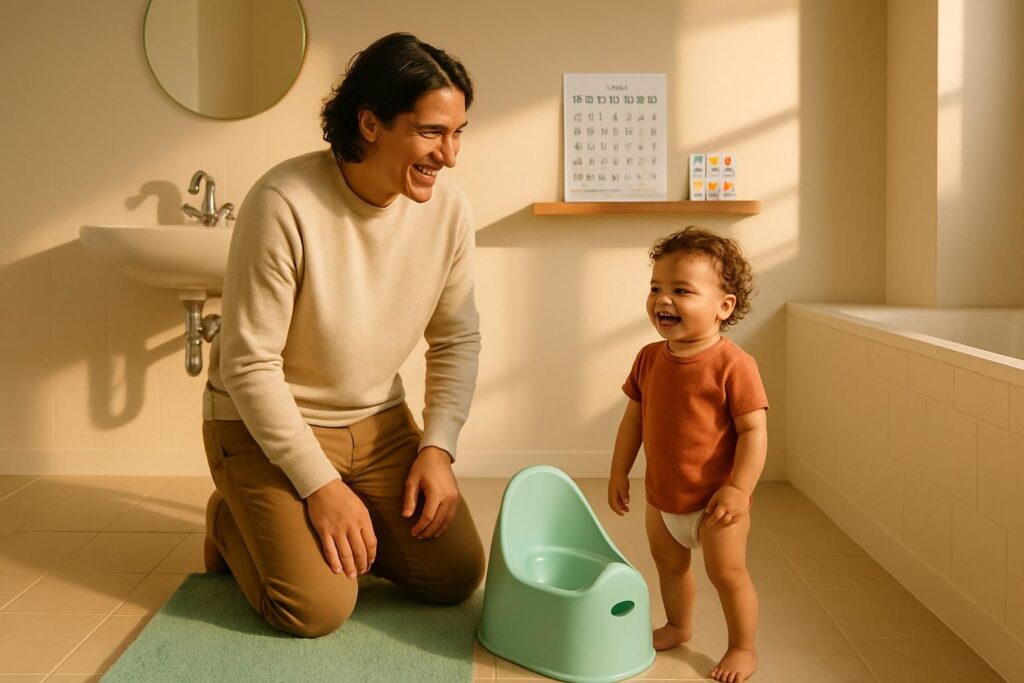
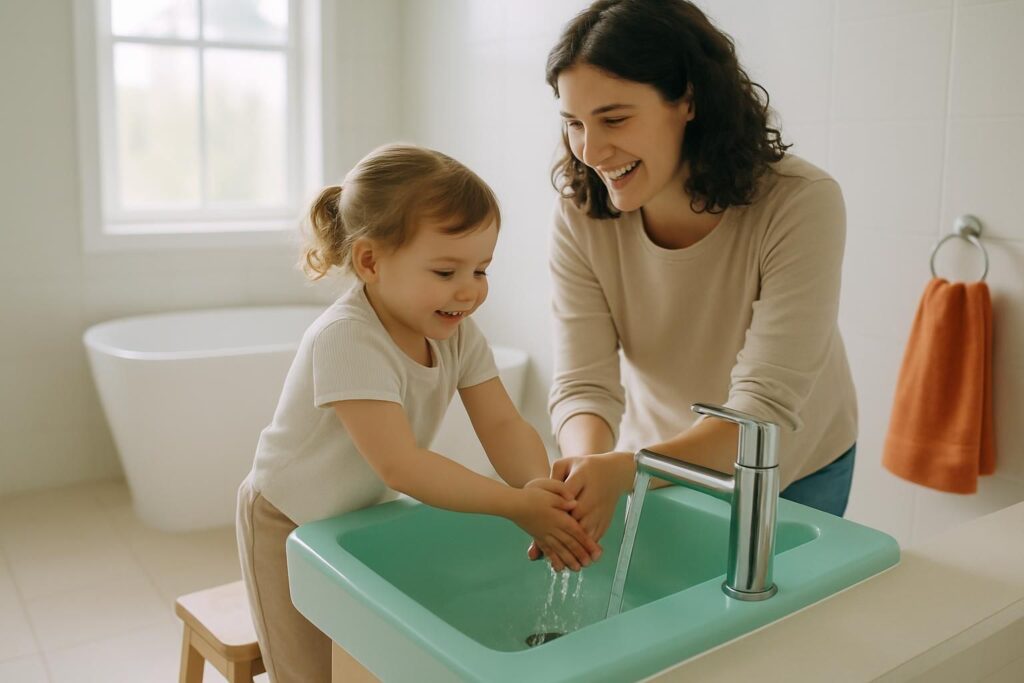
A few things are worth having set up before you start, so the first morning does not turn into a scramble. A potty for the first few days, a toilet seat reducer for once your child moves to the big toilet, and a step stool so they can get up and wash their hands on their own all make the week smoother.
Beyond that, plan on at least 15 pairs of cotton underwear, something to protect the mattress and the couch, a handful of small rewards for the early days, and pull-ups kept strictly for sleep rather than daytime use. For the complete rundown, see the full list of what you need to potty train.
What if you start and it does not work?
Accidents in the first few days are part of learning, not a sign that you misread readiness. Expect them, especially in the first 48 hours, and treat each one as information rather than a setback.
Many parents find day 4 or day 5 is the hardest stretch, not day 2. By then, the child is often tired of being asked ‘will you tell me when you need to pee?’ over and over, and some pushback or resistance shows up. The fix is usually to ask less often rather than more, and to hand your child a bit more responsibility for noticing it themselves.
If it genuinely is not working after a real attempt, the method’s own advice is to stop and leave it a few weeks before trying again, rather than pushing through. That pause is part of the approach, not a failure of it. If your child has already had a good run and then slides backward, that is worth reading about separately as potty training regression, which is different from a rocky start.
Most children are dry during the day in about a week once they are genuinely ready. Some manage it in as little as three days, while others take two or three weeks, and both ends of that range are completely normal. Children who are autistic, have Down syndrome, or are non-verbal often need a longer stretch and more careful reading of their individual signals rather than waiting to be told in words. For a sense of what the end point actually looks like, see what counts as potty trained.
When to talk to your doctor instead
Some situations belong with a pediatrician rather than an article. Constipation, a child who seems to be holding in poop, painful peeing, or anything that looks like a urinary tract infection all need a doctor’s eyes, not a parenting checklist.
The same goes for concerns about developmental delay, or a child who shows none of the readiness signs well past age 3. And bedwetting that continues past age 6 is worth raising with your pediatrician rather than troubleshooting on your own. None of these are things to solve from an article, and a quick call to your child’s doctor is the right next step.
Frequently asked questions
At what age is a child usually ready for potty training?
There is no single age that fits every child. Most toddlers start showing the first readiness signs somewhere between 18 months and 3 years, and in the United States toilet training on average begins between ages 2 and 3, according to the American Academy of Pediatrics. What matters more than the number on the calendar is whether the body, behavior and word signs are showing up together right now.
What are the three main signs my child is ready to potty train?
Staying dry for an hour or two at a time, telling you after a wet or dirty diaper, and being able to follow a simple two-step instruction are three of the strongest signs. None of these alone means a child is ready, but seeing all three together is a good indication the body and the understanding are lining up.
My child shows some signs but not all of them. Should I start?
You do not need every sign on the list, but you want to see several from each category: body, behavior and words. If your child only shows one or two signs total, it is usually worth waiting a few weeks and checking again rather than starting and running into frustration on both sides.
Is my child too young to potty train at 18 months?
Eighteen months is on the early edge, and some toddlers do show genuine readiness signs that young, but most need more time. Rather than going by age alone, look for the actual body, behavior and language signs described above, and try the readiness quiz if you are unsure.
What if my child is scared of the potty?
A child who is frightened of the potty or the toilet is telling you they are not ready yet. The honest move is to back off the pressure, build familiarity through books, a sibling's example, or just letting them sit on it fully dressed, and try again in a few weeks once the fear has eased.
How long does potty training take once my child is ready?
Most children are dry during the day in about a week once they are genuinely ready. Some manage it in as little as three days, while others take two or three weeks, and that range is completely normal. Night-time dryness is separate and usually comes later, on its own timeline.
Ready for the next step?
The 7-Day Potty Training Video Course walks you through this program in forty short videos, grouped per day, with a digital AI coach you can ask a question at eleven at night on day four. The full handbook comes with it as a PDF to read and print. Nothing is shipped, so you can start today.
Sources
- American Academy of Pediatrics (HealthyChildren.org) (Most toddlers start showing signs of bladder and bowel control between 18 months and 3…)
- American Academy of Pediatrics (HealthyChildren.org) (Bedwetting past age 6 is worth discussing with a pediatrician.)
- American Academy of Pediatrics (HealthyChildren.org) (Children with autism, Down syndrome, or developmental delays often need a longer, more…)
This article was written with AI assistance and checked by Dustin van de Sande.